The New Zealand Army does not have one uniform. It has a framework of authorised orders of dress, each with a number, a listed set of garments and a set of occasions where it applies. Understanding that framework is the fastest way to answer the practical question most people have: what gets issued, and what do you actually wear on the day.
This guide walks through the official dress system, the current NZMTP combat clothing, the ceremonial Service Dress orders, and the rules that govern how each is worn. It draws on the New Zealand Army Orders for Dress released under the Official Information Act, along with published NZDF and museum descriptions.
 NZDF Recruitment · Aptitude & Selection 2026From curious to candidate.
Selection opens with a timed cognitive assessment. Here is exactly how to prepare for it.
What the NZ Army Uniform System Covers
The New Zealand Army Orders for Dress, Part 2, Chapter 2, Section 1, Issue 4, dated June 2020, sets out the authorised dress framework for Army personnel. The document states plainly that its provisions detail the various orders of dress authorised for all ranks.
The system covers Service Dress, Mess Dress, Field, Combat and Fatigue Dress, Physical Training Dress, Stewarding Dress, Hospital Whites, Patrol Reds and Highland Dress. Twenty-two authorised orders are listed in total, running from 1A through to 8G.
Interest in this material is not only internal. An Official Information Act request lodged in April 2024 by D. Greenhalgh asked the New Zealand Defence Force for the list of uniforms officially authorised for wear in the New Zealand Army, Royal New Zealand Navy and Royal New Zealand Air Force, preferably with pictures. The request was successful, which is why so much of this detail is now publicly readable.
The regulations also carry a rank-related note worth flagging early. Officers above the rank of lieutenant colonel, the Sergeant Major of the Army, the Land Component Command Sergeant Major and Formation Sergeant Majors may wear their affiliated corps dress distinctions, minus the regimental belt. Those personnel wear the New Zealand Army belt and Army hat badge instead.
The full list of authorised orders
| Dress Number | Description |
|---|---|
| 1A | service dress – ceremonial |
| 1B | service dress – formal |
| 1C | service dress – informal |
| 1D | service dress – casual |
| 1E | service dress – ceremonial (short sleeves) |
| 2 | mess dress |
| 3 | field, combat and fatigue dress |
| 4A | physical training dress |
| 4B | battle physical training dress |
| 4C | physical training instructor |
| 5A | stewarding formal |
| 5B | stewarding informal |
| 5C | cooks whites |
| 6 | hospital whites |
| 7 | patrol reds |
| 8A | Highland service dress – ceremonial |
| 8B | Highland service dress – formal |
| 8C | Highland service dress – informal |
| 8D | Highland service dress – casual |
| 8E | Highland service dress – ceremonial (short sleeves) |
| 8F | Highland mess dress |
| 8G | Highland fatigue dress |
Combat Dress and the Current NZMTP Uniform
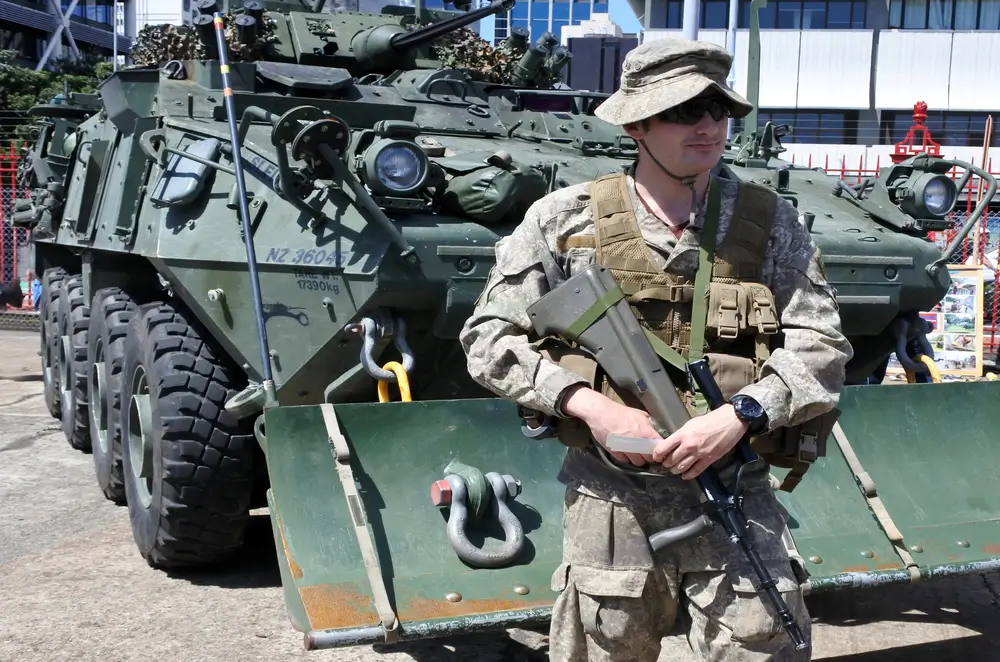
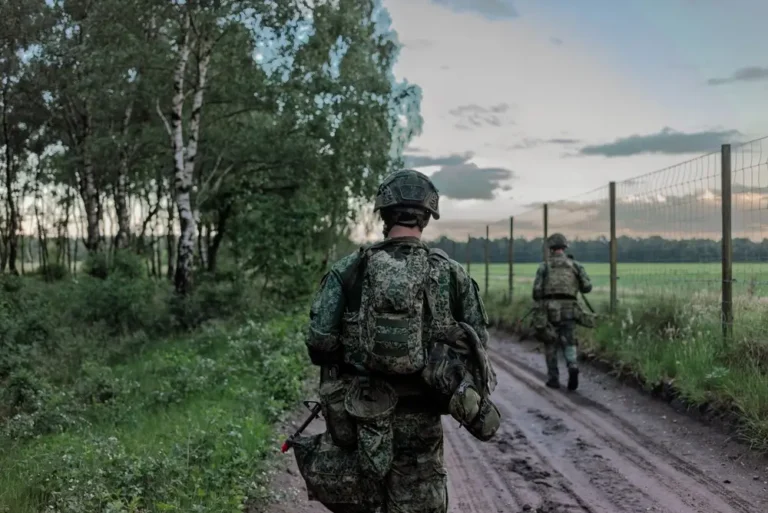
Dress No 3, Field, Combat and Fatigue Dress, is what most soldiers wear most days. The listed components are a beret, helmet or jungle hat, an NZMTP combat shirt and trousers, appropriate socks, boots or garrison shoes, a nametag and a rank patch. Optional additions cover webbing, body armour, packs, belts and operational weather layers.
New Zealand Multi-Terrain Pattern, or NZMTP, is the current official camouflage pattern for the NZDF. It replaced the Multi Terrain Camouflage Uniform, known as MCU, and the older NZDPM variants through a phased rollout. Wikipedia’s reference material describes NZMTP as visually similar to British MTP and to the original Multicam pattern, using a multi-environment palette of greens, browns and tans intended to work across woodland, desert and transitional terrain. Minor differences in fabric and colouring distinguish it from the British version, but the pattern layout stays close to MTP. The fabric is typically ripstop or a poly-cotton blend, with flame-resistant variants issued for specific roles.
The wearing rules for Dress No 3 are tighter than people expect. It is normal working dress and suits field exercises and training, but it is not to be worn in public, or in camps and establishments, unless specifically ordered. That single line explains a lot about what you will and will not see combat clothing used for off base.
How NZ Army Combat Camouflage Changed
The current pattern makes more sense once you see what came before it. New Zealand’s combat camouflage has moved through three broad eras in four decades.
From DPM to NZDPM
In 1980, the New Zealand Army adopted British Disruptive Pattern Material as its camouflage pattern. Several versions of British DPM were worn from the early 1980s onward, and the design developed into New Zealand-specific NZDPM variants. A desert derivative, NZ Desert DPM, entered operational use from 2003 for arid deployments, and New Zealand troops sent to Afghanistan initially wore a version of it. Both patterns were evolutions of the British DPM family, and the practical result was a two-pattern wardrobe: one set for green environments, one for dry ones.
The short-lived MCU period
The NZDF announced a new uniform in July 2012 and introduced the Multi Terrain Camouflage Uniform in 2013 to replace NZDPM and NZ Desert DPM. Fuller detail on the pattern came in an official press release on 20 June 2013, which stated that all Regular Force members would have the new uniforms by November 2013, while the Reserve Forces would receive the new clothing system by October 2014. The stated total cost of the New Zealand MCU project was $13.6 million over two years.
The reasoning behind the change was operational rather than cosmetic:
“We have traditionally had our two patterns of uniform, one for the jungle and one for the desert. However, with the operational environments we face today, we can be operating in a variety of terrains within one area. We needed something which would do the job in whatever environment we deploy to.” — Captain Ian Leabourne, MCU Project Manager
Field impressions were initially positive. A New Zealand Army major photographed at DVD 2014 wearing his MCU combat shirt and trousers described the uniform as practical and popular with his troops, partly because they were told not to iron the fabric.
Complaints followed all the same. Stuff reported that 716 reports were filed concerning the MCU between January 2017 and January 2019, citing unfit material and manufacturing faults. That figure comes from a single news report rather than a published defence statistic, so treat it as an indication of the scale of the problem rather than a settled number. Ron Mark, then in opposition, had also criticised MCU quality in 2016 and the fact that the garments were produced overseas.
The move to NZMTP
In June 2019 the NZDF announced the adoption of New Zealand Multi-Terrain Pattern. Army News reported that production was planned to begin in late 2019, with distribution starting in 2020, and that the replacement would be rolled out over the following three to four years. By 2023, NZMTP had become the standard camouflage uniform for most NZDF personnel.
Some practical details of that changeover are on record. The NZ MTP uniform was developed with the Defence Force’s supplier Work Wear Group. An NZDF spokeswoman said the cost was mostly covered by an existing contract, and that the exact figure could not be released because of commercial sensitivity. Parts of the uniform would be replaced over several years using the Defence Force’s annual clothing replacement funding. The fabric is sourced from the United Kingdom, with the uniforms manufactured in Auckland and Christchurch. Domestic manufacture was a point Ron Mark, by then Defence Minister, welcomed.
Specialist users sit slightly outside this timeline. Camouflage references document distinct pattern use by the NZSAS, and the Army’s dress orders identify headwear generically rather than assigning colours unit by unit.
NZDF Recruitment · Aptitude & Selection 2026From curious to candidate.Selection opens with a timed cognitive assessment. Here is exactly how to prepare for it.
Service Dress: The 1A to 1E Orders
Service Dress is the smart, non-camouflage side of the wardrobe. It runs across five levels, from ceremonial down to casual, using largely the same core garments with different accessories and levels of formality.
Ceremonial Service Dress 1A
Dress 1A is the principal ceremonial order. Te Papa’s collection description of a Ceremonial Service Dress All Ranks uniform, known as a Ceremonial1A, notes that it is worn by all ranks of the NZ Army on formal occasions and is directly influenced by the khaki British Army service dress adopted by the New Zealand Army in the early twentieth century. The same description observes that symbols on the breast, shoulders and upper arm distinguish the wearer’s rank and corps.
Male Dress No 1A components
| Item |
|---|
| Hat NZMR (QAMR only) or beret |
| Shirt, service dress – long or short sleeved |
| Tie, khaki |
| Jacket, service dress |
| Trousers, service dress |
| Socks, khaki (black for R NZAC) |
| Shoes, black |
| Belt, black, ceremonial (officer cadets and all soldiers except WO1) |
| Gloves, brown, leather (all officers and WO1) |
| Orders, decorations, and medals |
| Belt, Sam Browne (all officers (except those of the RNZChD) and WO1) (note 1) |
| Aiguillette (if applicable) |
| Sash, Mokowaewae (all WO2 and SNCO unless in the colour party when the corps sash will be worn) (note 1) |
| Belt, service dress, khaki |
| Belt, sash (Colonels and above and Command Sergeant Majors only) |
| Force for New Zealand name badge (except when on parade) |
Merino undershirts and under-trousers are listed as optional items. A further group is worn or carried only as ordered: the lemon squeezer hat, swords and accessories for officers other than those of the RNZChD and for WO1, a rifle for officer cadets and soldiers other than WO1, bayonet and scabbard, white gloves for other ranks except WO1, and inner ECW gloves.
Female Dress No 1A components
| Item |
|---|
| Hat NZMR (QAMR only), or beret |
| Shirt, service dress – long or short sleeved |
| Tie, khaki |
| Jacket, service dress |
| Trousers, service dress (note 3) |
| Socks, khaki (black for R NZAC) |
| Shoes, black |
| Belt, black, ceremonial (officer cadets and all soldiers except WO1) |
| Gloves, brown leather (all officers and WO1) |
| Orders, decorations, and medals |
| Belt, Sam Browne (all officers (except those of the RNZChD) and WO1) (note 1) |
| Aiguillette (if applicable) |
| Sash, Mokowaewae (all WO2 and SNCO unless in the colour party when the corps sash will be worn) (note 1) |
| Belt, service dress, khaki |
Note the corps-specific details that run through both lists. Socks are khaki, except black for RNZAC, the Royal New Zealand Armoured Corps. The NZMR hat is restricted to QAMR personnel. The Sam Browne belt and Mokowaewae sash apply to defined rank groups rather than everyone on parade.
Formal, informal and casual Service Dress
Dress 1B, Service Dress Formal, drops the ceremonial belt and gloves and substitutes medal ribbons and commendations for full medals, with orders, decorations and medals worn only as ordered. The female version adds a skirt option and pantyhose where applicable. The Force for New Zealand name badge is worn in this order without the on-parade exception that applies to 1A.
Dress 1C, Service Dress Informal, is lighter again. It uses a long-sleeved service dress shirt with khaki tie and trousers, a regimental belt, black shoes, medal ribbons, rank slides and the name badge. A mild weather jacket, a black V-neck jersey and merino base layers are listed as optional. Dress 1E is the short-sleeved variant of the ceremonial order, and Dress 1D covers casual service dress.
When Each Order of Dress Is Worn
The dress regulations tie orders to occasions, which is where most practical questions get answered.
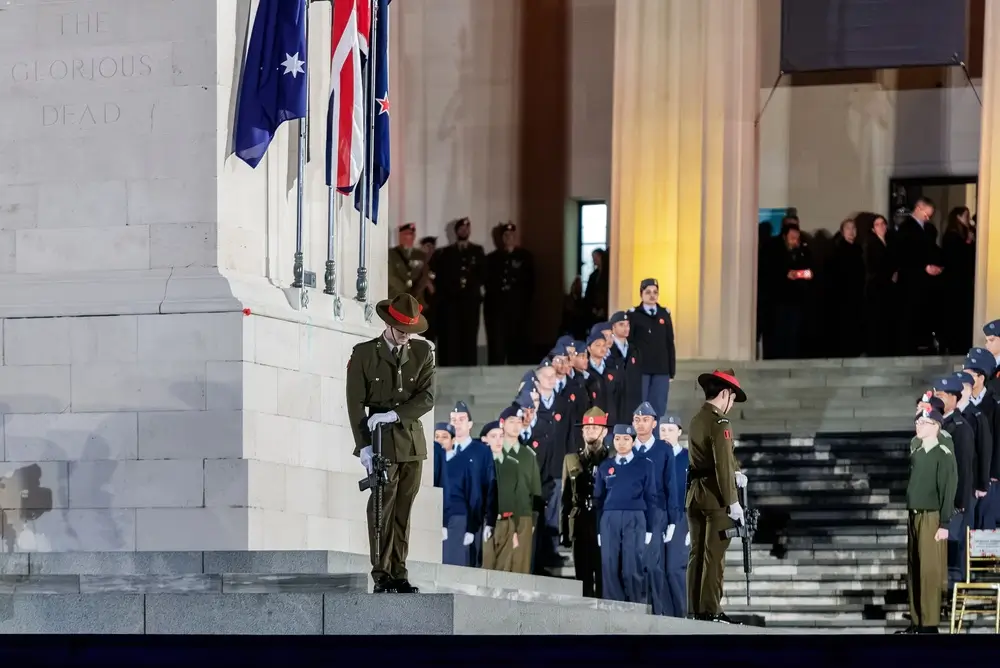
Ceremonial Service Dress, meaning Dress 1A and its Highland Dress equivalent 8A, is authorised for official calls, ceremonial parades, Anzac Day and Armistice Day services, military funerals, investitures, medal presentations and weddings where the wearer is part of the bridal party or the honour guard. If you are attending one of those events in uniform, this is the order to expect.
Dress 1B and Highland Dress 8B cover formal visits, public functions not covered by the ceremonial order, formal evening functions where Mess Dress is not worn, church parades, and weddings attended as a guest. The informal and casual variants handle day-to-day office and lower-key requirements.
Travel has its own rule. When travelling on civilian transport, personnel must wear Dress 1, Dress 3 or Dress 8, with Dress 3 consisting of MCU clothing and a beret only under the published rule. Combat Dress otherwise stays inside its normal working, field and training envelope unless specifically ordered.
Mess Dress and Specialist Orders
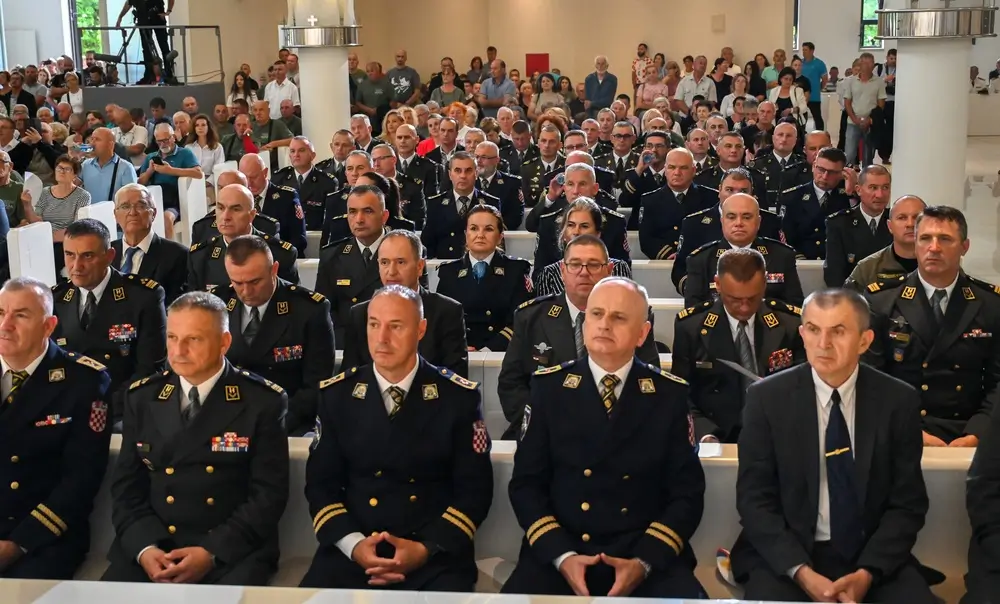
Mess Dress is authorised as Dress No 2, used for formal evening functions in the mess environment.
Patrol Reds sit at Dress No 7. The NZ Army Band has its own set of three uniforms: Mess Kit, Parade Dress and Tropical Dress, with Tropical Dress using a white tunic version of Parade Dress.
Highland Dress occupies the whole of Dress No 8, from 8A ceremonial through to 8G fatigue. At the discretion of the unit commander, members of the Scottish companies of the Otago Southland Regiment may wear the appropriate version of Highland Dress in place of the general use order with a similar descriptive title. Providing Highland Dress is a unit responsibility rather than a central issue.
Chaplains have a documented exception. Royal New Zealand Chaplains Department personnel conform with the dress provisions for officers of other corps, with defined variations. When conducting or participating in a religious service or ceremony, a chaplain may wear denominational robes over military uniform. Orders, decorations, medals or medal ribbons are worn as appropriate to the dress of the service personnel present, in the equivalent position as on uniform, but badges of rank are not worn on clerical robes.
Headwear, Badges and Wearing Standards
Headwear follows the order of dress. In Dress 1A, the listed options are a beret or the NZMR hat for QAMR personnel, which makes the beret the standard choice for everyone else in that order. The lemon squeezer appears in the ceremonial order as an item to be worn or carried as ordered. Dress 3 lists a beret, helmet or jungle hat. The released Orders of Dress extract identifies the beret and the QAMR NZMR hat but does not include a full current table of beret colours by corps, so unit-level colour questions are best put to a recruiting office or the relevant unit.
Identity markers are treated as clothing components, not decoration. Dress 3 includes a nametag and a rank patch as listed items. Dress 1A includes orders, decorations and medals, an aiguillette where applicable, the Mokowaewae sash for specified warrant officers and senior non-commissioned personnel, and the Force for New Zealand name badge except when on parade.
Wearing standards are specific. NZMTP combat shirts must be tucked into trousers when corps belts, ceremonial belts or Sam Browne belts are worn. Sleeves may be worn up or down, but sleeves worn down must be properly secured, and tailored if they are too long. Garrison shoes are restricted to garrison wear and are not authorised for field dress.
Practical Takeaways Before You Enlist or Attend
Three points do most of the work here. The camouflage uniform you will be issued is NZMTP, which became standard for most NZDF personnel by 2023. Your smart uniform will be Service Dress, and the order number tells you the formality level. Combat Dress stays out of public settings unless it is specifically ordered, including the restricted travel rule.
For the next step, check the current recruiting information published by the New Zealand Defence Force for what is issued on entry, then confirm the specific order of dress with the unit or event organiser if you are attending a parade, funeral, investiture or wedding in uniform. The dress orders change by issue, so the unit instruction for the day is what governs.
Frequently Asked Questions
What are the official and different uniforms worn by the New Zealand Army?
The official system covers Service Dress, Mess Dress, Field, Combat and Fatigue Dress, Physical Training Dress, Stewarding Dress, Hospital Whites, Patrol Reds and Highland Dress. The Orders of Dress document lists 22 authorised orders in total, covering different levels of ceremony, working use, training and specialist roles.
What will the new Army uniforms look like in 2027?
There is no confirmed separate 2027 uniform design on the public record. The documented change is the move from MCU to NZMTP, with formal distribution beginning in 2020 and NZMTP becoming the standard camouflage uniform for most NZDF personnel by 2023.
What are the three main types of military uniform in the NZ Army?
As a rough overview, the three most recognisable categories are Combat Dress, Service Dress and Mess Dress. The official NZ Army system is more detailed than that, and also includes physical training, stewarding, hospital, Patrol Reds and Highland orders.
What is the NZ Army’s current uniform and camouflage?
NZMTP is the current standard camouflage pattern for the NZDF and replaced MCU through a phased rollout. In the Army dress regulations, NZMTP combat clothing forms the core of Dress No 3, the field, combat and fatigue order.
What are the current Army combat uniforms?
Dress No 3 is the Army’s field, combat and fatigue dress. Its listed core includes an NZMTP combat shirt and trousers, appropriate socks, boots or garrison shoes, headwear, a nametag and a rank patch, with protective equipment and weather layers available as optional items.
What is the NZ Army’s current dress uniform?
The principal ceremonial dress is Dress 1A, Service Dress Ceremonial, also described as Ceremonial1A. It combines a service dress jacket and trousers, a khaki shirt and tie, black shoes, a ceremonial belt, the relevant headwear and the applicable decorations and accessories.
Is the NZ Army dress uniform blue or green?
The ceremonial service dress is drab or khaki rather than blue. Dress 1A pairs khaki socks and a khaki tie with a drab service dress jacket and trousers, with black shoes and belt details providing contrast.
What does MTP mean in the Army?
MTP means Multi-Terrain Pattern. NZMTP is the New Zealand pattern derived from the British MTP family, and it is described as visually similar to British MTP and to the original Multicam pattern.
What colour beret do NZ SAS personnel wear?
There is no current official NZSAS beret colour established in the publicly released Army dress material. Camouflage references document specialist pattern use by the NZSAS, while the Orders of Dress identify the beret as headwear without a complete corps-by-corps colour table.
When is each NZ Army dress order worn?
Ceremonial Service Dress covers formal occasions such as official calls, parades, memorial services, military funerals, investitures and medal presentations. Formal, informal and casual Service Dress provide the less ceremonial options, while Combat Dress is intended for normal working, field exercise and training use under the applicable orders.
Sources
NZDF Recruitment · Aptitude & Selection 2026From curious to candidate.Selection opens with a timed cognitive assessment. Here is exactly how to prepare for it.
NZ Army Ranks: Full Order, Insignia and Service Equivalents