
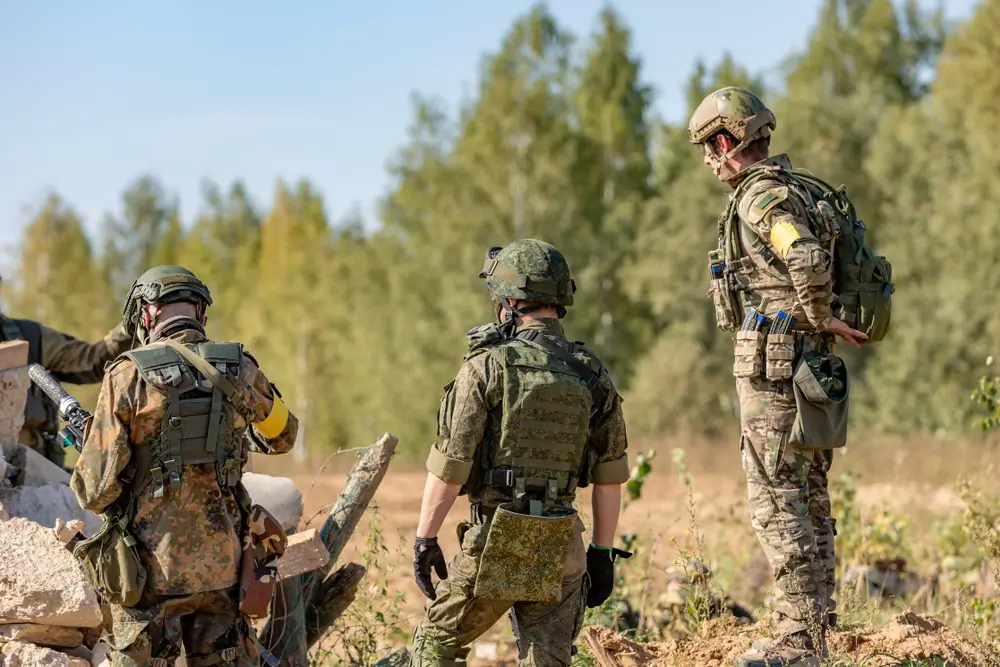
New Zealand Army engineers keep the Army moving. They build bridges, clear mines, run water points, blow up obstacles and, when they are not doing engineering work, fight as soldiers. If you are weighing up a Combat Engineer application, the practical questions are usually the same: what the job actually involves, how long the training takes, whether Reserve service fits around a civilian job, and what qualifications you walk away with.
This guide pulls together what the New Zealand Defence Force and Defence Careers publish about the Corps of Royal New Zealand Engineers, the Combat Engineer role in both the Regular Force and the Reserve Force, and the assessments you may face on the way in.
 NZDF Recruitment · Aptitude & Selection 2026Your trade decides which test you sit.
Work through NZDF style aptitude questions under time and find out where you actually stand.
What the New Zealand Army engineers are
The Corps of Royal New Zealand Engineers (RNZE) provides the Army with mobility and counter-mobility capability, broad engineering support, and an infantry role when engineers are not undertaking engineering tasks. That dual identity is the defining feature of the corps: engineer first by trade, soldier throughout.
The RNZE is organised as a single regiment, 2nd Engineer Regiment, based at Linton Military Camp near Palmerston North. Sub-units sit under that regiment, including field squadrons that carry their own local histories and traditions.
Why Army engineers are called sappers
Army engineers in the RNZE are commonly known as sappers, and NZDF material uses the same word when referring to military engineers. Sapper is also the most junior enlisted rank in the corps, though in everyday use it covers members of the RNZE more broadly.
The corps motto is “Ubique quo fas et gloria ducunt”, meaning “Everywhere, where Right and Glory Lead”. The Ubique part is not decoration. Sappers turn up wherever the Army needs a gap crossed, a route opened, water made drinkable or a structure taken down.
Engineering work with a public face
The relationship between sappers and the town of Akaroa shows how the corps has worked in the community. In October 1974, 3 Field Squadron was asked to help the then County of Akaroa with underwater demolitions, bridging, vertical and horizontal construction and tree felling. That work led the county chairman to grant the Charter of Akaroa to the squadron, and many of those tasks are still trained and executed by sappers today.
“We are proud to continue to develop the relationship that is now more than 50 years strong, and hope that the connections develop further into the future.” — Major Mike Lawry
As Major Lawry has described it, the squadron previously maintained key local infrastructure including bridges, piers, roads and its own facilities. Today it uses the bays and oceans there to refine all-arms and small boat handling operations.
The Combat Engineer mission: mobility and counter-mobility
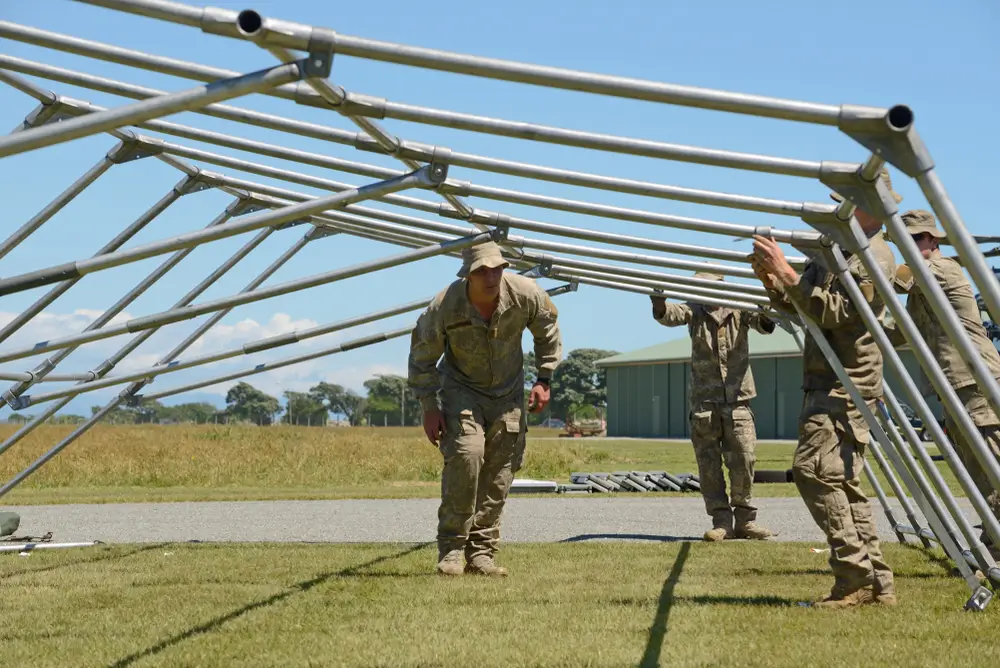
The core purpose of a Combat Engineer is to maintain the Army’s ability to move and manoeuvre on the battlefield without interference from hostile forces. Everything else in the trade flows from that single mission.
In practice, this is delivered as mobility and counter-mobility support to manoeuvre elements: creating obstacles, removing them, putting in tactical bridging and operating tactical watercraft. Mobility means keeping friendly assets moving. Counter-mobility means stopping an opponent from doing the same.
Defence Careers describes the Combat Engineer skill set as covering explosives, bridge construction and demolition, field surveying, mine clearance, booby traps, explosives search, boating, water supply, tree felling, sawmill operation, minor construction, rigging and small engines. That is a wide trade by any standard.
The role runs alongside the soldiering profession rather than separate from it. Infantry skills, tactics, weapons training, medical training and communications training are all part of the package. On base, a Combat Engineer trains continuously with the Army’s latest equipment and heads out on exercises around New Zealand. While not performing engineer duties, the secondary role is Infantry, as a Rifleman.
Field engineering is worth clarifying here, because applicants often search for it as if it were a separate job. In the official role descriptions it appears as a core capability introduced inside the Combat Engineer pathway, not as a distinct Reserve engineer trade.
What Combat Engineers build, move and demolish

On deployment, Combat Engineers can be tasked with demining, construction of field defences, gap crossing for Army assets and demolition. The RNZE also provides general engineering support covering construction, water purification and supply, CBRN defence, bridging, firefighting and demolitions.
Equipment reflects that mix. The corps uses JCB High Mobility Engineer Excavators for obstacle clearance, and a rapidly emplaced bridging system mounted on an 8×8 truck described as capable of bridging a twelve-metre gap in ten minutes. Historically the corps operated NZLAVs and continues to have access to engineering variants.
Explosives, search and clearance
Combat Engineers are trained in explosives handling, mine clearance, booby-trap identification, explosives search and demolition. Reserve training covers explosive demolition and military search alongside bridge construction and small boat handling. A qualified demolition handler works to strict procedure, because the same skills that open a route can injure the people using it.
The historical record shows how long this has been core business. During the First World War, the New Zealand Tunnelling Company, formed in 1915, was active on the Western Front on counter-mining and tunnel construction at Vimy Ridge and Arras, later building bridges during the Hundred Days Offensive, including a 240-foot bridge over the Canal du Nord. In the Second World War, field companies handled demolitions and then minefield construction and clearance during the advance from El Alamein, railway companies laid 400 km of track in 265 days, and engineers in Italy became adept at pontoon and Bailey bridging.
Disaster relief and reconstruction
Since the 1980s, the RNZE has been heavily engaged in peacekeeping and disaster relief. Deployments have included Bosnia, East Timor, Afghanistan as part of a provincial reconstruction team, and Iraq. The corps has been highly active in the Pacific, providing relief in the Cook Islands, Fiji, Samoa, Tonga and Vanuatu after cyclones, and assisting with water filtration systems in Tuvalu and Tokelau during droughts.
Closer to home, RNZE sappers were deployed within hours of the 2011 Christchurch earthquake to repair infrastructure and assist with stabilisation and demolition work, and helped clear slips after the 2016 Kaikōura earthquake.
NZDF Recruitment · Aptitude & Selection 2026Your trade decides which test you sit.Work through NZDF style aptitude questions under time and find out where you actually stand.
Training: from recruit course to Combat Engineer
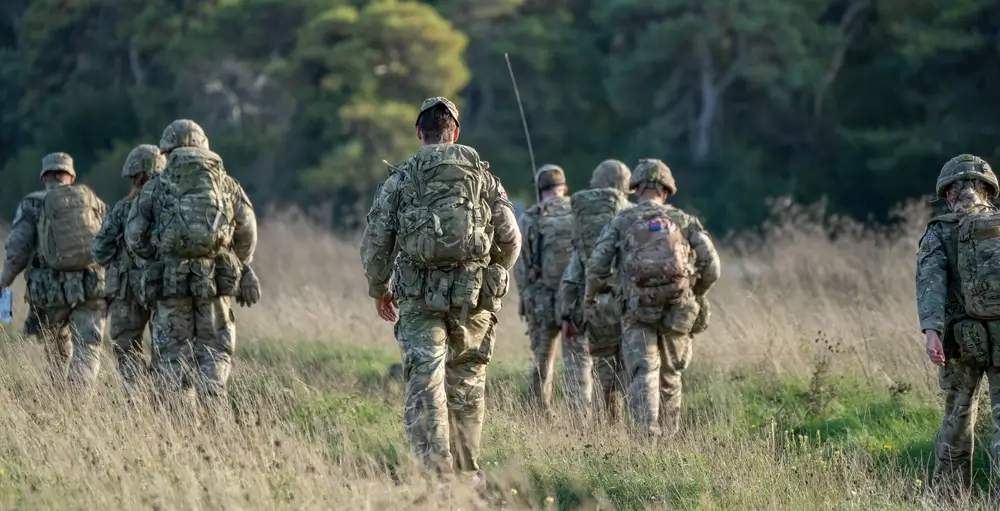
Regular Force applicants start with basic training. Successful recruits are posted to Waiouru Army base for 16 weeks of basic military training, covering organisation and administration, Army customs and protocol, drill and parades, military field skills and weapon training, first aid and physical fitness. For context on Army-wide intakes, NZDF states that Regular Force recruit course intakes run for 17 weeks.
Trade training then begins with the Basic Combat Engineer Course, an eight-week course at the School of Military Engineering at Linton Military Camp. It is the first course conducted for most RNZE trades and introduces the combat side of engineering before a soldier moves into a specific trade. Content covers the basics of field engineering: bridging, water supply, explosives, field defences, obstacles, booby traps and boating.
Specialist courses follow. These can include Royal NZ Engineering Engine Hands, Search, First Aid and Rigid Hull Boat courses, with some training aligned to NZQA standards. Related Engineering & Technical trades in the Army include Plant Operator, where you use heavy machinery to construct or cross obstacles and keep troops and equipment moving, along with roles such as Armourer, Ammunition Technician and Automotive Technician.
Pay while training and afterwards
Defence Careers publishes indicative earnings for the Combat Engineer pathway.
| Status | Salary |
|---|---|
| Under training | $69,833 |
| Future potential earnings | $100,996 |
The mechanical aptitude test for engineering trades
Some Engineering & Technical trade types trigger an additional mechanical aptitude assessment during the application process. Defence Careers identifies which trade types this applies to, so check the requirements for the specific role you are targeting rather than assuming.
In this New Zealand Army context, the assessment to prepare for is the SHL Verify Mechanical Comprehension test. It measures your understanding of practical mechanical principles: gears, pulleys, levers, pressure, force and how simple systems behave under load. It is not the entry test used by other armies, and preparing with the wrong material is a common and avoidable mistake.
If you want the detailed breakdown of question types and how to prepare, see our dedicated guide at /mechanical-aptitude-test/.
Reserve Combat Engineer service alongside civilian work

Combat Engineer is the only engineer trade offered by the Army Reserves, and the Reserve Force is actively interested in people arriving with civilian qualifications. Reserve locations listed by Defence Careers are Auckland, Manawatu, Wellington and Christchurch, with Reserve activity based around camps including Trentham and Burnham Military Camp.
Reserve Combat Engineers train across five engineering pillars: explosive demolition, bridge construction, mine clearance, small boat handling and establishing water supplies. All of it is delivered in parallel with the soldiering profession, including infantry skills and tactics.
Initial training runs across three stages and totals approximately 7 weeks.
| Module | Description | Duration | Location | Timing |
|---|---|---|---|---|
| Module 1: Introduction to the New Zealand Army and Reserve Force Service | Familiarisation with Army and Reserve Force service, attestation, drill and command, Military Law, Ethos and Values, Reserve Force particulars, living and operating within the military environment. | 2 days | Auckland (Whangaparāoa Leadership Centre or RNZAF Base Auckland, Whenuapai), Wellington (Trentham Military Camp), Christchurch (Burnham Military Camp) | Conducted throughout the calendar year |
| Module 2: Basic Training | Develops individual skill set for a soldier at basic capability level. Includes drill, first aid, communications, weapons handling (IW MARS-L, LSW-C9), grenade qualification, fieldcraft, physical training (Army Fitness Test, swim test, pack walk), Laws of Armed Conflict. | 38 days (residential) | Waiouru Military Camp | November, December, January (accounts for leave) |
| Corps Training: Initial Trade Specific Coursing (Basic Combat Engineer – BCE) | Provides basic trade-specific skills for Combat Engineers across five pillars: Demolition, Search, Small boat handling, Bridge building, Establishment of a water point. Refines outputs for combat battlespace operations. Continues soldiering tenets (Move, Shoot, Communicate, Medicate). | 2 weeks (residential) | Palmerston North (Linton Military Camp), at the School of Military Engineering | February of each calendar year |
Corps Training is described by Defence Careers as equivalent to a 14 days commitment. After initial training, the minimum expected Reserve Force commitment is a cumulative 20 days per year, which is what makes the trade workable alongside a civilian job or study.
Reserve pay
| Remuneration Component | Amount |
|---|---|
| Initial Daily Rate (including holiday pay) | $252 |
| NZDF Kiwisaver Contribution | 4% (on top of personal contribution) |
How it works in practice
Corporal Jon Beattie, who created tech company Octana with his partner, has kept his Reserve Force Combat Engineer role while living in Queenstown. “I’ve been part of 3 Troop in Auckland for over thirteen years now so really am part of the team,” he says. Since the COVID-19 pandemic, elements of training are held online, which enables remote learning and helps soldiers in different locations stay with their unit.
“Until you join the Army you don’t realise you’re only operating at thirty percent of your actual capacity.” — Corporal Jon Beattie
For scale, NZDF reports 4,358 Regular Force members and 2,080 Reserve Force members as at 30 November 2025, with the Army Reserves organised around three reserve battalions. The Army sits under three main commands: Land Component Command, Special Operations Component Command and Army General Staff.
Civilian qualifications and where the trade leads
Two long qualifications are listed on the Combat Engineer pathway: the New Zealand Certificate of Quarry Shotfirer Course at 24 months, and the New Zealand Certificate of Quarry Operations Manager Course, also at 24 months. Beyond those, some specialist training aligns with NZQA standards and can carry industry recognition outside the Army, and sponsored tertiary study programmes are available at all levels.
Apprenticeships can also be the front door. Major Nigel Gattsche joined the Army in 1974 from Palmerston North Boys’ High School, where a carpentry apprenticeship in the Regular Force Cadets was the start of his goal of becoming an architectural draftsman. He completed the apprenticeship, graduated into the RNZE, began officer training in 1979 at Portsea in Australia and rejoined the corps as a 2nd Lieutenant in 1980.
His career shows how far engineering experience can run. Deployments included Antarctica, where he commanded the Scott Base reconstruction team in the early 1980s, West Germany in 1984, the Sinai twice, Afghanistan three times including the 16-member advance party on the first deployment to Bamiyan, the Solomon Islands and South Korea. He was site manager for rebuilding Linton Military Camp for the return of troops from Singapore in the late 1980s, and later worked on planning and construction for the New Zealand Embassy in Beijing and the New Zealand Liberation Museum, Te Arawhata, in France. He stepped away from fulltime soldiering after 52 years in both the Regular and Reserve Forces.
“You can play the long game. My biggest experiences have been predominantly in the latter years.” — Major Nigel Gattsche
That is the broader pattern for RNZE careers: field engineering early, then infrastructure and construction leadership, reconstruction work and operational planning. Trade training, discipline and organisational ability all transfer, and Reserve service lets someone keep a civilian career while staying part of an Army troop.
Your next step
If the trade appeals, work in this order. Confirm the current entry criteria for the Combat Engineer role you want, Regular or Reserve, on the Defence Careers application information. Decide whether the 20-day-a-year Reserve minimum or full-time service fits your life. Then start building fitness early, because the Army Fitness Test, swim test and pack walk are part of basic training, not optional extras. If your target trade triggers the mechanical aptitude assessment, prepare specifically for the SHL Verify Mechanical Comprehension format using our guide at /mechanical-aptitude-test/.
Frequently Asked Questions
Do engineers in the Army see combat?
Yes, they can serve in operational and battlefield environments. Combat Engineers train as soldiers, hold a secondary Infantry role and may deploy for demining, field defences, gap crossing and demolition. Their primary purpose remains supporting Army manoeuvre through engineering capability.
What do they call engineers in the Army?
New Zealand Army engineers in the RNZE are commonly called sappers. Sapper is also the most junior enlisted rank in the corps, although the term is used broadly for its members.
Does the New Zealand Army still have Combat Engineers?
Yes. Defence Careers describes both a Regular Force Combat Engineer role and an Army Reserve Combat Engineer role, and the RNZE continues to deliver combat engineering through 2nd Engineer Regiment. The work covers mobility, counter-mobility, bridging, demolition and field engineering.
How do you join the New Zealand Army as an engineer?
The usual route is to apply for a Combat Engineer role, complete Army basic training, then do trade training through the School of Military Engineering. Reserve applicants work through a modular initial training programme before Corps Training and the Basic Combat Engineer course. Check the full entry criteria on the current Defence Careers application information.
What does an engineer in the Army do?
A Combat Engineer helps the Army move and manoeuvre. The work spans construction, bridging, demolition, mine clearance, field surveying, water supply, search, boating and obstacles. Engineers also train as soldiers and can operate in an infantry role when they are not on engineering tasks.
What is a Combat Engineer in the Army?
A Combat Engineer is an RNZE soldier trained to provide combat engineering support while developing infantry skills and tactics. Tasks include building and removing obstacles, explosive demolition, bridge construction, mine clearance, small boat handling and setting up water supplies.
Are Combat Engineers considered special forces?
The role descriptions do not classify Combat Engineers as special forces. They are RNZE combat engineers with infantry training who may work alongside special forces on particular activities, but their specialist identity is military engineering rather than special operations.
Do Combat Engineers carry guns?
Yes. Combat Engineers receive weapons training and hold a secondary Infantry, or Rifleman, role. Service therefore combines soldiering and weapon training with engineering duties such as bridging, demolition, search and water supply.
Do NZ Army engineering trades require a mechanical aptitude test?
Some Engineering & Technical trade types trigger an additional mechanical aptitude test. In the New Zealand Army context, that assessment is the SHL Verify Mechanical Comprehension test. It should not be confused with the entry test used by another country’s army.
What civilian qualifications can NZ Army engineers gain while serving?
The Combat Engineer information lists the New Zealand Certificate of Quarry Shotfirer Course and the New Zealand Certificate of Quarry Operations Manager Course, each shown as 24 months. Some specialist training aligns with NZQA standards, and sponsored tertiary study is available. An apprenticeship route into the RNZE also exists, as Major Nigel Gattsche’s career shows.
Sources
NZDF Recruitment · Aptitude & Selection 2026Your trade decides which test you sit.Work through NZDF style aptitude questions under time and find out where you actually stand.
NZ Army Infantry: Training, Battalions and Career Paths
NZ Army Pay 2026: Salary, Rank Scales, Allowances & Benefits