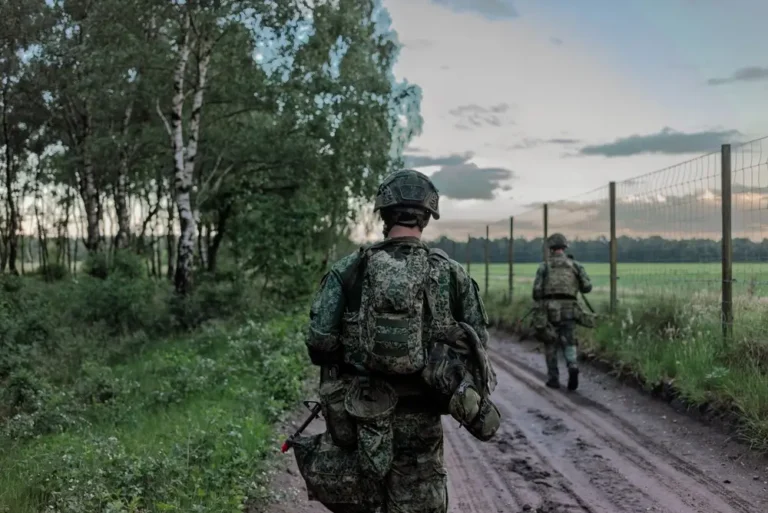
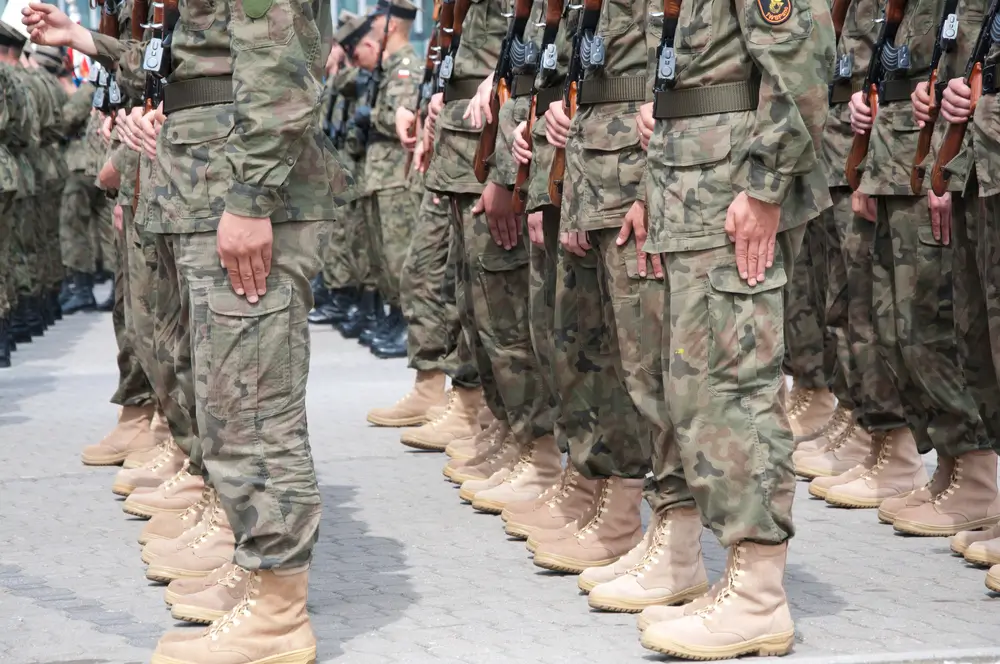
The New Zealand Defence Force, usually shortened to NZDF, is the country’s combined military. If you are looking at it as a possible career, the first thing worth knowing is that it is not one organisation with one job. It is three services, plus tri-service components, plus a large civilian workforce, all working under a single command.
This guide walks through what the NZDF is, what it actually does, how the Navy, Army and Air Force differ, and what a civilian needs to do to apply. It is written for people starting from zero, so nothing here assumes prior military knowledge.
 NZDF Recruitment · Aptitude & Selection 2026From curious to candidate.
Selection opens with a timed cognitive assessment. Here is exactly how to prepare for it.
What Is the New Zealand Defence Force?
The NZDF, in Māori Te Ope Kātua o Aotearoa, is the three-branched military of New Zealand. It consists of the Royal New Zealand Navy (RNZN), the New Zealand Army and the Royal New Zealand Air Force (RNZAF), alongside tri-service components that support all three.
Its remit covers the protection of national security for New Zealand and its realm, promoting the country’s interests, safeguarding peace and security, and supporting peacekeeping and humanitarian missions. The NZDF is supported by the New Zealand Ministry of Defence and is commanded by the Chief of Defence Force.
As of June 2024, the NZDF had a strength of 15,383 employees: 10,037 regular force personnel, 3,281 reserve force personnel and 3,294 civilian members. That breakdown matters if you are exploring careers, because approximately 21% of the workforce is not in uniform at all.
The organisation describes itself as a combat-ready force, trained, equipped and ready to respond every hour of the day, every day of the year. That readiness posture is what drives the training standards, the medical requirements and the length of the recruitment process discussed further down.
Who leads the NZDF
Command sits with the Chief of Defence Force, with each service led by its own chief. The senior leadership as of September 2024 was as follows.
| Role | Name |
|---|---|
| Chief of Defence Force | Air Marshal Tony Davies |
| Vice Chief of Defence Force | Rear Admiral Mathew Williams |
| Commander Joint Forces | Major General Robert Krushka |
| Chief of Navy | Rear Admiral Garin Golding |
| Chief of Army | Major General Rose King |
| Chief of Air Force | Air Vice-Marshal Darryn Webb |
| Special Operations Component Commander | Colonel Sean Bolton |
| Maritime Component Commander | Commodore Shane Arndell |
| Land Component Commander | Brigadier Jason Dyhrberg |
| Air Component Commander | Air Commodore Andy Scott |
| Deputy Chief of Navy | Commodore Andrew Brown |
| Deputy Chief of Army | Brigadier Hamish Gibbons |
| Deputy Chief of Air Force | Air Commodore Daniel (DJ) Hunt |
What Does the NZDF Do?
The short answer: it keeps Aotearoa New Zealand safe and secure, and advances the nation’s interests through military operations at sea, on land and in the air.
Its primary roles include defending New Zealand’s sovereign territory, protecting critical lines of communication, providing civil defence support, meeting whole-of-government security objectives, supporting allies and partners, and promoting regional peace and security. That is a wide spread of tasks for a force of this size, which is why so many trades exist inside it.
Not all of the work is combat. NZDF skills and equipment aid communities in need at home, in neighbouring regions and further afield. Disaster response, logistics and humanitarian support sit alongside the security mission rather than being an afterthought to it.
Deployments reflect that mix. NZDF personnel have served across the Pacific and beyond under a range of commands.
| Country | Command |
|---|---|
| Cook Islands | New Zealand Mutual Assistance Program |
| Solomon Islands | |
| South Korea | United Nations Command & Military Armistice Commission |
| Iraq | Combined Joint Task Force – Operation Inherent Resolve, United States Air Force, 609th Air Operations Center |
| Qatar | |
| Bahrain | Combined Task Force 150 |
| Israel | United Nations Truce Supervision Organization |
| Syria | |
| Jordan | Operation Gallant Phoenix |
| Egypt | Multinational Force and Observers |
If you join, expect a passport to be part of the job. The Defence Force is actively engaged in operations and exercises across Aotearoa and abroad.
The Three Services and What They Operate
Each service has its own environment, equipment and daily rhythm. Choosing between them is usually the first real decision an applicant makes.
Royal New Zealand Navy
The RNZN operates two Anzac class frigates, one multi-role vessel, two offshore patrol vessels and four inshore patrol vessels. Patrol work, maritime security and support to Pacific neighbours are core parts of what that fleet delivers. Life in the RNZN can mean weeks at sea, which changes how the job feels compared with a land posting.
New Zealand Army
The Army is a light combat force built around infantry and motorised infantry, with 73 LAV III light armoured vehicles. It also holds New Zealand’s special forces capability through the New Zealand Special Air Service. Day to day, soldiers work with modern equipment such as Carl Gustaf M3 firepower systems and New Zealand Light Armoured Vehicles, known as NZLAV.
Royal New Zealand Air Force
The RNZAF has 44 aircraft. Its fleet includes P-8 Poseidon maritime patrol aircraft, C-130J Super Hercules and Boeing 757 transport aircraft, and NH90 and AW109 utility helicopters. The mix leans towards surveillance, transport and support rather than strike, which shapes the trades the RNZAF recruits for: aircrew, engineering, logistics and ground support roles all sit within the RNZAF structure.
Inside the New Zealand Army
The Army, known also as Ngāti Tūmatauenga, describes itself as a world-class, combat-ready force that is modern, agile and highly adaptive. Its mission is to provide land forces that are trained, led and equipped to win as part of an Integrated Defence Force.
That phrase, Integrated Defence Force, is worth pausing on. It means the Army is not designed to operate alone. Its planning, equipment and training assume the Navy and Air Force are part of the same effort, and much of the technology it uses is aimed at improving training, sharpening decision-making and optimising capability across that joint structure.
Culture is built on four values expressed in te reo Māori: Tū Kaha (courage), Tū Tika (commitment), Tū Tira (comradeship) and Tū Maia (integrity). These are not decorative. They appear in recruit training, in how leadership is assessed, and in how the Army explains itself to the public.
The Army also says its people come from all walks of life and share a strong sense of what it means to be Kiwi, serving Aotearoa and its diverse communities. For a civilian weighing up a first application, that framing is a useful signal: the emphasis is on team fit and shared standards, not on a single background or profile.
NZDF Recruitment · Aptitude & Selection 2026From curious to candidate.Selection opens with a timed cognitive assessment. Here is exactly how to prepare for it.
Life, Values and Benefits Across the NZDF
No two days are the same, according to Defence Careers. You might wake up on a local Army base, on a naval warship in the open ocean, or in the South Pacific on an Air Force deployment. That variety is one of the main things the NZDF sells to applicants, and it is a fair description of how service life differs from a fixed civilian job.
Tū Kaha, Tū Tika, Tū Tira and Tū Maia carry across the wider force, not just the Army. They shape how teams operate and how conduct is judged.
On pay, the Defence Careers portal states that personnel earn a competitive salary while training, with pay rises in line with rank and qualifications, plus other benefits aimed at preparing for the future. Specific salary bands are not published on that overview page, so treat any single figure you see quoted elsewhere with care and check the official trade pages instead.
Training is a continuing part of the deal rather than a one-off. Personnel receive skills development and industry-recognised qualifications, with opportunities for sponsored study during a career. The NZDF also describes its people as its priority and greatest asset, and presents itself as a diverse, inclusive workplace that supports health and wellbeing.
A career in the Defence Force is framed around purpose: working in a tight-knit team, protecting your whānau, your country and the environment, and representing New Zealand wherever you go. Family, or whānau, comes up repeatedly in how the NZDF describes service, which reflects how much the job affects people around you as well as you.
Choosing a Role: Trades, Reserve Force and Civilian Jobs
There are up to 100 different trades across the Navy, Army and Air Force. That range covers combat roles, technical and engineering trades, medical work, logistics, communications and more. Very few applicants know exactly which trade suits them at the start, and that is normal.
Three types of employment exist side by side. Regular force personnel serve full time. Reserve force personnel serve part time while holding civilian jobs or studying. Civilian employees work for the NZDF without being in uniform, in roles that keep the organisation running.
The reserve force route is worth understanding if full-time service does not fit your circumstances. For the New Zealand Army, initial training for the reserve force runs across three stages and takes approximately seven weeks in total: Module 1 is a two-day introduction to Army and Reserve Force service, Module 2 is a 38-day residential Basic Training course at Waiouru Military Camp, and Corps Training, the trade-specific stage, is equivalent to a 14-day commitment. After that, the minimum expected commitment is 20 days per year.
Full-time entry is more concentrated. Regular Force Recruit courses run for 17 weeks.
How a Civilian Applies to the NZDF
The NZDF describes joining as a journey that takes time and commitment, with a recruitment process designed to find the right fit for both you and the team. The full application process runs to eight stages, from gathering documents through to joining an intake, and takes approximately three to six months.
Check your eligibility first
Before anything else, confirm you meet the basic requirements. The official eligibility guidance sets the minimum age to submit an application at 17 years old, and applicants must have turned 18 by the time they graduate from their recruit course. Three years of High School is the general educational requirement, though individual trades can require more.
Residency also matters. For Confidential Vetting, the eligibility page specifies at least the last five years of residency, or since age 18, for the stated pathways.
Physical measurements are part of the screen. The minimum acceptable height is 1.52 m, and applicants over 1.96 m may be unsuitable for specific trades, though no general maximum height is set. The maximum acceptable weight is 125 kg, and BMIs up to 33 may be considered where assessment attributes the BMI to large muscle bulk. Hearing should mostly not fall below 30 decibels in the upper frequencies.
Vaccination requirements are date-qualified. Applicants whose first COVID-19 dose was before 7 March 2024 need two doses; those whose first dose was on or after 7 March 2024 need one dose.
Apply online and send your documents
Applications are submitted online, and the process guides you through each stage so you know what to expect. The NZDF team may acknowledge a submitted application within ten working days, and you are required to provide copies of the requested documents within two weeks of applying. Missing that document window is an avoidable way to stall your own file.
Work with your candidate coordinator
Once your application is in, one of the NZDF candidate coordinators is assigned to you. Candidate coordinators provide updates, information and support throughout the process, which is genuinely useful given how long the timeline runs. Use them: they can tell you where your file sits and what the next stage requires.
If the Army is your target service, the practical next step is a service-specific walkthrough of the joining route at /how-to-join-the-nz-army/.
Aptitude Tests and Fitness Standards
Two things trip up more applicants than anything else: the aptitude tests and the fitness assessment.
What the aptitude tests measure
NZDF aptitude tests provide reliable and objective information about an individual’s ability to perform under training and on the job. They help the NZDF identify the candidates most likely to succeed in training and in their early career.
The official recruitment guidance does not publish a test format or name individual papers, so be sceptical of anyone claiming to know the exact question set. What is clear is the purpose: aptitude tests are a screening tool, and your result influences which trades are open to you. Because the aptitude tests sit early in the process, weak preparation there closes doors before you reach the later stages.
Practising timed reasoning questions under exam conditions is the sensible approach. A structured preparation path for the aptitude tests is available at /nzdf-aptitude-test/.
Medical and physical fitness
To be part of the NZ Defence Force you need to be medically and physically fit for military duties worldwide. That standard applies regardless of the trade you pick.
For the Army, Defence Careers publishes Assessment Day and Induction Day benchmarks. The Assessment Day beep test minimum is 7.10 for male applicants and 5.09 for female applicants. By Induction Day, the standards rise: a 2.4 km run in 12 minutes or less for men and 14 minutes or less for women, with a minimum of 15 press-ups for men and 8 for women.
Navy standards are banded by age. For female applicants aged 16 to 29, the Navy Assessment Day beep test minimum is 5.01.
The gap between Assessment Day and Induction Day is deliberate. You are expected to keep training between the two, not to peak once and coast.
Frequently Asked Questions
What does the NZDF do?
The NZDF is a combat-ready force, trained, equipped and ready to respond every day. It keeps Aotearoa New Zealand safe and secure and advances national interests through military operations at sea, on land and in the air. Its roles also cover national security, community support and international peace and security.
Does New Zealand have a defence force, and what are its three services?
Yes. The New Zealand Defence Force is the country’s combined military. It consists of the Royal New Zealand Navy, the New Zealand Army and the Royal New Zealand Air Force, alongside tri-service components.
How do you join the New Zealand Defence Force?
Check your eligibility first, then apply online through the NZDF recruitment process. Once your application is submitted, a candidate coordinator is assigned to you and provides updates and support through the following stages. If the Army is your target, start with the Army-specific joining guide.
What aptitude tests do NZDF applicants take?
The official recruitment guidance does not name individual tests or publish a test format. It explains that NZDF aptitude tests give reliable, objective information about an individual’s ability to perform in training and on the job, helping identify candidates most likely to succeed.
How fit do you need to be to join the NZDF?
You need to be medically and physically fit for military duties worldwide. For the Army, published Assessment Day and Induction Day standards cover the beep test, a 2.4 km run and press-ups, and Navy beep test minimums are banded by age.
How much does a New Zealand soldier or NZDF member get paid?
No single salary figure is published on the general Defence Careers overview. It states that members earn a competitive salary while training, with pay rises in line with rank and qualifications, plus other benefits aimed at the future.
How long do you have to serve in the New Zealand Army?
The official recruitment pages covering eligibility, application, aptitude testing, fitness and available roles do not state a standard minimum service period. For the Reserve Force, the minimum ongoing commitment is 20 days per year.
Does New Zealand have a powerful military?
The NZDF describes itself as combat-ready, trained and equipped, and it operates modern ships, aircraft, firepower systems and armoured vehicles. There is no official comparative ranking of New Zealand’s military power in that material, so capability is better judged by what the force actually fields and does.
What is the most elite military unit in New Zealand?
The New Zealand Special Air Service provides the country’s special forces capability, and the NZSAS Regiment is frequently referred to in that role. No formal ranking establishes it as the “most elite” unit, so treat that label as informal rather than official.
Does New Zealand have fighter jets, or will it get them?
The RNZAF fleet described in official material includes P-8 Poseidon maritime patrol aircraft, C-130J Super Hercules and Boeing 757 transport aircraft, and NH90 and AW109 helicopters. Any claim about current or future fighter jets would need a separate, current official source, and none is set out here.
Next Steps
If the NZDF interests you, the most useful thing you can do this week is narrow the field. Pick a service, look at two or three trades within it, and check your eligibility against the age, education, residency and medical requirements above.
After that, start preparing for the aptitude tests and build your fitness towards the Induction Day standards rather than the Assessment Day minimums. Given the process runs three to six months, an early application with steady preparation behind it beats a late one every time.
Sources
NZDF Recruitment · Aptitude & Selection 2026From curious to candidate.Selection opens with a timed cognitive assessment. Here is exactly how to prepare for it.
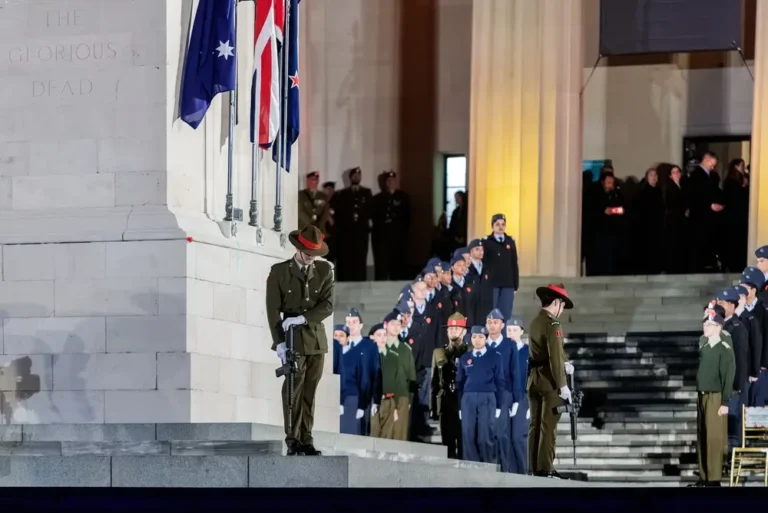
NZ Army Uniform: Orders of Dress, NZMTP Combat Kit Guide
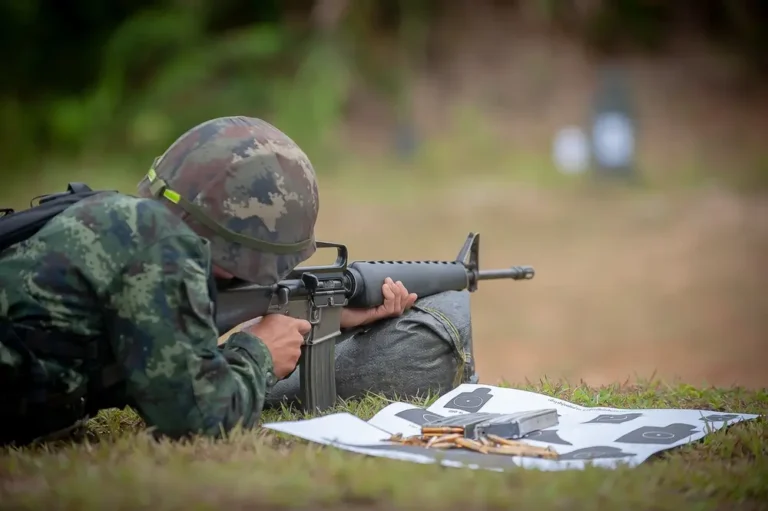
NZ Army Ranks: Full Order, Insignia and Service Equivalents