The New Zealand Army is the land service of the New Zealand Defence Force (NZDF), and it is smaller than most people expect. Around 6,438 Regular and Reserve personnel carry a workload that runs from disaster response at home to peacekeeping in South Sudan. If you are weighing up whether Army service suits you, understanding what the force actually is, and what it actually does, matters more than any recruitment slogan.
This article covers the Army’s role, current strength, structure, equipment, daily work, deployments and history. For the application process and entry criteria, separate guides cover how to join the NZ Army and NZ Army entry requirements, along with dedicated pages on ranks, pay and uniform.
 NZDF Recruitment · Aptitude & Selection 2026From curious to candidate.
Selection opens with a timed cognitive assessment. Here is exactly how to prepare for it.
The New Zealand Army today
The NZDF describes the NZ Army as a world-class, combat ready force that is modern, agile and highly adaptive. Its stated mission is to provide land forces that are trained, led and equipped to win as part of an Integrated Defence Force. That last phrase matters: the Army does not operate as a standalone service but as the land component of a joint force.
Modern equipment and technology are used to improve training, sharpen decision making and optimise capability. The Army also emphasises being well-equipped to operate in diverse environments with precise effect, which reflects a light, deployable posture rather than a heavy armoured one.
Ngāti Tūmatauenga and Army identity
The NZDF presents the service as Ngāti Tūmatauenga, the New Zealand Army. The tribal identity was received in 1994, linking the institution’s modern identity with Māori cultural tradition.
Culture is expressed through four values: Tū Kaha (courage), Tū Tika (commitment), Tū Tira (comradeship) and Tū Maia (integrity). The Army describes its people as coming from all walks of life and sharing a strong sense of what it means to be Kiwi. Tū Kaha and Tū Tika show up in how soldiers are expected to perform under pressure; Tū Tira and Tū Maia shape how teams hold together and how individuals are held to account. These are not decorative slogans within the organisation, they are referenced in training, reporting and command decisions.
What the Army does for New Zealand and its partners
The core work of the NZDF is to conduct military operations and to maintain military capability ready for use when the Government needs it. Preparation and availability of a credible, effective armed force is described as the NZDF’s top priority.
Government of New Zealand information sets out the wider roles clearly. The NZDF defends New Zealand’s sovereignty, discharges obligations as an ally of Australia, contributes to or leads peace and security operations in the South Pacific, makes a credible contribution to peace and security in the Asia-Pacific region, protects wider interests by supporting international peace and the international rule of law, and contributes to whole-of-government work in resource protection, disaster relief and humanitarian assistance.
Domestic and regional assistance is a real part of the job, not an afterthought. Army skills and equipment are used to help communities at home, in neighbouring regions and further afield. For many soldiers, a civil defence callout or a humanitarian task in the Pacific will be the most visible work they do in a given year.
The Army within the NZDF
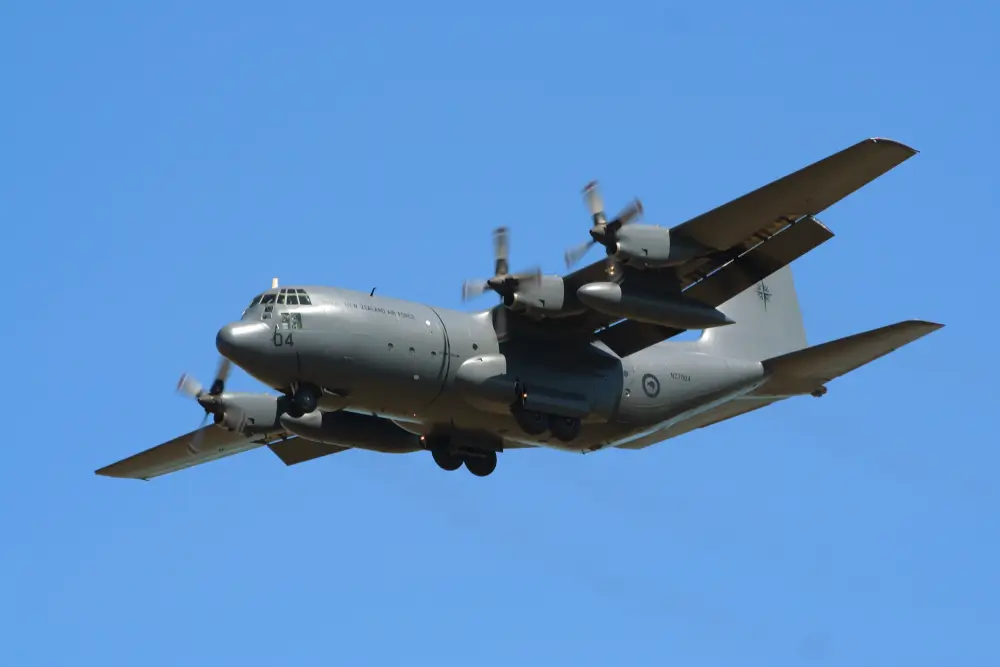
The NZDF is made up of three services: the Royal New Zealand Navy (RNZN), the New Zealand Army and the Royal New Zealand Air Force (RNZAF), supported by joint and other defence components. The Army provides land power; the RNZN provides maritime capability; the RNZAF provides air transport, utility helicopter and maritime patrol capability.
That division is less rigid in practice than on paper. The Army describes its connections extending beyond its own service to the Navy and Air Force, as well as to other government and non-government agencies. A soldier’s day can start on a local Army base, on a naval warship at sea, or in the South Pacific as part of an Air Force deployment.
Air and sea assets matter to soldiers because they determine how quickly and how far the Army can move. The table below shows the RNZAF fleet, which includes the P-8A Poseidon surveillance aircraft, the NH90 medium utility helicopter and the C-130 Hercules cargo fleet that carries Army personnel and stores on operations.
| Aircraft Type | Quantity | Role |
|---|---|---|
| Augusta Westland A109 | 5 | Light Utility Helicopter |
| NH90 | 8 | Medium Utility Helicopter |
| SH-2G(I) Seasprite | 8 | Maritime Helicopter |
| King Air KA350 | 4 | Commuter Aircraft |
| Lockheed C-130 Hercules | 5 | Cargo Aircraft |
| Boeing 757-2K2 | 2 | Passenger and Freight Configuration |
| Boeing P-8A Poseidon | 4 | Surveillance Aircraft |
| T-6C Texan II | 11 | Training Aircraft |
Senior command sits above all three services. Air Marshal Tony Davies is Chief of Defence Force, and Major General Rose King is Chief of Army, with Brigadier Jason Dyhrberg as Land Component Commander.
NZ Army size and personnel
Official NZDF figures give the clearest picture of Army strength. As at 30 November 2025, the headcount was as follows.
| FORCE TYPE | HEADCOUNT |
|---|---|
| REGULAR FORCE | 4,358 |
| RESERVE FORCE | 2,080 |
| TOTAL | 6,438 |
Gender breakdown of the Regular Force at the same date shows the following distribution.
| GENDER | HEADCOUNT |
|---|---|
| female | 640 |
| male | 3,718 |
| Total | 4,358 |
These numbers cover uniformed Army personnel only. The Army also employs civilians in specialist and corporate roles that do not require deployment to an operational environment, and the NZDF notes that this work is essential to the service.
Set against the wider organisation, the Army is a major component but not the whole force. Total NZDF employment reached 15,383 people in the year ended June 2024, counting Regular Force, Reserve Force and civilian personnel across all three services. The Navy, Air Force and joint elements make up the balance.
New Zealand’s defence budget for 2026 is put at $2,455,949,332 USD by Global Firepower, an external index that uses its own methodology and some estimates. It is a useful order of magnitude rather than an official appropriation figure.
NZ Army structure: brigades, regiments and corps
The Army is built around a brigade construct, supported by an enabling formation-level Training and Doctrine organisation. Within that framework sit infantry, cavalry, field artillery, combat engineer, signals and logistics units. In plain terms: the combat arms that close with an objective, the supporting arms that give them firepower and mobility, and the logistics chain that keeps both going.
Special operations sit apart. The Army includes the NZ Special Operations Component Command, which comprises the 1st New Zealand Special Air Service Regiment. The NZSAS is New Zealand’s named special operations unit, and Colonel Sean Bolton holds the Special Operations Component Commander role.
Camps and establishments give the structure a physical shape. Papakura Military Camp hosts the 1st New Zealand Special Air Service Regiment. Waiouru Military Camp is primarily associated with recruit training, so most new soldiers will pass through it. Linton is the largest Army camp overall, and Burnham is the largest in the South Island. Defence House in Wellington serves as headquarters.
NZDF Recruitment · Aptitude & Selection 2026From curious to candidate.Selection opens with a timed cognitive assessment. Here is exactly how to prepare for it.
What a New Zealand soldier does day to day
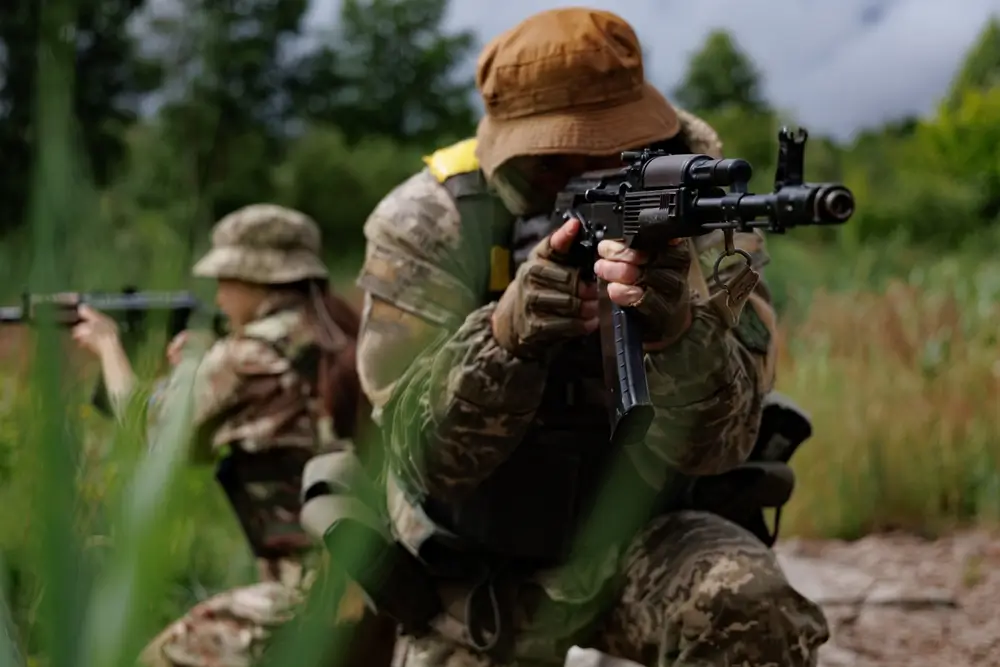
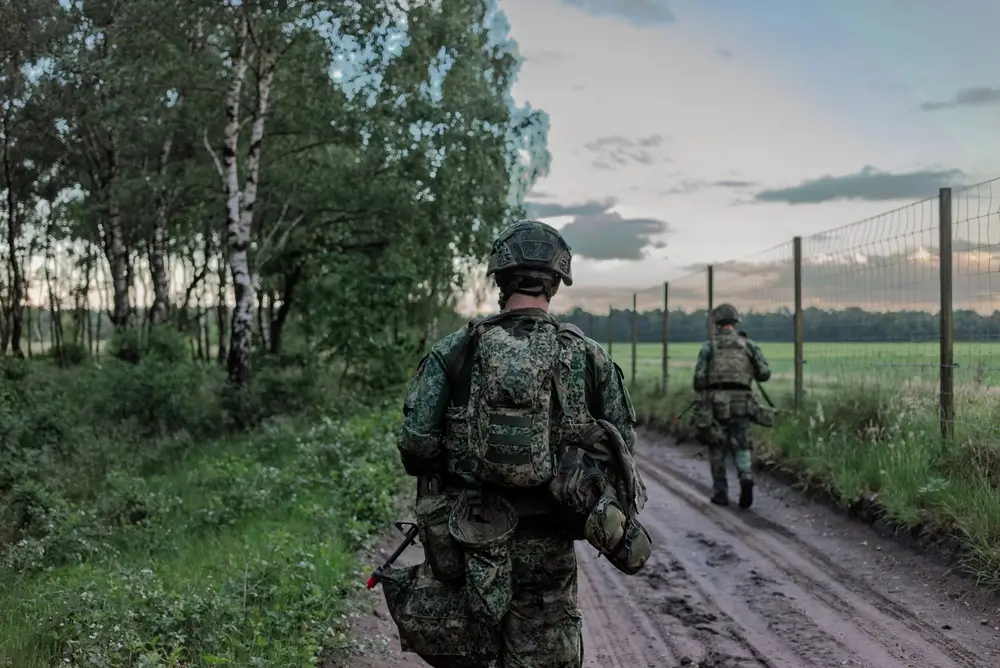
Army people are trained in skills specific to their trade as well as military skills applicable to their role, including planning, leadership and command. They serve on and support operational deployments and training, both in New Zealand and around the world.
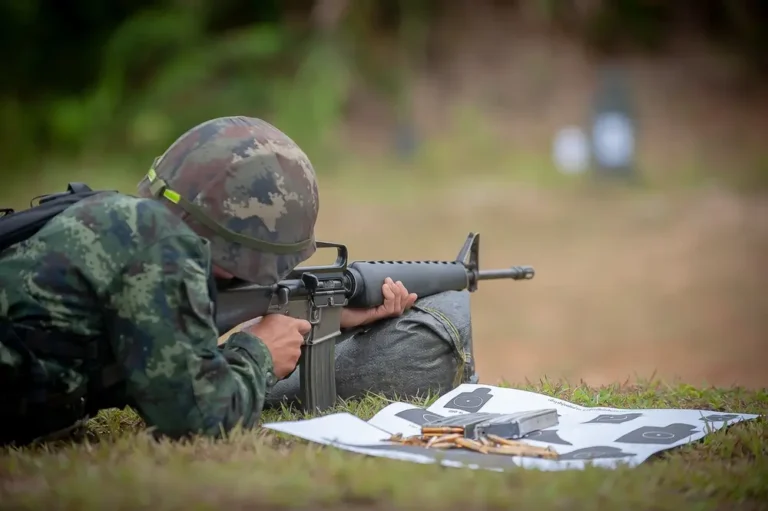
Infantry work gives a concrete example of the routine. Reserve infantry training covers weapon handling including live firing, navigation, first aid, fieldcraft and survival training, while building physical fitness, strength, endurance and stamina. Most of it happens outdoors, in close-knit teams. The IW MARS-L is the individual weapon soldiers train on, and weapon handling with the IW MARS-L is a foundation skill across combat roles.
Not every role is a combat role. Logistics specialists make sure soldiers have enough equipment and supplies to complete a task, covering ammunition, fuel, spare parts and clothing. Medics in the Royal New Zealand Army Medical Corps provide medical support in both battlefield and field hospital environments. Ammunition management, signals and engineering trades follow the same pattern: a civilian-recognisable skill set applied under military conditions.
As careers progress, the emphasis shifts. Junior soldiers focus on personal and section skills; senior ranks take on planning, leadership and command responsibility. Rank structure runs from Private through to Warrant Officer Class One on the non-commissioned side, and from Second Lieutenant to Lieutenant General for commissioned officers.
Army capabilities, equipment and modernisation
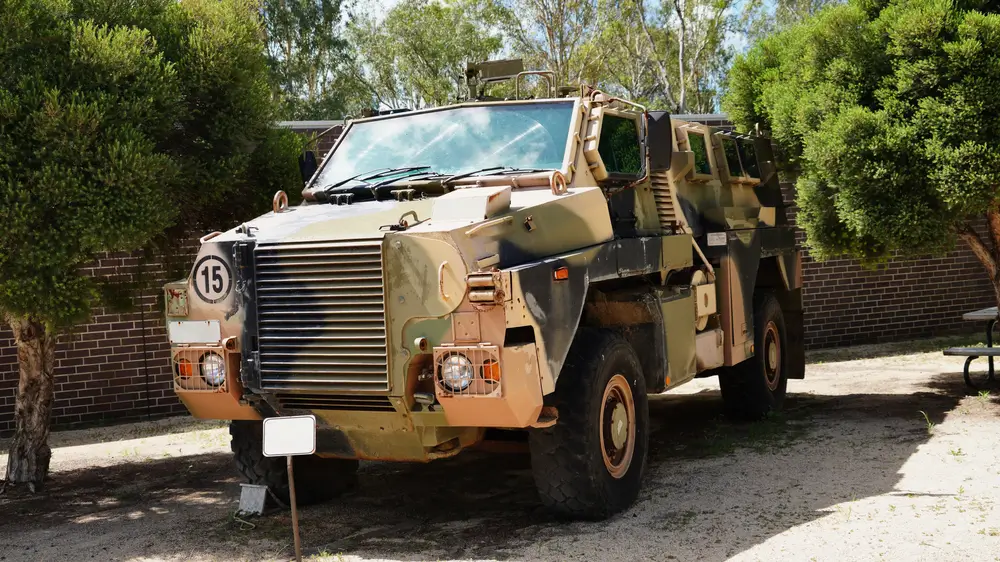
The Army’s fleet is built for light combat and mobility rather than heavy armour. The table below lists the main categories.
| Category | Specific Vehicles/Equipment |
|---|---|
| Light Skin and Lightly Armoured Vehicles | Bushmaster vehicle, New Zealand Light Armoured Vehicle (NZLAV) |
| Heavy Weapons | Towed 105mm howitzers |
| Bridging Systems | Wheeled Rapidly Emplaced Bridging Systems (REBS) on MAN support vehicle flat rack |
| Medium to Heavy Operational Vehicles | MAN HX60 (6 tonne), HX 58 (9 tonne), and HX77 (15 tonne) variants |
The NZLAV, based on the LAV III, is the Army’s main armoured mobility platform, with the Bushmaster providing protected patrol capability. Global Firepower’s 2026 assessment lists no tanks for New Zealand, alongside 3,378 land vehicles and 31 towed artillery pieces. That absence is a deliberate consequence of the light combat posture, not a gap that shows up in day-to-day operations for most soldiers.
Modernisation is ongoing. Army reporting and recent media coverage point to continuing updates in training, operational readiness and emerging drone capabilities, along with new utility vehicles entering service.
Training, readiness and Army culture
The NZDF describes itself as trained, equipped and ready to respond every hour of the day, every day of the year. Readiness is not a state you reach once; it is maintained through continuous training, modern equipment, exercises and capability updates.
Exercises test that claim. NZDF reporting describes Army stability and security training in Whanganui as a major exercise simulating a security scenario in the Pacific, which reflects where New Zealand expects to be called on most often.
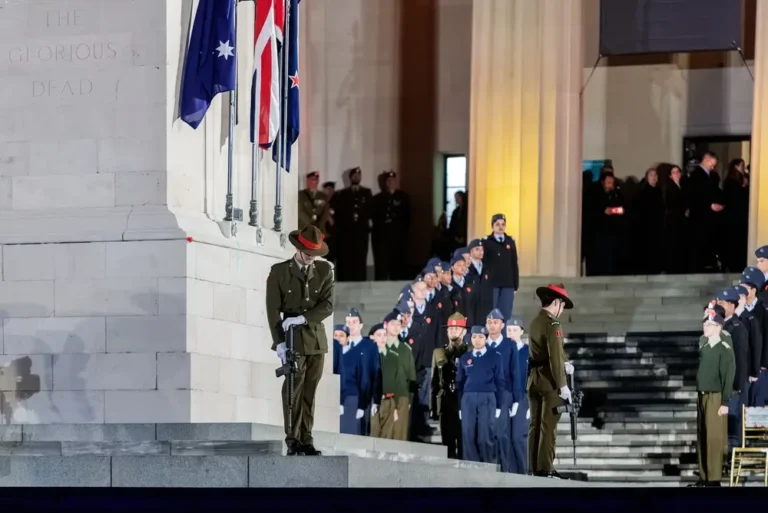
Culture and readiness are linked explicitly. Tū Kaha, Tū Tika, Tū Tira and Tū Maia are the reference points the Army returns to when judging whether its people are ready, and they are reinforced through ceremonial occasions as much as through field training. Recent Army News coverage has included the consecration and presentation of the Colours for 2nd/1st Battalion RNZIR on behalf of King Charles III, and the farewell to Tā Bom Gillies, the last 28 (Maori) Battalion veteran, at his tangihanga in Rotorua.
Deployments and international partnerships
On average, the NZDF has about 200 to 250 personnel deployed overseas each year, according to parliamentary audit reporting. That is a small footprint spread across a wide geography.
| Country | Command |
|---|---|
| Cook Islands | New Zealand Mutual Assistance Program |
| Solomon Islands | |
| South Korea | United Nations Command & Military Armistice Commission |
| Iraq | Combined Joint Task Force – Operation Inherent Resolve, United States Air Force 609th Air Operations Center |
| Qatar | |
| Bahrain | Combined Task Force 150 |
| Israel | United Nations Truce Supervision Organization |
| Syria | |
| Jordan | Operation Gallant Phoenix |
| Egypt | Multinational Force and Observers |
| South Sudan | United Nations Mission in South Sudan |
| Europe | Operation Tieke |
Australia is the closest partner. Australians and New Zealanders have fought alongside each other since Australians enlisted in the New Zealand land wars between 1845 and 1864, and combined forces operated together in both world wars, Vietnam and many later deployments. That relationship produced the term ANZAC, originally standing for Australian and New Zealand Army Corps, formed in the First World War and revived in the Second. Bilateral work today aims at better training, readiness and interoperability, and Anzac Day on 25 April remains the Army’s anniversary.
Beyond the Tasman, the Army’s international engagement has included assistance to Ukraine, alongside exercises and other overseas activities.
The Army Reserve and the wider workforce
The Army Reserve Force is the part-time component of the Army. Reserve soldiers and officers supplement full-time Regular Force units on local and international operations, and in recent years reservists have supported international and domestic disaster relief, domestic civil service, Scott Base in Antarctica, international peacekeeping and training, and combat operations.
If you have seen the term Territorial Force, that is the former name for the same component. The Territorial Force was formed in 1910 as the military reserve, and the current NZDF term is Army Reserve Force.
Commitment is manageable alongside civilian work. Reserve personnel generally train one weekend per month, with the occasional weekday evening, and a minimum expected commitment of 20 days per year. Part-time soldiers come from all walks of life, from students to lawyers to tradespeople. Some want something different from their day job; others bring civilian expertise into a military setting. Reserve infantry entry lists an initial daily rate of $252, and Army Officer entry under training is listed at a salary of $69,833 with potential future earnings of $140,000.
Civilian employees complete the picture. They fill specialist and corporate roles that do not require deployment, providing continuity and expertise that uniformed postings cannot always sustain.
A short history of the New Zealand Army
Military tradition traces back to militias established in the 1840s and the Armed Constabulary created in 1867. The military branch of the Constabulary formed the foundation of the professional permanent army in 1886, and the Territorial Force followed in 1910.
After the Second World War, focus shifted to preparing a third Expeditionary Force against potential Soviet threats, and compulsory military training was introduced to staff it. New Zealand’s land forces formally adopted the name New Zealand Army in 1950, established through the New Zealand Army Act 1950 and comprising Army Troops, District Troops and the New Zealand Division. Armour evolved over the same period, from Valentine tanks to M41 Walker Bulldogs, then Centurions, and finally FV101 Scorpions, while coastal artillery regiments were reduced to cadres and fully disbanded by 1967.
Operational history is long. Engagements include the New Zealand Wars, the Second Boer War, the First and Second World Wars, the Malayan Emergency, the Korean War, the Borneo Confrontation, Vietnam, East Timor, the Solomon Islands and Afghanistan. That record explains a lot about the force today: a small army that has consistently deployed alongside larger partners, and has built its structure and training around doing so credibly.
Frequently Asked Questions
What does the New Zealand Army do?
The Army provides trained, led and equipped land forces as part of the Integrated Defence Force. Its wider missions include defending New Zealand’s sovereignty, supporting regional peace and security, assisting communities during disasters and humanitarian events, and supporting allies and partners.
How many soldiers does the NZ Army have?
The latest official Army headcount is 6,438, made up of 4,358 Regular Force members and 2,080 Reserve members as at 30 November 2025. That figure covers the Army only, not the entire NZDF workforce, which also includes the Navy, Air Force and civilian staff.
How big is the New Zealand Defence Force compared with the Army?
The NZDF is a 15,000-plus organisation once Regular Force, Reserve Force and civilian personnel are counted. The Army’s Regular and Reserve headcount of 6,438 makes it a major component of that total, but not the whole force.
How is the New Zealand Army structured?
The Army is organised around a brigade construct with an enabling, formation-level Training and Doctrine organisation. Its capabilities cover infantry, cavalry, field artillery, combat engineers, signals and logistics, and the wider structure includes the NZ Special Operations Component Command with the 1st New Zealand Special Air Service Regiment.
How does the New Zealand Army fit alongside the RNZN and RNZAF?
The Army is the land service within the three-service NZDF, alongside the Royal New Zealand Navy and Royal New Zealand Air Force. It works with the RNZN, RNZAF and other government and non-government agencies, with the Navy providing maritime capability and the Air Force providing air, transport and maritime patrol capability.
What is the NZ Army called, and why is it not styled Royal?
The NZDF presents it as Ngāti Tūmatauenga, the New Zealand Army, and New Zealand’s land forces formally adopted the name New Zealand Army in 1950. The Navy and Air Force are Royal services, but the available sources do not give a reason for the Army’s different naming convention, so none should be assumed.
How strong is the New Zealand Army and military?
New Zealand has a small but capable military, and the Army is described as a modern, agile light combat force. Global Firepower’s 2026 review ranks New Zealand 90th out of 145 countries, though that external index relies partly on estimates and is best read alongside official NZDF information.
Does the NZ Army have tanks?
The Global Firepower 2026 assessment lists New Zealand as having no tanks. The Army operates a light combat fleet instead, including the NZLAV and Bushmaster vehicles, supported by towed 105mm howitzers and other systems.
What is the most elite military unit in New Zealand?
The 1st New Zealand Special Air Service Regiment is the country’s named special operations unit, sitting within the NZ Special Operations Component Command. The available sources do not offer a comparative ranking of elite units.
What is the role of the Territorial Army in New Zealand?
The current term is Army Reserve Force, formerly the Territorial Force. It is the part-time component of the Army, supplementing Regular Force units and providing capacity for domestic emergencies, overseas operations, disaster relief, peacekeeping and training.
Next steps
If Army service still appeals after reading this, the practical questions come next: eligibility, fitness standards, trade selection and whether Regular Force or Reserve Force fits your situation. Start with the entry requirements guide, then work through the trade or corps that matches your interests, since the Army’s day-to-day work varies enormously between infantry, logistics, medical and signals roles. The Reserve pathway, at one weekend a month and a 20-day annual minimum, is also a low-risk way to test the fit before committing full-time.
Sources
NZDF Recruitment · Aptitude & Selection 2026From curious to candidate.Selection opens with a timed cognitive assessment. Here is exactly how to prepare for it.
NZDF: New Zealand Defence Force Roles, Services and How to Join
NZ Army Uniform: Orders of Dress, NZMTP Combat Kit Guide