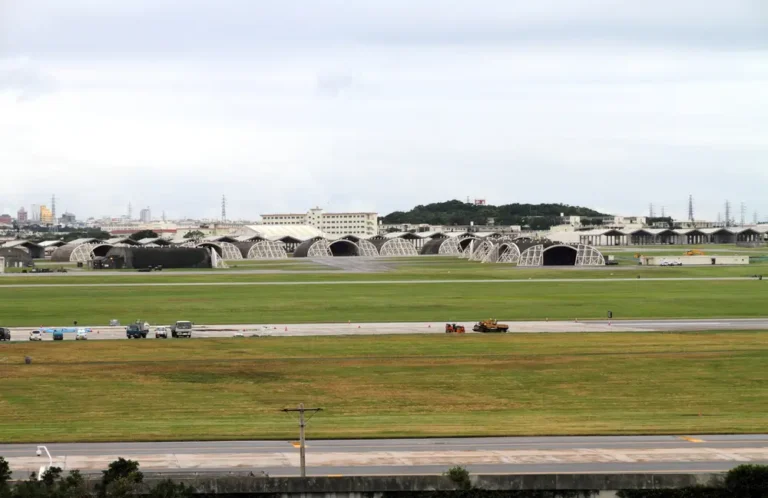
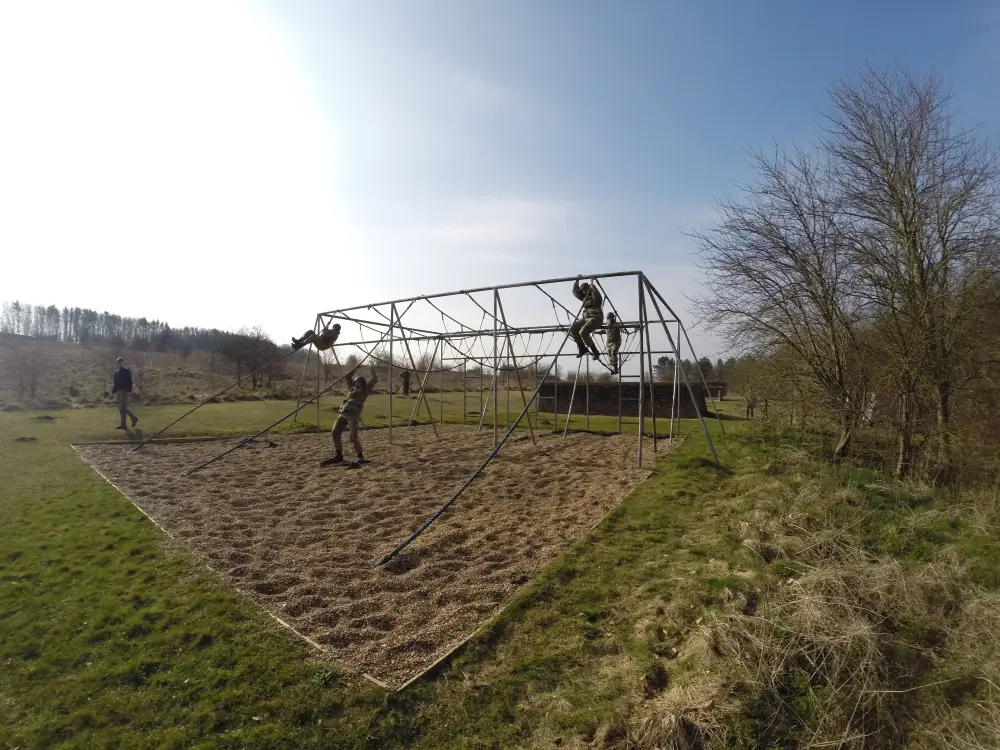
Waiouru is where every New Zealand Army soldier starts. If you are thinking about enlisting, this is the camp you will hear about first, and the one that shapes your first months in uniform. This guide explains what the base is, what happens there, what the conditions are like, and how to make contact before you arrive.
What Waiouru Military Camp means for an Army recruit
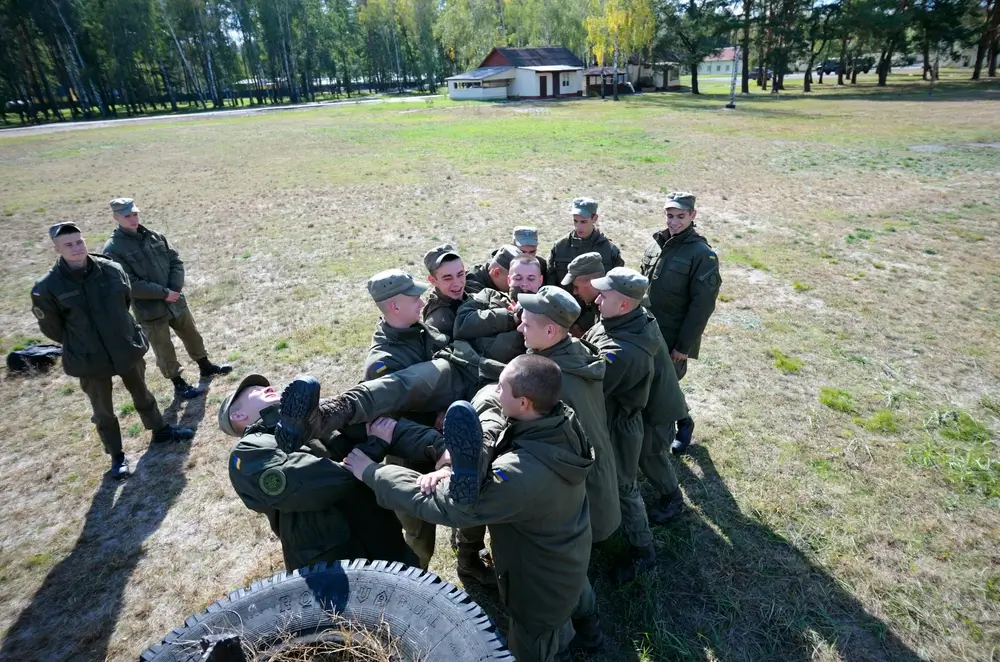
Waiouru Military Camp sits in the central North Island with Mount Ruapehu as its backdrop. The NZDF (New Zealand Defence Force) describes it as the New Zealand Army’s primary training base, and it is best understood that way: not as an address on a map, but as the environment where recruits are trained and developed.
 NZDF Recruitment · Aptitude & Selection 2026First the test, then the camp.
Clear the NZDF aptitude assessment with proper timed practice before you worry about kit lists.
The name Waiouru means “River of the West”. According to the NZDF, the site has a long history as a walking route for Māori, then as an 1880s sheep station, and since the World War II era as an army training area.
Every New Zealand Army soldier completes their initial basic training at The Army Depot in Waiouru. The NZDF states that this initial basic training runs for 16 weeks. Where you are posted afterwards makes no difference to that first step: it happens here.
The Army Depot, Army schools and specialist training
The government chose Waiouru in the 1930s because a local sheep station offered large areas of low-cost open land, plus road and rail access to the coast. It was intended as a training area for the Territorial Forces. Artillery was the first branch of the Army to use the site, and by the outbreak of war in 1939 most of the land had been acquired by the Crown.
The build-up was fast. At the beginning of the winter of 1940, some 800 construction workers built a training camp capable of housing 7,000 Territorial soldiers within six weeks, shifting 450,000 tonnes of earth and erecting 230 buildings by Christmas 1940, supported by 20 km of streets and utility lines. An Armoured Fighting Vehicle School and a Command and Staff School followed in August 1941.
Waiouru also carried the country’s national service programmes. Compulsory Military Training was completed at Waiouru from 1950 to 1958, and balloted national service ran between 1962 and 1972.
Today the camp remains home to The Army Depot and the Army Command School, which includes the Officer Cadet School of New Zealand. It also houses the School of Military Intelligence and Security for the New Zealand Intelligence Corps. Around 500 civilian and military staff are based at the camp, which is the permanent workforce that keeps the training cycle running year round.
The Waiouru Military Training Area
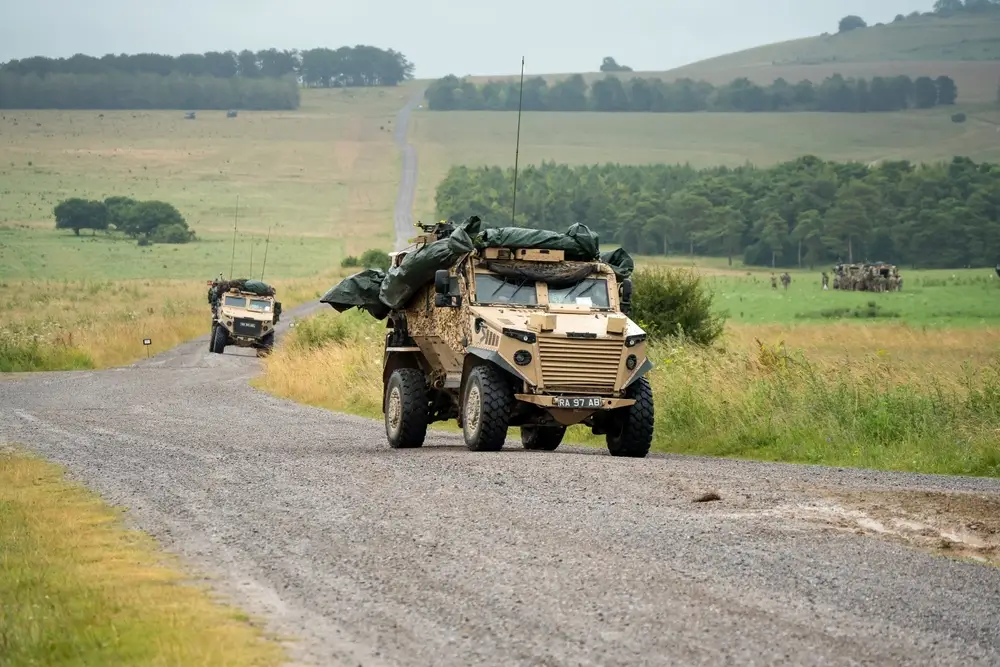
The rugged and challenging environment around the camp is what makes Waiouru useful to the Army. According to the NZDF, the Waiouru Military Training Area is an exceptional area for open and close country training and live firing exercises.
The adjacent training area includes weapons ranges, military manoeuvre and live fire training areas, an urban training facility and a helicopter landing area. These facilities support all three NZDF Services, other government agencies and international partners, so recruits share the ground with a wide mix of units.
On land area, the most authoritative figure available comes from Crown closing submissions filed in the Waitangi Tribunal’s Wai 2180 inquiry, which record the total land incorporated into the Waiōuru Military Exercise Area.
| Category | Acreage |
|---|---|
| Total land in Waiōuru Military Exercise Area | 146,822 acres |
| Total Crown land included | 11, 611 acres |
| Total Māori land compulsorily acquired | 43,437 acres |
| Total European land acquired | 91,774 acres |
That total is roughly 594 square kilometres. The same record shows that a substantial share of the exercise area was Māori land compulsorily acquired, which is why the site features in claims heard under the Treaty of Waitangi process. Recruits will not deal with that history directly during training, but it is part of the ground they train on.
Cold, altitude and the physical demands of the plateau
The Military Training Area sits on the central plateau. High altitude, a cold climate and demanding terrain combine to make physical resilience a real part of daily life here, and recruits are expected to arrive with a solid base of fitness.
Cold is the detail most people underestimate. Reporting by the Waikato Times on Exercise Crete recorded temperatures at Waiouru falling to minus five degrees Celsius before wind chill was taken into account. Field exercises in those conditions mean cold, wet soldiers, with combat service support teams moving transport, ammunition and food out to them.
The terrain adds its own load. Ground that is uneven, exposed and often wet turns routine movement into work, and that is deliberate. Training activities are designed to test and build endurance rather than to keep people comfortable. The armoured vehicles used in exercises, including the LAV, are described by the same reporting as a welcome place to get out of the cold, which tells you something about the weather.
What recruit training looks like at Waiouru
Basic training comes first, and it applies to every new recruit. After that, the wider training area supports live field firing, battle handling exercises, and work in both open and close country.
A recent series of exercises gives a good picture of the scale. More than 300 soldiers from 1st (NZ) Brigade and the Training and Doctrine Group worked through freezing temperatures across live field firing and battle handling activities in the Military Training Area. Exercise Brimstone, a School of Artillery exercise supported by 16th Field Regiment, put junior leaders of the Royal New Zealand Artillery through tactical missions by day and night.
Ten kilometres away, Exercise Vengeance 2 saw Victor Company, 1st Battalion, Royal New Zealand Infantry Regiment, train in close country conditions. According to published accounts of the exercise, it combined aircraft, infantry, surveillance and reconnaissance, snipers, direct fire machine gun sections, signals, medics, intelligence operators and logistics personnel. A third scenario, Exercise Active Edge 2, tested a Combat Service Support Team supplying both of the other exercises.
“We need to be combat ready and able to move at short notice if the New Zealand Government calls on us to assist. It could be combat, or it could be to provide assistance after a cyclone or natural disaster,” said Major Haedyn Jenkinson, Officer Commanding Victor Company.
Jenkinson also noted that the terrain at Waiouru mirrored the range of challenging environments soldiers could expect on overseas operations. That is the underlying logic of the place: train here, and the operational environment feels familiar.
NZDF Recruitment · Aptitude & Selection 2026First the test, then the camp.Clear the NZDF aptitude assessment with proper timed practice before you worry about kit lists.
Facilities that support the recruit experience
Living and recovery facilities matter when the training load is high. The camp has three Messes for soldiers and officers, along with the Eru Brown Gym and a swimming pool.
Published NZDF service hours for the camp include:
- Eru Brown MBE Gymnasium: 5 a.m. to 10 p.m., seven days
- Waiouru Defence Health Centre: 8 a.m. to 4 p.m., Monday to Friday, with an after-hours Duty Medic contact
- Waiouru Defence Dental Centre: 8 a.m. to 4.30 p.m., Monday to Friday
- Psychologist services: 8 a.m. to 4.30 p.m., Monday to Friday
The Defence Health Hub also lists rehabilitation, physiotherapy, social worker, chaplaincy and community support services at the camp. The NZDF has signalled planned upgrades too, including refurbishment of the main mess kitchen, work on the New Zealand Army Marae, the gym and the swimming pool, plus upgrades to potable water treatment and the waste management compound, and capping of the old Waiouru landfill. New buildings are intended to reach high sustainability ratings.
The National Marae and Army identity
The New Zealand Army National Marae, Rongomaraeroa o ngā hau e whā, stands at Waiouru in the Rohe of Ngāti Rangi, Ngāti Tūwharetoa and Mōkai Pātea. It is a central part of the training experience, not an optional extra.
All soldiers pass through the National Marae on their journey to becoming a member of Ngāti Tūmatauenga. The NZDF describes Waiouru as the home of the New Zealand Soldier, Te papa kāinga o ngā hoia o Ngāti Tūmatauenga. Time at the Marae covers the Army’s history, its Kawa and Tikanga, cultural practices, and relationships with local iwi.
One detail explains the outlook well. Unlike many other marae, the Army’s faces the setting sun. As the NZDF puts it, that is symbolic of the Army’s role: while you face the rising sun, we will protect you from any who might come from the darkness behind you.
Graduation and the move into service
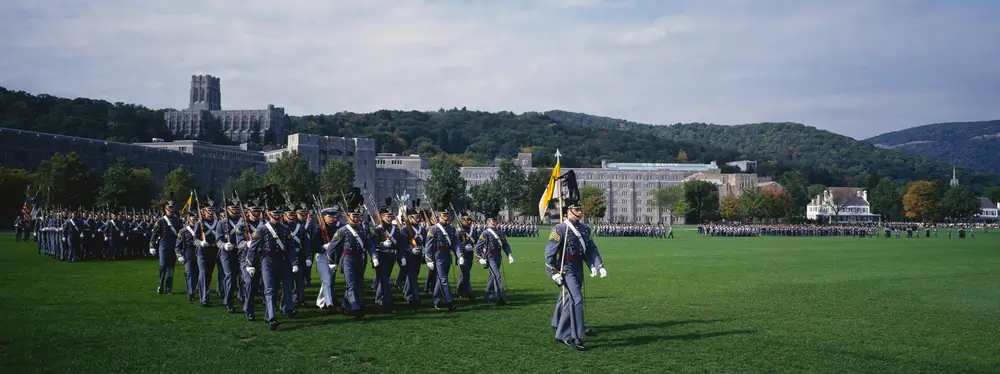
Basic training ends on the drill square, which is used for graduation parades. NZDF imagery shows recruits marching in formation through the arch with Māori carvings and onto the parade ground on graduation day.
Graduation is the point where a recruit becomes a soldier and moves into their service period. For families, it is usually the first chance to see the camp and the plateau conditions their recruit has been describing. Pack for cold weather even in summer.
Practical access and contact details
The camp gate is on Ruapehu Road, off State Highway 1, Waiouru, and it operates 24 hrs, seven days a week. General enquiries go to 06 387 5599, and the camp’s general information line is staffed 8 a.m. to 4.30 p.m., Monday to Friday.
Note the limits of what is published. The official access listing gives the gate location and phone contact rather than a separate postal address or postcode, so confirm mailing details with the camp directly. NZQA lists Waiouru Military Camp as Education Organisation number 4444, which reflects its role as a training provider.
Because the site includes weapons ranges and live fire training areas, do not assume that the 24 hour gate means open public access to the Military Training Area. Call ahead before planning any visit.
Next step: if you are considering enlisting, talk to a Defence Careers adviser about entry requirements and intake dates, and start building the aerobic base and load-carrying fitness that plateau conditions demand.
Frequently Asked Questions
How big is Waiouru Military Camp?
The strongest available figure is 146,822 acres for the Waiōuru Military Exercise Area, roughly 594 square kilometres. That covers the wider training and exercise land rather than the built-up camp footprint.
What units are based at Waiouru?
Waiouru is home to The Army Depot and the Army Command School, including the Officer Cadet School of New Zealand, plus the School of Military Intelligence and Security. The wider camp supports personnel from across the NZDF and partner organisations.
What is the biggest Army base in New Zealand?
The available sources do not rank New Zealand Army bases by size. What they do state clearly is that Waiouru is the Army’s primary training base and the home of The Army Depot, which is the more accurate description.
Is Waiouru Military Camp open to the public?
The official access listing gives gate hours of 24 hours a day, seven days a week, but it does not say the active training area is open for general public access. With weapons ranges and live fire areas on site, contact the camp before attempting to visit.
What is Waiouru Military Camp used for?
It is the Army’s primary recruit training base. The surrounding area supports open and close country training, live firing, military manoeuvre, urban training, helicopter operations and exercises involving all three NZDF Services.
What is the most elite military unit in NZ?
The sources used for this article do not identify or rank elite units, so no claim is made here. Questions about specialist units are best put to Defence Careers directly.
What is the Army base Waiouru?
Waiouru Military Camp is the central training environment where New Zealand Army recruits complete their initial basic training. It also hosts the Army Command School, the Officer Cadet School of New Zealand and other specialist training functions.
How big is Waiouru military training area?
The recorded land area for the Waiōuru Military Exercise Area is 146,822 acres, approximately 594 square kilometres, covering the wider exercise ground rather than the camp buildings.
Where is Waiouru Military Camp?
It is in the central North Island. The official listing gives the gate location as Ruapehu Road, off State Highway 1, Waiouru. No separate postal address or postcode is published, so direct general enquiries to 06 387 5599.
What training happens at Waiouru?
All new Army recruits complete basic training here. The wider area is also used for open and close country training, live field firing, battle handling, military manoeuvre, urban training and multi-unit exercises.
Sources
NZDF Recruitment · Aptitude & Selection 2026First the test, then the camp.Clear the NZDF aptitude assessment with proper timed practice before you worry about kit lists.