

A beep test score only means something once you compare it against people of the same age and sex. Level 8 is a strong result for a 45-year-old man and an ordinary one for a 20-year-old woman’s male peers. This guide gives the age-based norms for men, women and youth, explains how to read a level/shuttle result, and shows where the general tables stop being useful, which is the moment you start chasing an NZDF pass mark.
How to read a beep test score

A beep test result is written as level/shuttle. The number before the separator is the level you reached. The number after it is how many shuttles you completed at that level. A score of 9/4 means Level 9 with four shuttles completed before you dropped out.
 NZDF Recruitment · Aptitude & Selection 2026Train the test you cannot run.
The cognitive assessment gets far less preparation than the beep test does. Give it the same discipline.
Boundary values in the normative tables are inclusive. If the Good range for your age group starts at 8/6, a score of exactly 8/6 counts as Good, not Average.
There is no single good beep test score that applies to everyone. The tables split by age and by sex because both change what a realistic result looks like. Comparing only the level number, without the shuttle count, will often push you into the wrong band.
One more caution before you read too much into a number. The beep test measures aerobic capacity under specific conditions, and footwear, the running surface, temperature and how familiar you are with the format all move the result. Treat the normative data as a guide, not a verdict.
Good beep test scores for men by age

The male table below covers ages 12 and up in broad bands. For men aged 18–25, Good sits between 10/2 and 11/5, and anything above 13/10 is rated Excellent. The Good band drops to 8/10–10/6 at 26–35, then 7/8–8/9 at 36–45, 6/7–7/7 at 46–55, 5/7–6/8 at 56–65 and 4/9–6/1 over 65.
| Age | very poor | poor | fair | average | good | very good | excellent |
|---|---|---|---|---|---|---|---|
| 12-13 yrs | < 3/3 | 3/3-5/1 | 5/2-6/4 | 6/5-7/5 | 7/6-8/8 | 8/9-10/9 | > 10/9 |
| 14-15 yrs | < 4/7 | 4/7-6/1 | 6/2-7/4 | 7/5-8/9 | 8/10-9/8 | 9/9-12/2 | > 12/2 |
| 16-17 yrs | < 5/1 | 5/1-6/8 | 6/9-8/2 | 8/3-9/9 | 9/10-11/3 | 11/4-13/7 | > 13/7 |
| 18-25 yrs | < 5/2 | 5/2-7/1 | 7/2-8/5 | 8/6-10/1 | 10/2-11/5 | 11/6-13/10 | > 13/10 |
| 26-35 yrs | < 5/2 | 5/2-6/5 | 6/6-7/9 | 7/10-8/9 | 8/10-10/6 | 10/7-12/9 | > 12/9 |
| 36-45 yrs | < 3/8 | 3/8-5/3 | 5/4-6/4 | 6/5-7/7 | 7/8-8/9 | 8/10-11/3 | > 11/3 |
| 46-55 yrs | < 3/6 | 3/6-4/6 | 4/7-5/5 | 5/6-6/6 | 6/7-7/7 | 7/8-9/5 | > 9/5 |
| 56-65 yrs | < 2/7 | 2/7-3/6 | 3/7-4/8 | 4/9-5/6 | 5/7-6/8 | 6/9-8/4 | > 8/4 |
| > 65 yrs | < 2/2 | 2/2-2/5 | 2/6-3/7 | 3/8-4/8 | 4/9-6/1 | 6/2-7/2 | > 7/2 |
Read across your own row rather than eyeballing the level. A 30-year-old man who stops at 8/9 is at the very top of Average; two more shuttles and he is in the Good band.
Good beep test scores for women by age
For women aged 18–25, Good runs from 8/7 to 10/1, with Excellent above 12/7. The band moves to 7/8–9/4 at 26–35, 6/3–7/4 at 36–45, 5/4–6/2 at 46–55, 4/5–5/6 at 56–65 and 3/5–4/3 over 65.
| Age | very poor | poor | fair | average | good | very good | excellent |
|---|---|---|---|---|---|---|---|
| 12-13 yrs | < 2/6 | 2/6-3/5 | 3/6- 5/1 | 5/2-6/1 | 6/2-7/4 | 7/5-9/3 | > 9/3 |
| 14-15 yrs | < 3/3 | 3/3-5/2 | 5/3-6/4 | 6/5-7/5 | 7/6-8/7 | 8/8-10/7 | > 10/7 |
| 16-17 yrs | < 4/2 | 4/2-5/6 | 5/7-7/1 | 7/2-8/4 | 8/5-9/7 | 9/8-11/10 | > 11/10 |
| 18-25 yrs | < 4/5 | 4/5-5/7 | 5/8-7/2 | 7/3-8/6 | 8/7-10/1 | 10/2-12/7 | > 12/7 |
| 26-35 yrs | < 3/8 | 3/8-5/2 | 5/3-6/5 | 6/6-7/7 | 7/8-9/4 | 9/5-11/5 | > 11/5 |
| 36-45 yrs | < 2/7 | 2/7- 3/7 | 3/8- 5/3 | 5/4-6/2 | 6/3-7/4 | 7/5-9/5 | > 9/5 |
| 46-55 yrs | < 2/5 | 2/5-3/5 | 3/6-4/4 | 4/5-5/3 | 5/4-6/2 | 6/3-8/1 | > 8/1 |
| 56-65 yrs | < 2/2 | 2/2-2/6 | 2/7-3/5 | 3/6-4/4 | 4/5-5/6 | 5/7-7/2 | > 7/2 |
| > 65 yrs | < 1/5 | 1/5-2/1 | 2/2-2/6 | 2/7-3/4 | 3/5-4/3 | 4/4-5/7 | > 5/7 |
The same score lands differently across the two tables. A result of 9/5 is Average for a man aged 18–25 but Good for a woman in the same band, which is exactly why the level number alone tells you very little.
Youth norms: ages 9 to 17
Teenagers should not be measured against the adult chart. Youth norms are built on single-year age groups, and they come from a much larger international dataset: Tomkinson, Lang, Léger and colleagues published 20 m shuttle run values from 1,142,026 children and youth across 50 countries in the British Journal of Sports Medicine in May 2016.
| Age | very poor | poor | fair | average | good | very good | excellent |
|---|---|---|---|---|---|---|---|
| 9 yrs | < 2/2 | 2/2-3/4 | 3/5-4/4 | 4/5-5/4 | 5/5-6/4 | 6/5-7/7 | > 7/7 |
| 10 yrs | < 2/2 | 2/2-3/5 | 3/6-4/5 | 4/6-5/5 | 5/6-6/6 | 6/7-8/1 | > 8/1 |
| 11 yrs | < 2/2 | 2/2-3/6 | 3/7-4/7 | 4/8-5/8 | 5/9-6/10 | 7/1-8/6 | > 8/6 |
| 12 yrs | < 2/2 | 2/2-3/8 | 4/1-5/1 | 5/2-6/4 | 6/5-7/6 | 7/7-9/3 | > 9/3 |
| 13 yrs | < 2/4 | 2/4-4/2 | 4/3-5/6 | 5/7-6/9 | 6/10-8/3 | 8/4-10/1 | > 10/1 |
| 14 yrs | < 2/6 | 2/6-4/5 | 4/6-6/1 | 6/2-7/4 | 7/5-8/9 | 8/10-10/9 | > 10/9 |
| 15 yrs | < 2/7 | 2/7-4/7 | 4/8-6/3 | 6/4-7/7 | 7/8-9/2 | 9/3-11/3 | > 11/3 |
| 16 yrs | < 2/8 | 2/8-4/9 | 5/1-6/6 | 6/7-7/10 | 8/1-9/6 | 9/7-11/8 | > 11/8 |
| 17 yrs | < 3/1 | 3/1-5/2 | 5/3-6/8 | 6/9-8/3 | 8/4-9/9 | 9/10-12/1 | > 12/1 |
| Age | very poor | poor | fair | average | good | very good | excellent |
|---|---|---|---|---|---|---|---|
| 9 yrs | < 2/2 | 2/2-3/1 | 3/2-3/8 | 4/1-4/6 | 4/7-5/4 | 5/5- 6/6 | > 6/6 |
| 10 yrs | < 1/7 | 1/7-3/1 | 3/2- 3/8 | 4/1-4/7 | 4/8-5/6 | 5/7- 6/8 | > 6/8 |
| 11 yrs | < 1/6 | 1/6-2/8 | 3/1- 3/8 | 4/1-4/8 | 4/9-5/8 | 5/9-7/1 | > 7/1 |
| 12 yrs | < 1/5 | 1/5-2/8 | 3/1-4/1 | 4/2-4/9 | 5/1-5/9 | 6/1-7/3 | > 7/3 |
| 13 yrs | < 1/5 | 1/5-3/1 | 3/2-4/1 | 4/2-5/1 | 5/2-6/1 | 6/2- 7/5 | > 7/5 |
| 14 yrs | < 1/5 | 1/5-3/1 | 3/2-4/1 | 4/2-5/1 | 5/2-6/2 | 6/3- 7/6 | > 7/6 |
| 15 yrs | < 1/5 | 1/5-3/12 | 3/2-4/2 | 4/3-5/2 | 5/3-6/3 | 6/4-7/7 | > 7/7 |
| 16 yrs | < 1/5 | 1/5-3/1 | 3/2- 4/2 | 4/3-5/2 | 5/3-6/3 | 6/4-7/8 | > 7/8 |
| 17 yrs | < 1/5 | 1/5-3/1 | 3/2-4/2 | 4/3-5/3 | 5/4-6/4 | 6/5- 7/9 | > 7/9 |
Schools use the same 20 m shuttle run, usually called the PACER test, but they do not score it against these percentile bands. The PACER test is graded against age- and sex-specific healthy fitness zones set by The Cooper Institute’s FitnessGram program. As rough guidance, a 14-year-old boy typically needs around Level 6 to reach the healthy zone, with Level 8 and above counting as strong, while a 14-year-old girl sits nearer Level 4 to 5. The cut points rise each year, so for a school assessment the published FitnessGram healthy fitness zones for that exact age and sex are the numbers that matter, not the adult chart.
NZDF Recruitment · Aptitude & Selection 2026Train the test you cannot run.The cognitive assessment gets far less preparation than the beep test does. Give it the same discipline.
Why a good score changes with age
Beep test norms are not measured directly for every age group. They follow from VO2 max norms, because the multi-stage fitness test is an estimate of maximal oxygen uptake rather than a direct measurement of it.
Two pieces of research make the translation possible. The Ramsbottom equation, published by Ramsbottom and colleagues in 1988, estimates VO2 max in ml/kg/min as roughly 11.5 plus 3.5 times the final level, which puts Level 9 at about 43 and Level 11 at about 50. The Cooper Institute’s VO2 max norms, published in ACSM’s Guidelines for Exercise Testing and Prescription, then set the percentile cutoffs for what counts as average and good at each age and sex.
Run the Ramsbottom equation across those VO2 max norms and you get the level-based chart below. Values are rounded to the nearest full level, so use it as a quick reference rather than a precise cutoff.
| Age | Men: Average | Men: Good | Women: Average | Women: Good |
|---|---|---|---|---|
| 20-29 | Level 7 to 8 | Level 10 | Level 5 | Level 7 to 8 |
| 30-39 | Level 7 | Level 9 | Level 5 | Level 7 |
| 40-49 | Level 6 | Level 8 to 9 | Level 4 | Level 6 |
| 50-59 | Level 5 | Level 7 to 8 | Level 3 to 4 | Level 5 to 6 |
| 60-69 | Level 4 | Level 6 to 7 | Level 3 | Level 5 |
Keep the limits in view. A beep test VO2 max estimate is pushed around by running efficiency, familiarity with the format, anaerobic capacity, motivation, temperature, shoes and the surface. That is also why the beep test is not interchangeable with the Cooper test: the Cooper test is self-paced over a fixed 12 minutes, while the beep test is paced externally by the audio until you fail.
Use the same 20-metre protocol every time

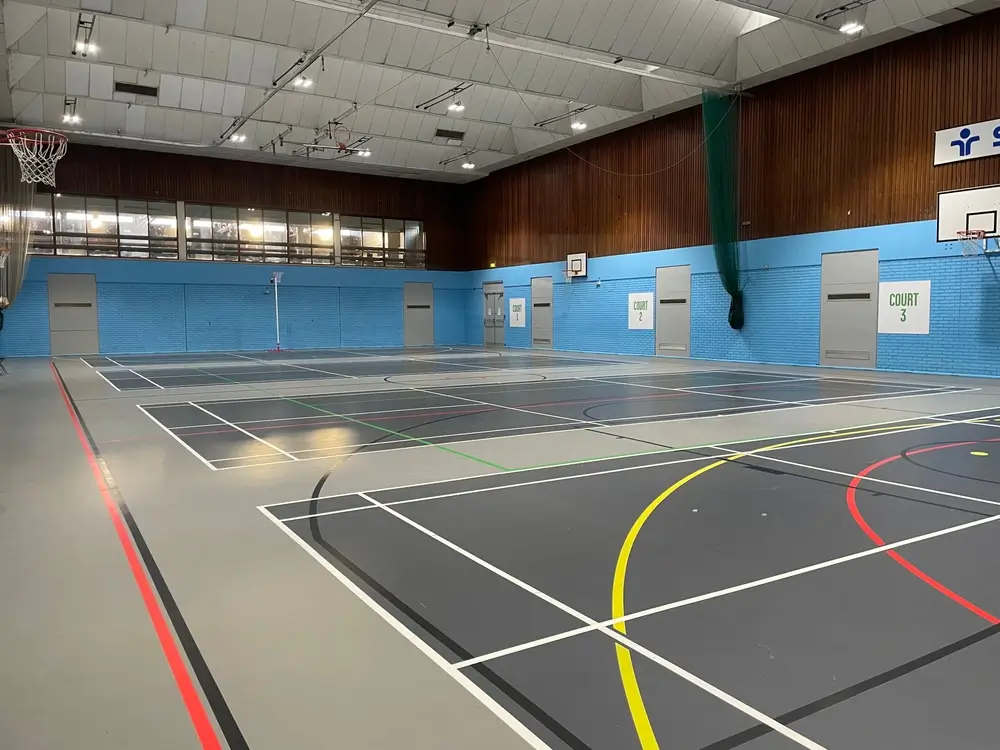
Comparing yourself to a table only works if you ran the standard version of the test. Two markers go exactly 20 metres apart on a flat, non-slip surface. You run between them in time with the audio, touching or crossing the line with a foot before or as the beep sounds.
The standard MSFT (multi-stage fitness test) format runs to 21 levels. It opens at a gentle 8.5 km/h and the required speed rises by 0.5 km/h at each level as the gap between beeps shortens. At Level 1 you have around 9 seconds to cover 20 metres; by Level 13 you have under 5 seconds, which is close to a flat sprint.
Miss a line and you get a warning, and you have to turn immediately and catch the pace back within the next two shuttles. Miss the marker before the beep on two consecutive shuttles and the test is over. Your score is the last level and shuttle you completed.
NZDF and Force Fit: check the official pass bar
The tables above are population norms. They are not tied to any job, sport or employment standard, and a Good rating for your age does not mean you have met a recruitment requirement.
For the New Zealand Defence Force, the number that counts is the one published for the assessment you are attending. The NZDF Defence Careers Assessment Day standards set the Army beep test minimum at 7.10 for men and 5.09 for women. Requirements are role-specific, so confirm the level for the trade you are applying to, and check the current Force Fit criteria before you assume a result passes.
The practical approach is simple: use the age norms to see where your aerobic capacity sits today, then train towards the official bar with a margin, not towards the exact minimum.
Improve your score before the assessment
Steady 5 km runs and long treadmill sessions do not match the demands of this test, because the beep test relies on sudden pivots and a heart rate that keeps climbing. You want both a solid aerobic base and a usable anaerobic peak.
Build high-intensity interval training in twice a week. A straightforward session is 30 seconds of hard running followed by 30 seconds of slow walking, repeated for 15 to 20 minutes. That forces your heart rate to swing between zones and trains recovery between efforts. For raising maximal oxygen uptake specifically, the best documented HIIT protocol is the Norwegian 4×4: four rounds of four minutes near your maximum, with recovery between rounds. Sessions like the Norwegian 4×4 sit above your lactate threshold, which is where the later levels of the test live.
Underneath the hard work, easy zone 2 mileage builds the aerobic base that lets you hold Levels 8 and up rather than fading after one strong minute. A heart rate monitor, ideally an EKG chest strap rather than a wrist sensor, makes it easy to check you are actually in the intended zone during both the easy work and the intervals.
Technique is worth real levels. Practising the shuttle run itself, especially the turns, can be worth one to two levels on its own. Use a low, firm turn at the cone and drive back in the opposite direction rather than rounding it, which saves an estimated 5 to 10 percent of your energy over the test. Pace the opening levels too, particularly Levels 1 to 4, instead of sprinting from the first beep.
Then retest under the same conditions every few weeks. Moving from Average to Very Good for your age group is a realistic target with 6 to 8 weeks of focused training.
Frequently Asked Questions
What is a good beep test score by age?
It depends on both age and sex. The adult tables put Good at 10/2–11/5 for men aged 18–25 and 8/7–10/1 for women aged 18–25, with lower ranges for each older band. Always compare the full level/shuttle score rather than the level number on its own.
Is level 7, 6.7, 7.3 or 9.5 a good beep test score?
It depends on your age, sex and completed shuttle count. A score of 7/3 is Fair for men aged 18–25 but Average for women in that band, while 9/5 is Average for men aged 18–25 and Good for women. Check your exact result against your own row.
How hard is 5.4 on the bleep test?
A score of 5/4 means Level 5 with four completed shuttles. For adults aged 18–25, that falls inside the Poor range for both men and women on the general tables. Interpret it against your own age group rather than treating it as a universal measure of difficulty.
How many runs is 5.4 on the beep test?
It means four shuttles completed at Level 5, not four runs in total for the whole test. The number before the separator is the level and the number after it is the shuttle count within that level.
What is a good beep test score for females?
For women aged 18–25 the Good range is 8/7–10/1. It falls to 7/8–9/4 at 26–35, 6/3–7/4 at 36–45, 5/4–6/2 at 46–55, 4/5–5/6 at 56–65 and 3/5–4/3 over 65.
What is the average male beep test score?
The approximate average is Level 7 to 8 for men aged 20–29, Level 7 for 30–39, Level 6 for 40–49, Level 5 for 50–59 and Level 4 for 60–69. These are rounded benchmarks, so the shuttle count and the table you are using both matter.
How do you read beep test results?
Read them as level/shuttle. A result of 9/4 means Level 9 with four shuttles completed at that level. Your score is the last completed shuttle before the test ends, which is normally after two consecutive failures to reach the line in time. Boundary values in the norm tables are inclusive.
Is level 14 good on the beep test?
Level 14 sits above the Excellent threshold for every adult age band in the general tables for both men and women, although the shuttle count still refines where it lands. It should not automatically be read as an NZDF or Force Fit pass, because employment standards are role-specific and have to be checked separately.
What is a good level on the beep test?
There is no single good level for everyone. As a broad adult reference, the age chart puts Good around Level 10 for men aged 20–29 and around Levels 7 to 8 for women aged 20–29, with the benchmark declining through the older age bands.
Does a general age norm tell me whether I meet the NZDF or Force Fit requirement?
No. The age-based tables are population norms, not employment standards. Use them to understand where your current score sits, then check the official NZDF or Force Fit requirement for your role before treating any result as a pass or a fail.
Sources
NZDF Recruitment · Aptitude & Selection 2026Train the test you cannot run.The cognitive assessment gets far less preparation than the beep test does. Give it the same discipline.

How to Train for the Beep Test: A 6-Week Practical Plan

NZ Army Fitness Requirements: Tests, Standards and Times