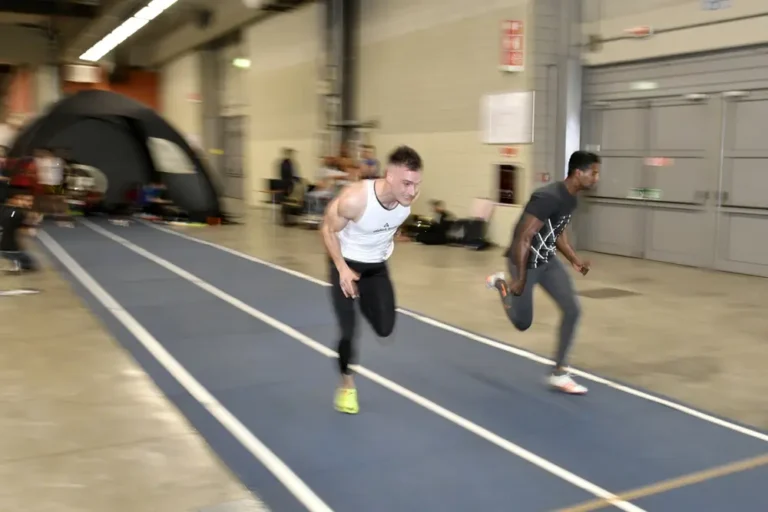

The beep test looks simple: run 20 metres, turn, run back, keep up with the audio. In practice, most candidates lose levels for reasons that have little to do with how fit they are. They sprint the opening shuttles, they turn badly, and they train in ways that never look like the test itself.
This guide sets out how to train for the beep test when you have an Assessment Day in the diary. It covers the protocol, how to set a realistic target, what a training week should contain, the technique that saves energy, and how to arrive on the day ready to perform.
 NZDF Recruitment · Aptitude & Selection 2026Train the test you cannot run.
The cognitive assessment gets far less preparation than the beep test does. Give it the same discipline.
Understand the 20-Metre Assessment Day Protocol

The Multi-Stage Fitness Test, also called the bleep test or MSFT (Multi-Stage Fitness Test), uses two markers set exactly 20 metres apart on a flat, non-slip surface. You must reach or cross the opposite line before the next beep sounds, or exactly as it sounds. Touching the line with at least one foot each time is part of the standard.
The test is divided into 21 levels. It starts at a gentle jogging pace of 8.5 km/h, and the gap between beeps shortens at every stage, raising the required speed by 0.5 km/h. That progression is why the opening feels easy and the later levels do not.
Two rules end the test. If you fail to reach the line before a beep, you receive a warning and must turn immediately and work to catch the pace. The warning rule gives you a chance to recover, but the moment you miss the marker on two consecutive shuttles, the test is over.
Your result is recorded as the level and shuttle you reached. A score of 8.5 means Level 8 with five shuttles completed inside that level. Read the notation this way and scores like 5.4 or 8.8 become obvious: Level 5 with four shuttles, Level 8 with eight shuttles.
Set a Baseline and Choose Your Target
Before you write a plan, run the test properly once and record the full level and shuttle figure. The 20-metre shuttle run is a practical measure of aerobic capacity and endurance, and it lets you track progress, set goals, and see whether your limit is pacing, speed endurance, or raw fitness.
Then translate the Assessment Day requirement into a number you can train towards. For job applications, one recommendation is to aim at least one level above the published minimum, so you have a buffer if conditions or nerves work against you on the day. The New Zealand Defence Force publishes Assessment Day standards through its Defence Careers portal: the Army minimum is 7.10 for male applicants and 5.09 for female applicants, while the Navy minimum for applicants aged 16 to 29 is 6.10 for males and 5.01 for females. Some trades ask for far more, with the RNZAF Physical Training Instructor standard set at 9.05 and the NZSAS standard at 12.01.
How much can you realistically add? A coaching estimate published by the UK running coaching site We Run in November 2025 puts it at one to three levels of improvement after six weeks or more of consistent training. Treat that as a planning range, not a promise. With only two or three weeks left, the same source suggests fitness gains will be limited, but tactical changes may still be worth 0.5 to 1 level.
Where you stand against general standards
The tables below give general fitness benchmarks by age and sex. They are not Assessment Day standards, but they help you judge whether your baseline is close to average or well below it.
Standards for Men
| Age Group | Poor | Average | Good | Excellent |
|---|---|---|---|---|
| 18–25 | < 5/2 | 8/6 – 10/1 | 10/2 – 11/5 | > 13/10 |
| 26–35 | < 5/2 | 7/10 – 8/9 | 8/10 – 10/6 | > 12/9 |
| 36–45 | < 3/8 | 6/5 – 7/7 | 7/8 – 8/9 | > 11/3 |
| 46–55 | < 3/6 | 5/6 – 6/6 | 6/7 – 7/7 | > 9/5 |
| 56–65 | < 2/7 | 4/9 – 5/6 | 5/7 – 6/8 | > 8/4 |
| Over 65 | < 2/2 | 3/8 – 4/8 | 4/9 – 6/1 | > 7/2 |
Standards for Women
| Age Group | Poor | Average | Good | Excellent |
|---|---|---|---|---|
| 18–25 | < 4/5 | 7/3 – 8/6 | 8/7 – 10/1 | > 12/7 |
| 26–35 | < 3/8 | 6/6 – 7/7 | 7/8 – 9/4 | > 11/5 |
| 36–45 | < 2/7 | 5/4 – 6/2 | 6/3 – 7/4 | > 9/5 |
| 46–55 | < 2/5 | 4/5 – 5/3 | 5/4 – 6/2 | > 8/1 |
| 56–65 | < 2/2 | 3/6 – 4/4 | 4/5 – 5/6 | > 7/2 |
| Over 65 | < 1/5 | 2/7 – 3/4 | 3/5 – 4/3 | > 5/7 |
Build a Weekly Plan Around Beep Test Demands
A useful plan has three layers: technique, conditioning, and testing. Most candidates only ever train the third layer, which is why hard effort so rarely turns into extra levels.
Conditioning has to look like the test. Because the bleep test relies on sudden pivots and a rapidly shifting heart rate, running steady-state 5Ks or spending an hour on a treadmill will not prepare you well. You need work that builds both the aerobic base that carries you through the early levels and the anaerobic power that keeps you going at the end.
High-Intensity Interval Training is the core of that work. Perform HIIT twice per week: run hard for 30 seconds, then walk slowly for 30 seconds, and repeat for 15 to 20 minutes. The format forces your heart rate to jump between zones and trains your energy systems to recover efficiently between efforts, which is exactly the stop-start capacity the test demands.
A sample first week can look like this: two technique sessions, one interval session, one test-pace session on a measured course, and one rest or light day. That balance keeps technique work early in the week, when you are fresh, and stops the plan turning into a series of maximal tests. Once the basics are locked in, matching the effort level to the test matters more than simply adding volume.
Train Pacing, Turning, and Breathing Together

Technique is where most levels are won or lost, and it is the layer almost nobody trains deliberately. As Russ, an experienced coach, puts it:
people with low fitness regularly out-score much fitter people, purely on better strategy.
Pace the opening levels like a progression
Levels 1 through 4 are intentionally slower. Run them efficiently rather than fast, and save the effort for the stages that will actually decide your score. Pacing the test like a progression session works better than treating each shuttle as a sprint.
The practical version: take the first one or two shuttles at a brisk walk, then gradually settle into a run. Aim to arrive at the line just before the beep, so you are neither standing around at the end nor burning energy to get there early. That plateau pace approach, where your speed rises only as the audio requires it, often gets people one or two stages further than fast shuttle runs from the start.
Turn low and drive back
Turning technique is the cheapest improvement available. Do not run a wide, sweeping circle at the cone. Drop your hips low as you approach the line, plant your outside foot firmly, and drive your body back in the opposite direction. Alternate which foot you plant so one leg does not take all the load.
Done well, the turn can save 5 to 10 percent of your energy compared with a wide change of direction. Over dozens of turns in a full test, that saving shows up directly in your level and shuttle score.
Keep breathing controlled
Breathing belongs in the technique layer alongside pacing and turning technique. Keep it relaxed and steady so it supports your rhythm instead of becoming a separate source of tension. If you find yourself gasping in the opening levels, the problem is usually the pace you chose, not your lungs.
NZDF Recruitment · Aptitude & Selection 2026Train the test you cannot run.The cognitive assessment gets far less preparation than the beep test does. Give it the same discipline.
Practise the Exact 20 Metres
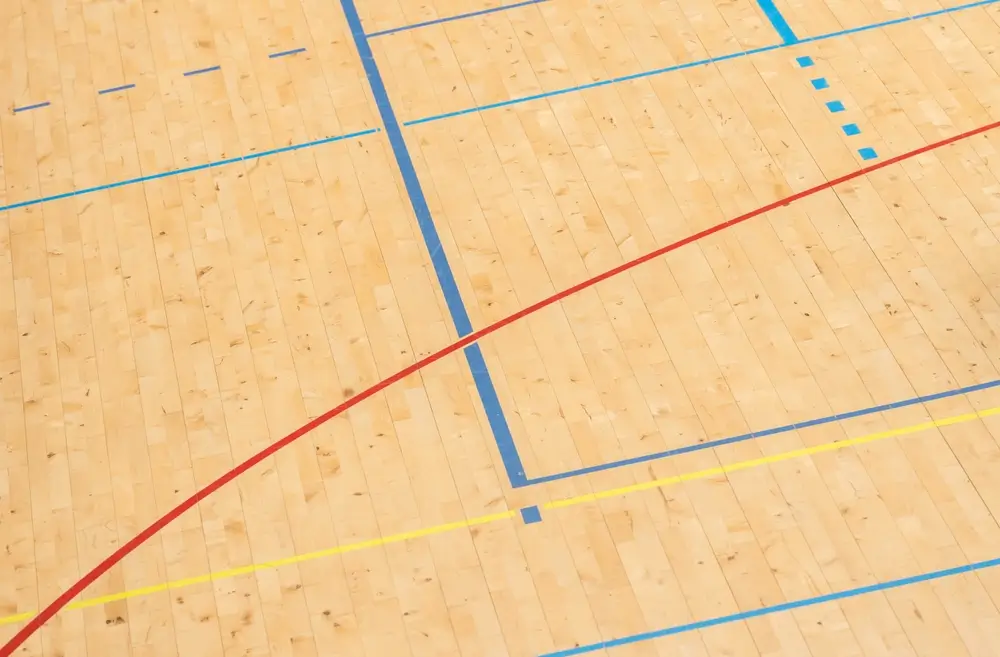
Do not practise on a guessed distance. Measure the course with a tape measure, set cones at each end, and use a beep test app or audio recording that gives the correct beep timings. Measuring out the distance and practising it will itself improve your performance, because your pacing gets calibrated against the exact 20m you will face on Assessment Day.
Practising the real stop-start pattern also matters more than piling up steady miles. VO2 max, or maximal oxygen uptake, is what the Multi-Stage Fitness Test is designed to estimate, but the score you record depends just as much on how efficiently you handle repeated accelerations, decelerations and turns.
One thing conditioning is not: playing your sport. Game fitness and beep test fitness are not the same thing, even for genuinely fit athletes.
Progress the Plan Over Six to Eight Weeks
Start six to eight weeks before the test if you want noticeable improvement from consistent training. The aerobic base and the lactate threshold work that lifts your ceiling take time; there is no compressed version that produces the same result.
Technique gains arrive faster. Pacing and turning adjustments can produce noticeable improvement inside the first two to three weeks, which is why they belong at the front of the plan. Fix the free things first, then let conditioning do the slower work.
Retest every couple of weeks, not just on the day that counts. Checkpoint tests are the only way to know whether your actual number is moving while there is still time to change something. Record the full level and shuttle each time so you can compare like with like.
Use those results to diagnose, not just to score. If you fade early and your heart rate recovery between shuttles feels poor, conditioning is the limit. If you feel strong until you suddenly miss two beeps in a row, look at your pacing and where you spent energy in the opening levels.
Taper and Prepare for Assessment Day
Avoid heavy training in the two days before the test. The day before, a light 10 to 15 minute jog is enough to stay loose without adding fatigue.
Eat a light meal made from familiar foods two to three hours before you run. Stay hydrated across the day, but do not overload on fluids right before the start.
Warm up properly: five to ten minutes of jogging, then dynamic stretches and a few short accelerations. Cold muscles at Level 1 make the first turns feel awkward and waste the advantage of a controlled start.
If you can, recreate the official setup in your final sessions. The exact 20 metres, the audio, a proper warm-up, then the test. On the day itself, the fewer unfamiliar variables, the better.
The Mistakes That Cost the Most Levels
Sprinting the opening levels. The classic pattern is running fast to the line, standing around, then sprinting again. As the beeps speed up there is less standing time, so you have effectively turned the early test into an interval session and spent energy you needed later.
Turning wide. A sweeping arc at the cone costs both time and energy on every single shuttle. The low, firm change of direction exists to make the return more efficient.
Practising over an unmeasured distance. A rough estimate in a park teaches you the wrong pace. If the practice distance is short, you arrive on the day with a false sense of your rhythm.
Assuming general fitness equals test readiness. Running or sport does not automatically build the repeated acceleration, deceleration and direction changes the test asks for. Train the specific demand.
Frequently Asked Questions
How do I improve my beep test score?
Train for the test specifically instead of relying on steady-state running alone. Two weekly interval sessions, deliberate practice of pacing and turning on a measured 20-metre course, and checkpoint retests that let you adjust the plan before Assessment Day will do more than adding mileage.
What is the best way to train for a bleep test?
Combine technique, conditioning and testing. Include HIIT twice per week, practise the stop-start demands and the turns at each line, and do not treat ordinary long-distance running as a complete substitute for beep test preparation.
How can I train for the beep test if Assessment Day is six weeks away?
Begin with a baseline test, then build weekly sessions around intervals, pacing, turning and exact-distance practice. One coaching estimate puts realistic progress at one to three levels after six weeks or more, but that is a planning range rather than a guarantee, so verify it with regular retests.
How should I pace the beep test?
Treat it as a gradual progression rather than a sprint. Move briskly or jog at the start, aim to reach the line just before the beep without waiting around, and lift the pace only as the audio forces you to.
How should I breathe during the beep test?
Keep your breathing controlled and relaxed so it supports the pace instead of adding tension in the early levels. Practise it as part of the technique work, alongside pacing and turning.
How can I run faster in the beep test?
Do not chase speed from the first shuttle. Better late-stage performance comes from conserving energy early, using an efficient low turn at each line, and training sprint-and-walk intervals that improve recovery between hard efforts.
How hard is 7.5 on a beep test?
It depends on your age, sex, current fitness and the standard your role requires. The notation means Level 7 with five completed shuttles in that level, so judge it against the relevant benchmark rather than treating it as universally easy or hard.
How hard is 8.8 on a beep test?
There is no single difficulty rating, because standards vary by age, sex and the role being assessed. It represents Level 8 with eight shuttles, and the practical question is whether it clears your required Assessment Day level with enough margin.
How many runs is 5.4 on the beep test?
A score of 5.4 means Level 5 with four shuttles completed inside that level. The notation describes your position within the level rather than a cumulative count of every shuttle run before it.
Next Step
Set a date for your baseline test this week, record the full level and shuttle, and build the six weeks backwards from your Assessment Day. If you want the protocol, the level structure and the standards in one place before you start, head to /beep-test/.
Sources
NZDF Recruitment · Aptitude & Selection 2026Train the test you cannot run.The cognitive assessment gets far less preparation than the beep test does. Give it the same discipline.

Good Beep Test Score by Age: Full Charts for Men and Women

NZ Army Fitness Requirements: Tests, Standards and Times