

If you are preparing for a New Zealand Defence Force Assessment Day, the beep test shuttle run is the fitness component most applicants worry about. It is simple to describe and hard to fake: you run 20 metres back and forth in time with a recorded audio pace that keeps getting faster, until you cannot keep up.
This guide covers the official 20m protocol used by the NZDF, how the score is written and recorded, what the A-Day standards look like, the mistakes that end attempts early, and a six-week structure to raise your level before test day.
 NZDF Recruitment · Aptitude & Selection 2026Train the test you cannot run.
The cognitive assessment gets far less preparation than the beep test does. Give it the same discipline.
The aim is practical. By the end you should know exactly how to set up a lane, how to pace the opening levels, and what to train each week.
What the NZDF MSFT Is Designed to Measure
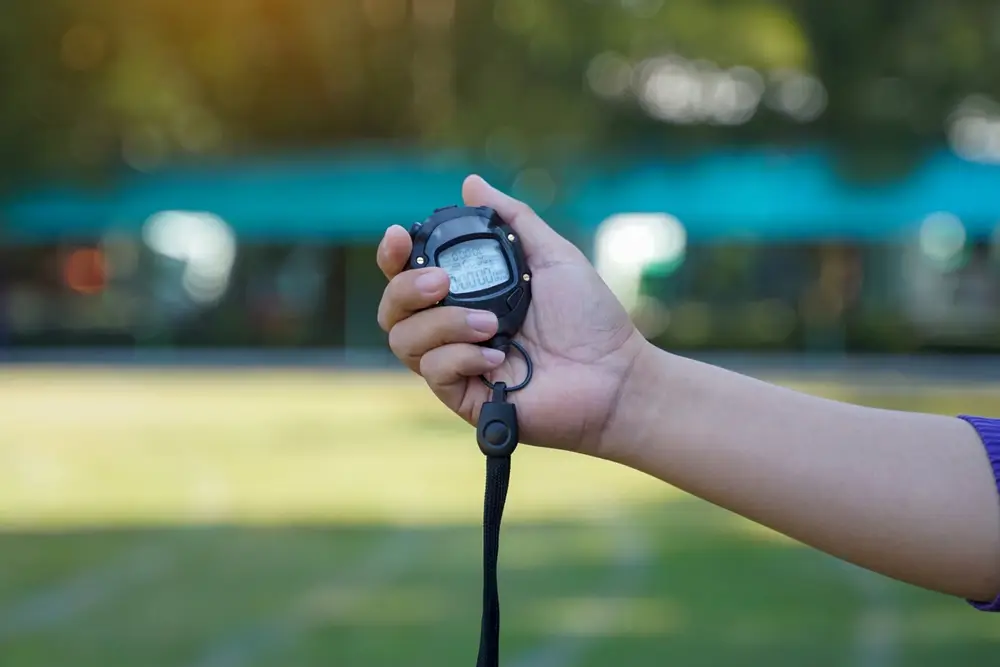
In the NZDF joining process, the Multi-Stage Fitness Test (MSFT), commonly called the beep test, is one of the Assessment Day fitness components and is conducted alongside press-ups. Different names circulate for essentially the same event: MSFT, beep test, bleep test, 20m shuttle run, pacer test, and the Léger test after the researcher associated with the original protocol.
The purpose is stated plainly in the official NZDF Defence Health guidance: the MSFT estimates an individual’s aerobic capacity (VO2 max) as an indicator of a minimum level of health-related fitness. It is an estimate, not a laboratory measurement of oxygen exchange.
VO2 max, or maximal oxygen uptake, is the highest rate at which your body can take in, transport and use oxygen to produce energy. It is considered one of the best indicators of aerobic fitness because it reflects how efficiently the heart, lungs, blood and muscles work together to sustain endurance performance.
“The participant typically reaches exhaustion shortly after hitting their maximum oxygen uptake, known as VO₂max.” — Nicholas Gant, head of exercise science at the University of Auckland
There is a catch worth understanding before you train. Because you accelerate, decelerate and change direction every 20 metres, the test also draws on your anaerobic system, the energy pathway that supplies rapid bursts without using oxygen. Running efficiency, motivation, test familiarity and environmental conditions all feed into the final number, so a beep test score should not be read as a pure VO2max value.
What makes it durable as a field test is convenience. According to The Conversation and commentary from New Zealand exercise science, the MSFT needs minimal equipment, can assess a whole group at once, and gives a repeatable indication of cardiorespiratory fitness without specialist laboratory apparatus. That is exactly why defence forces, police services and schools keep using it.
The Official 20m Protocol: Set-Up and Start
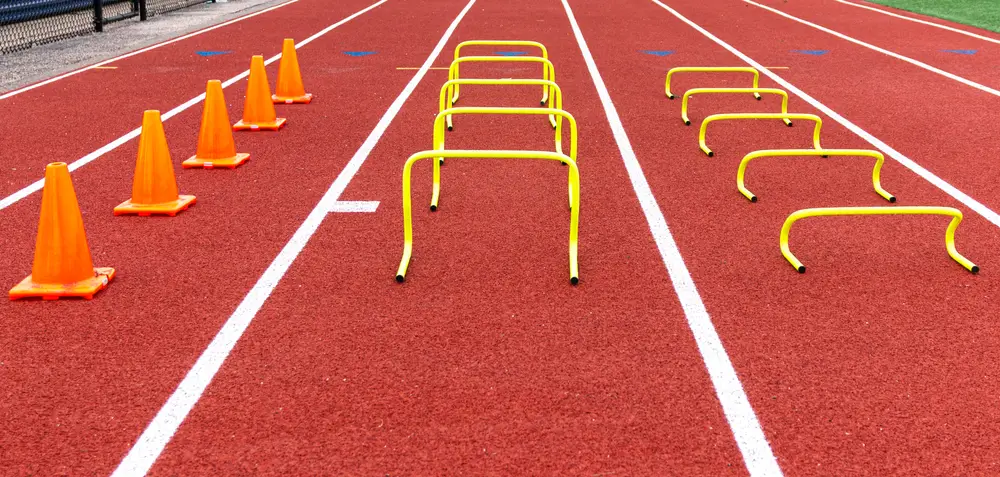
The NZDF MSFT protocol described by Defence Health is specific. Participants line up on the start line. On the beep, they run towards the opposite line, 20 metres away, arriving before the next beep sounds. On the next beep they run back. They keep leaving one line on the beep and reaching the opposite line before the next beep, until they can no longer keep pace.
One detail decides borderline shuttles: one foot must be physically grounded on or past the line at the end of the 20 metre distance, before or at the start of the beep sounding. Reaching towards the line with an outstretched arm is not the standard.
The audio controls everything else. Level 1 starts at roughly 8.0 km/h, level 2 steps up to 9.0 km/h, and each level after that adds 0.5 km/h. Running speed stays constant inside a level, then jumps when the next level begins, which is why the beeps come closer together as you progress. Three successive beeps mark the start of the test and the start of each new level, and each level lasts around a minute.
For a reliable setup you need a flat, non-slip surface, an accurately measured lane, marking cones, the correct MSFT audio, a loudspeaker loud enough to hear at both ends, and someone recording shuttles. Cutting corners on the tape measure is the most common way people arrive at A-Day with a false sense of their pace.
Level, speed and distance progression
The standard beep test format contains 21 levels. The table below shows the running speed, shuttle time, cumulative distance and cumulative time for each level, based on the widely used 20m version.
| Level | Shuttles | Speed (km/h) | Shuttle Time (s) | Total level time (s) | Distance (m) | Cumulative Distance (m) | Cumulative Time (min and seconds) |
|---|---|---|---|---|---|---|---|
| 1 | 7 | 8.0 | 9.00 | 63.00 | 140 | 140 | 1:03 |
| 2 | 8 | 9.0 | 8.00 | 64.00 | 160 | 300 | 2:07 |
| 3 | 8 | 9.5 | 7.58 | 60.63 | 160 | 460 | 3:08 |
| 4 | 9 | 10.0 | 7.20 | 64.80 | 180 | 640 | 4:12 |
| 5 | 9 | 10.5 | 6.86 | 61.71 | 180 | 820 | 5:14 |
| 6 | 10 | 11.0 | 6.55 | 65.50 | 200 | 1020 | 6:20 |
| 7 | 10 | 11.5 | 6.26 | 62.61 | 200 | 1220 | 7:22 |
| 8 | 11 | 12.0 | 6.00 | 66.00 | 220 | 1440 | 8:28 |
| 9 | 11 | 12.5 | 5.76 | 63.36 | 220 | 1660 | 9:31 |
| 10 | 11 | 13.0 | 5.54 | 60.92 | 220 | 1880 | 10:32 |
| 11 | 12 | 13.5 | 5.33 | 64.00 | 240 | 2120 | 11:36 |
| 12 | 12 | 14.0 | 5.14 | 61.71 | 240 | 2360 | 12:38 |
| 13 | 13 | 14.5 | 4.97 | 64.55 | 260 | 2620 | 13:43 |
| 14 | 13 | 15.0 | 4.80 | 62.40 | 260 | 2880 | 14:45 |
| 15 | 13 | 15.5 | 4.65 | 60.39 | 260 | 3140 | 15:46 |
| 16 | 14 | 16.0 | 4.50 | 63.00 | 280 | 3420 | 16:49 |
| 17 | 14 | 16.5 | 4.36 | 61.09 | 280 | 3700 | 17:50 |
| 18 | 15 | 17.0 | 4.24 | 63.53 | 300 | 4000 | 18:54 |
| 19 | 15 | 17.5 | 4.11 | 61.71 | 300 | 4300 | 19:56 |
| 20 | 16 | 18.0 | 4.00 | 64.00 | 320 | 4620 | 21:00 |
| 21 | 16 | 18.5 | 3.89 | 62.27 | 320 | 4940 | 22:03 |
Completing all 21 levels means covering 4,940 metres in 22 minutes and 3 seconds. That is well beyond what any entry standard asks for, and it puts the A-Day numbers in perspective: the levels you actually need sit in the first half of the table.
Two practical uses for this table. First, it converts a score into distance: reaching level 7 means around 1,220 metres of cumulative distance, and level 9 means around 1,660 metres. Second, it shows how narrow the margins become. By level 10 the shuttle time is 5.54 seconds, so hesitating at a turn costs you a measurable share of the shuttle.
Estimating VO2 max from your level
Because the MSFT was built as a VO2 max predictor, each completed level maps to an estimated maximal oxygen uptake value.
| Completed Level | Distance Run | VO2max |
|---|---|---|
| 1 | 140 | 18.9 |
| 2 | 300 | 22.1 |
| 3 | 460 | 25.9 |
| 4 | 640 | 29.6 |
| 5 | 820 | 32.8 |
| 6 | 1020 | 36.5 |
| 7 | 1220 | 39.8 |
| 8 | 1440 | 43.5 |
| 9 | 1660 | 46.8 |
| 10 | 1880 | 50.1 |
| 11 | 2120 | 53.7 |
| 12 | 2360 | 57.1 |
| 13 | 2620 | 60.7 |
| 14 | 2880 | 64.0 |
| 15 | 3140 | 67.4 |
| 16 | 3420 | 71.0 |
| 17 | 3700 | 74.3 |
| 18 | 4000 | 77.9 |
| 19 | 4300 | 81.3 |
| 20 | 4620 | 84.9 |
| 21 | 4940 | 88.3 |
Treat these as estimates. They are useful for tracking your own progress across a training block, less useful for comparing yourself with someone who tested on a different surface, with different audio, or on a course that was never properly measured.
How the Score Is Recorded and How an Attempt Ends

MSFT scores are written in Level.Shuttle format. The first number is the level, the second is the number of completed shuttles inside that level. So 5.4 means level 5 with four completed shuttles, and 10.2 means two completed shuttles at level 10. This is the format used in the NZDF standards tables, which is why entry figures look like 7.10 or 6.10 rather than round numbers.
Ending the attempt follows a standard rule. A runner who fails to reach the designated marker in time receives a caution, and to continue they must touch the marker before turning back. Two consecutive failures end the attempt. The recorded score is the most recent completed shuttle, not the level at which you first missed the pace.
That distinction matters on test day. One missed line is not the end of your test, so the correct reaction is to touch the line, turn, and try to get back on the beep rather than stopping in frustration.
NZDF Recruitment · Aptitude & Selection 2026Train the test you cannot run.The cognitive assessment gets far less preparation than the beep test does. Give it the same discipline.
NZDF Assessment Day: What Gets Tested and How It Is Graded

Assessment Day, usually called A-Day, lists two fitness components: the MSFT and press-ups. Preparing only for the beep test leaves half the assessment untrained.
NZDF states that A-Day results are graded and contribute to how competitive an applicant is in the overall selection process. In other words, scraping past the minimum and comfortably clearing it are not the same outcome, even though both avoid a fail.
Army and Air Force A-Day standards
Army and Air Force results are organised into bands rather than a single pass mark.
| GRADE | MSFT (BEEP TEST) Male | MSFT (BEEP TEST) Female | PRESS-UPS Male | PRESS-UPS Female |
|---|---|---|---|---|
| STRONG | 10.05 or greater | 8.06 or greater | 30 or greater | 15 or greater |
| 9.11 | 8.01 | 25 | 11 | |
| SATISFACTORY | 9.06 | 7.06 | 20 | 8 |
| 8.11 | 7.01 | 15 | 5 | |
| 8.06 | 6.05 | 10 | 3 |
For minimum entry, the figures reported for Army and Air Force candidates are 7.10 for males and 5.9 for females, according to information published by New Zealand fitness training providers working with defence applicants. The minimum press-up counts are 5 for males and 1 for females. A strong grade sits far higher, at 10.05 or greater and 30 press-ups for males, and 8.06 or greater and 15 press-ups for females.
Some trades carry their own standard that must be achieved or surpassed at A-Day. The RNZAF Physical Training Instructor role requires 9.05 on the MSFT with 30 press-ups, and NZSAS requires 12.01 with 30 press-ups.
Navy A-Day standards
Navy uses the same banded structure for A-Day, with lower minimum MSFT entry figures: 6.10 for males and 5.1 for females. Navy Divers face an additional test requirement of 9.5 for both males and females.
Navy MSFT requirements are also presented by age bracket. The table below shows the minimum standard for older age groups, alongside the under-30 figures already given.
| AGE GROUP | MALE | FEMALE |
|---|---|---|
| 40-49 | 4.09 | 3.01 |
| 50-59 | 3.08 | 2.01 |
| 60+ | 3.04 | 1.04 |
The takeaway is simple: there is no single generic beep test score that covers every NZDF pathway. Check the current official NZDF requirements for your branch, age and gender, then train to clear that figure with margin rather than to land on it exactly.
Where general beep test norms fit
Candidates often want to know whether their level is objectively good. General adult norms give rough context, but they are not selection standards.
| Category | Men | Women |
|---|---|---|
| Excellent | > 13 | > 12 |
| Very Good | 11 – 13 | 10 – 12 |
| Good | 9 – 11 | 8 – 10 |
| Average | 7 – 9 | 6 – 8 |
| Poor | 5 – 7 | 4 – 6 |
| Very Poor | < 5 | < 4 |
These are described by the source as a rough estimate based on experience with the standard Australian beep test version. Use them for perspective, and use the NZDF tables for decisions.
From A-Day to I-Day and In-Service Testing
The MSFT is one gate, not the whole pathway. Navy and Air Force candidates repeat the A-Day fitness test on Induction Day, with the aim of improving on their earlier result. Army candidates complete an Entry Fitness Level test instead, built around press-ups and a 2.4km run, which is a different assessment from the A-Day MSFT.
Reported minimum Induction Day run times for Army candidates are 12 minutes for males and 14 minutes for females over 2.4km, according to New Zealand defence fitness training information. That means an Army applicant needs both beep test capacity for A-Day and continuous running pace for I-Day.
Later in service, the Required Fitness Level (RFL) and the Load Carriage Fitness Test (LCFT) become the recurring milestones. These are separate assessments and should not be treated as alternative names for the A-Day MSFT.
Army Required Fitness Level, for context
| AGE | 2.4km run (mm:ss) Pass | 2.4km run (mm:ss) 1st Class Pass | Press ups Pass | Press ups 1st Class Pass |
|---|---|---|---|---|
| 16-24 | 10:16 | 9:47 | 28 | 30 |
| 25-29 | 10:39 | 10:10 | 26 | 30 |
| 30-34 | 11:02 | 10:32 | 24 | 30 |
| 35-39 | 11:26 | 10:54 | 22 | 30 |
| 40-44 | 11:51 | 11:18 | 18 | 30 |
| 45-49 | 12:17 | 11:43 | 14 | 30 |
| 50-54 | 13:05 | 12:28 | 10 | 30 |
| 55-59 | 13:531 | 13:13 | 8 | 30 |
The RFL standards for females follow the same structure with different times, starting at 12:47 for a pass and 12:11 for a first class pass in the 16-24 bracket, with 14 press-ups for a pass and 15 for a first class pass.
Planning ahead is the point here. If you stop training the day you clear the A-Day minimum, you arrive at Induction Day and in-service testing underprepared. Consistent training across the year is also what NZDF Defence Health emphasises for serving personnel, with reminders sent one month before a fitness test qualification expires and Physical Training Instructors available to help anyone worried about a specific component.
The Mistakes That End an Attempt Early
Most candidates lose levels they had the fitness to run. The reasons are consistent.
Sprinting the opening levels. Level 1 is 8.0 km/h and level 3 is only 9.5 km/h. Very few people actually run that pace. They run faster than the beep, arrive at the line early, stand around waiting, then take off hard again. The result is a stop-start rhythm that burns energy in the levels where you should barely be working. Think of your fitness as fuel in a fixed tank: poor pacing empties it before the pace increases start to bite.
Braking and turning late. Lunging at the line or striking the foot heavily wastes energy and adds strain on the joints. A short controlled step into the turn, with the turn started slightly before the line rather than at a dead stop, keeps momentum through the change of direction.
Practising on the wrong distance. A course that is not accurately measured teaches the wrong pace. If your practice lane is short, the official 20m shuttle run will feel unexpectedly hard. Measure the lane properly, every time.
Losing composure as the beeps close in. Breathing tends to become shallow and rushed in the later levels. Controlled breathing, a steady rhythm and a deliberate decision to keep working through discomfort are as much part of the test as leg speed.
A more effective mental model is to treat the beep test like a progression session. Some coaching guidance suggests taking the first shuttle or two at a brisk walk, then gradually easing into a run, aiming to reach the line just before the beep rather than well ahead of it. Done well, this often buys one or two extra levels compared with running fast shuttles from the start.
A Six-Week Training Structure That Matches the MSFT

Six to eight weeks is a realistic window for meaningful improvement. The plan below assumes six weeks and three layers of work: technique, conditioning matched to the test, and regular checkpoints. Most people only train the third layer, which is why extra effort often fails to translate into extra levels.
Weeks 1 and 2: technique and baseline
Start with an honest baseline. Measure a proper 20m lane, use the correct audio, and record your score in Level.Shuttle format. That number is your reference point.
Then spend these two weeks working on pacing, turning and breathing deliberately. Run short blocks of shuttles at level 3 to level 5 pace and practise arriving at the line just in time, planting one foot on or past it, and turning without a heavy braking step. Add two easy continuous runs to build a base of cardiovascular fitness, and keep press-up work in every session so the second A-Day component progresses at the same time.
Weeks 3 and 4: aerobic and interval conditioning
Now make the conditioning look like the test. Interval training suits the MSFT because it alternates short high-intensity efforts with recovery, which is exactly the pattern the test imposes as heart rate climbs level by level.
The beep test is unusual in that it takes you through a full range of intensities in one session. It begins at low intensity, moves through your anaerobic threshold territory, and finishes near maximum effort. Interval work over short shuttle distances, with controlled rest, builds the tolerance you need for that ramp. Keep one longer steady run in the week to support the aerobic fitness underneath it, and continue turning practice inside every shuttle session.
Weeks 5 and 6: test-specific practice and recovery
Shift the emphasis to full and partial test simulations. Run the audio from level 1 and hold controlled pacing through the early levels, then push into the levels just above your baseline score. Repeat this once or twice a week rather than every session.
Do a practice MSFT about a week before the assessment, particularly if this is your first time or if there has been a long break since you last tested. It familiarises you with the pace, the turns and the scoring process, and it tells you whether your pacing plan actually holds up.
Rest is part of the plan, not an interruption to it. Beep test training guidance recommends one to two complete rest days per week to support recovery and prevent burnout. Reduce volume in the final week so you arrive fresh rather than accumulating fatigue you cannot shed.
Practise with the equipment you expect to use: an accurately measured 20m lane, clear audio you can hear at both ends, and suitable footwear on a non-slip surface. Surface and equipment both influence results.
Test-Day Execution
Warm up properly but without creating fatigue. Easy jogging for around five to ten minutes, dynamic movements for the hips, ankles and hamstrings, and a small number of short accelerations prepares the muscles and nervous system. Stop there.
The day before, avoid heavy training and use light movement only. Keep hydration normal and choose familiar food before the assessment rather than experimenting with anything new.
During the test, hold three things: a controlled opening pace, one foot grounded on or past the line every shuttle, and breathing that stays relaxed and rhythmic. When the beeps begin to close in, expect the discomfort and keep working through it. That is the phase where composure separates candidates with similar aerobic capacity.
Afterwards, note your Level.Shuttle result and compare it against the standard for your branch, age and gender. If there is a gap, you now know precisely how many levels you need and which layer of training to prioritise.
Frequently Asked Questions
Is a shuttle run the same as a beep test?
The terms overlap heavily, but a generic shuttle run can refer to several different protocols, including short timed agility runs. In the NZDF context, the shuttle run means the audio-paced 20m Multi-Stage Fitness Test used on Assessment Day.
Is the NZDF beep test 15 or 20 metres?
The NZDF MSFT described in the official Defence Health guidance uses two lines 20 metres apart. A 15m bleep test variant exists and is used elsewhere, but you should measure and practise the 20m distance rather than relying on a modified protocol.
What is the beep test in New Zealand?
In New Zealand, the beep test generally means the Multi-Stage Fitness Test, or MSFT. For applicants, the relevant version is the 20m MSFT run on Assessment Day alongside press-ups, not a school fitness memory or a generic sports benchmark.
What does the MSFT measure?
It assesses aerobic capacity and provides an estimate of VO2 max through progressively faster 20m shuttles. Because it also involves repeated acceleration, deceleration and turning, the result is influenced by movement efficiency, anaerobic contribution, motivation and familiarity with the test.
What happens on NZDF Assessment Day?
NZDF joining information lists the MSFT and press-ups as the Assessment Day fitness components, and states that results are graded as part of selection. Check the exact branch, age and gender standards against the current official NZDF table.
What beep test level do I need for the New Zealand Army?
There is no single score that applies to every pathway. Army and Air Force use their A-Day grading table, with a reported minimum of 7.10 for males and 5.9 for females, while Navy requirements are adjusted by age and gender. Always work from the current official NZDF requirements for your chosen pathway rather than a general internet norm.
Does the required NZDF MSFT level change with age?
Yes for Navy, where MSFT requirements are presented by age and gender. Do not apply a younger candidate’s result or a general adult benchmark to an older Navy applicant without checking the current NZDF table.
How is a beep test score recorded, and what does 5.4 mean?
Scores are written as level.shuttle, so 5.4 means level 5 with four completed shuttles at that level. The final score is the last successfully completed shuttle, and the exact level-by-level shuttle count should match the audio version being used.
What is the trick to the beep test?
Controlled progression. Do not sprint the opening levels, arrive at the line efficiently rather than early, use a short controlled step into the turn, and let the audio set the pace. That preserves energy for the faster levels where most candidates fail.
How can I improve my beep test quickly?
Start as early as you can, with six weeks as a practical minimum for meaningful improvement. Combine pacing and turning practice with interval conditioning, test-specific sessions, checkpoint retests and adequate rest, rather than relying only on steady running.
Sources
NZDF Recruitment · Aptitude & Selection 2026Train the test you cannot run.The cognitive assessment gets far less preparation than the beep test does. Give it the same discipline.

NZ Army Fitness Requirements: Tests, Standards and Times

Beep Test Audio: Correctly Timed 20 m MP3 and Setup Guide