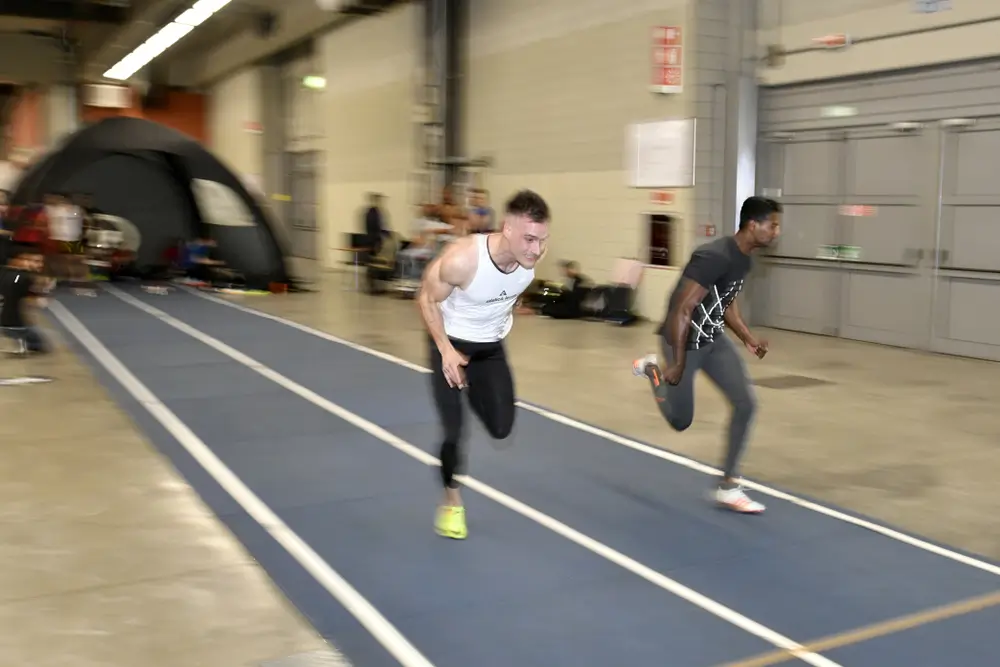
A beep test score is only as accurate as the audio that paces it. If the intervals are slightly off, or the recording was made for a different course length, the level you reach means very little. This guide covers what a correctly timed beep test audio file should contain, how to set up the course, and how to run and score the test so your result reflects your actual aerobic capacity.
The test itself goes by several names. You will see it listed as the multistage fitness test (MSFT), the 20 m shuttle run test, the bleep test, the PACER and the FitnessGram PACER. The protocol is the same idea in every case: run between two lines in time with audio cues, with the pace rising each level until you can no longer keep up.
 NZDF Recruitment · Aptitude & Selection 2026Train the test you cannot run.
The cognitive assessment gets far less preparation than the beep test does. Give it the same discipline.
What the beep test audio has to get right

The audio is the test. It sets the start, the pace of every shuttle, and the moment each new level begins. A usable file provides calibrated beeps, a spoken start countdown, level and shuttle announcements, and clear transition cues. An on-page player can add live level and distance feedback, pause and resume, and a save-result action so you keep a record after each attempt.
Timing has to come from the published shuttle run speed table rather than from a copied commercial tape. Recordings built this way state that the beeps are synthesised from that table, so every interval lines up with the level it belongs to. That is the difference between a file you can trust and a random clip of beeps.
The commonly used protocol starts at 8.5 km/h and increases by 0.5 km/h at each level, with levels lasting roughly one minute. The Léger protocol behind it was designed so each stage runs close to 60 seconds. A complete 20 m recording covers 20 levels and 231 shuttles, and runs for 21 min 1 sec as a single MP3 with no pauses, so once you press play you do not need to touch your phone again.
The countdown, the shuttle calls and the level changes
Every attempt opens the same way. You stand at one end of the 20 metre course with one foot on the line, and the recording gives a 5 second countdown before a triple beep marks the start. Some versions use a double beep or a voice cue instead of a triple beep, which is one more reason to listen to your file once before test day.
Spoken announcements matter more than they sound. When the audio calls the level and shuttle before a new stage begins, a solo runner has an audible reference for their result and never has to glance at a screen mid shuttle. That alone removes a common source of scoring errors.
A transition cue tells you the stage has changed and the gap between beeps has shortened. Your running speed has to increase straight away to stay on pace. Runners who treat the triple beep as a breather usually give away a shuttle or two in the first few seconds of the new level.
Set up the course: 20 metres, surface, shoes and sound
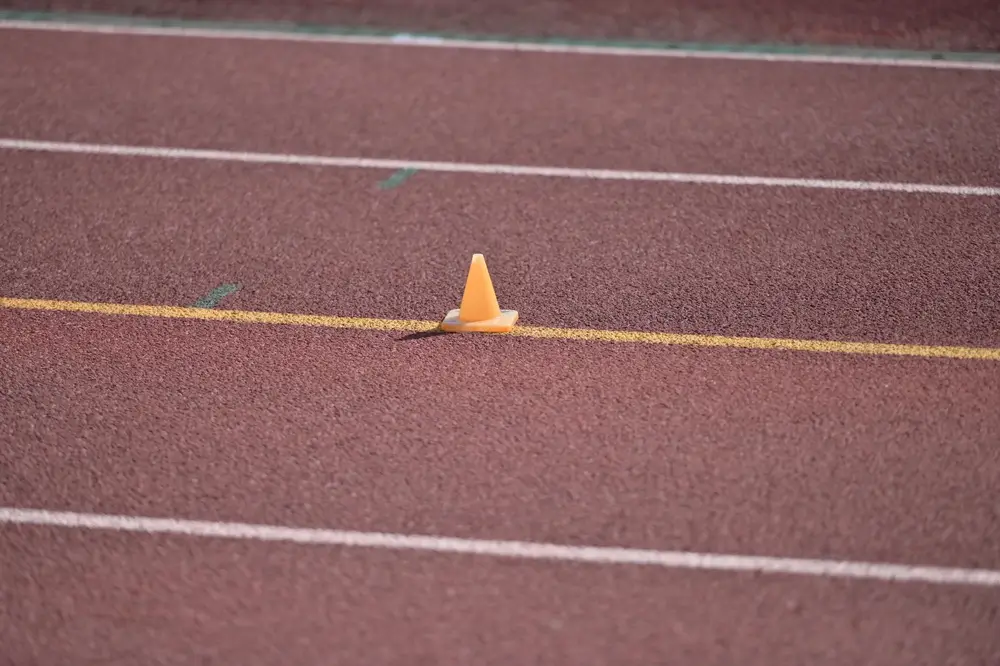
Measure line to line with a tape of at least 20 metres and mark both ends with cones or other clearly visible markers. Guesswork here changes the difficulty of every shuttle in the test. Standard testing guidance also lists a facility of at least 25 m in length, so there is room to turn safely beyond the two lines.
Surface quality is part of the protocol, not a detail. Testing guidance calls for a consistent, flat, non-slip facility that is protected from changing weather, and a running lane free of obstacles. If the environment changes between attempts, repeat results stop being comparable and the data becomes close to worthless. Wear proper running shoes and clothing you can turn hard in, because poor footing reduces effort and makes the score less reliable.
Sound is the last piece of the setup. Turn the volume most of the way up before you start, because you need to hear each beep clearly from 20 metres away and over your own breathing. A bluetooth speaker works far better than a phone speaker for anything beyond a one-person test, and in a large sports hall a portable bluetooth speaker is the practical choice. If a participant cannot hear the beeps, the test is not valid for them.
Running the audio from a phone without losing timing
A phone is enough. A standard MP3 plays on a smartphone, tablet or computer, and a beep test app works as a timer rather than a GPS tracker, so no dedicated device is needed for the audio itself.
Download the file before your session and do not rely on a mobile data connection while you run. Gaps caused by buffering invalidate the result, and a missed cue at level 9 is not something you can correct afterwards. Put the phone in flight mode if notifications tend to interrupt playback.
Check the calibration before you trust the score
Two files can both be labelled beep test audio and produce different scores. Use a recording that states its timing protocol and is built from the published speed table for the course you are running. Inaccurate calibration or a switch between audio versions distorts the level you appear to reach, which is exactly what you do not want when tracking progress toward a required standard.
For repeat testing to mean anything, hold everything constant: the same audio version, the same 20 metre setup, the same surface and the same stopping rule. Change one of those and the comparison is no longer valid.
NZDF Recruitment · Aptitude & Selection 2026Train the test you cannot run.The cognitive assessment gets far less preparation than the beep test does. Give it the same discipline.
20 metre or 15 metre: choose the right version
The standard course is 20 metres. A 15 metre version exists for smaller spaces and for specific testing standards, and it needs proportionally adjusted shuttle times rather than the 20 metre audio played over a shorter distance. One example is the 15 metre course run to level 5.4 used in the UK police Job Related Fitness Test (JRFT), a 35 shuttle recording of 3 min 40 sec.
Match the audio to the measured distance every time. A 20 metre recording on a 15 metre course inflates the score, and a 15 metre recording on a 20 metre course makes the pace impossible far too early.
Finish the test and record the correct result
You must reach the opposite line by the next beep, with at least one foot on or beyond the line before turning. If you arrive early, wait at the line for the beep instead of turning immediately, since the audio paces the test and an early turn changes nothing except your fatigue.
One missed line is treated as a warning. Two consecutive failures to reach the line end the test, and the last fully completed shuttle is your score. Results are written in level and shuttle format, so 10.2 means two shuttles completed at level 10. Because the test runs to volitional exhaustion, that final shuttle is the number that goes on the record sheet.
It helps to know how far you have actually run when you stop.
| Level reached | Cumulative distance |
|---|---|
| Level 5 | 820 m |
| Level 8 | 1,440 m |
| Level 10 | 1,880 m |
| Level 12 | 2,360 m |
| Level 15 | 3,140 m |
| Level 20 (full test) | 4,620 m |
What counts as a good score
There is no single good score. Interpretation depends on age, sex, training background, the purpose of the test and the exact protocol used. Many systems also convert the final level into an estimated VO2 max, and that estimate is useful for tracking change, but it is not a laboratory measurement of VO2 max and should not be reported as one. Pairing the score with heart rate data and session RPE gives a fuller picture of aerobic capacity than the level alone.
The tables below give general age group standards in level/shuttle format.
Standards for Men
| Age Group | Poor | Average | Good | Excellent |
|---|---|---|---|---|
| 18–25 | < 5/2 | 8/6 – 10/1 | 10/2 – 11/5 | > 13/10 |
| 26–35 | < 5/2 | 7/10 – 8/9 | 8/10 – 10/6 | > 12/9 |
| 36–45 | < 3/8 | 6/5 – 7/7 | 7/8 – 8/9 | > 11/3 |
| 46–55 | < 3/6 | 5/6 – 6/6 | 6/7 – 7/7 | > 9/5 |
| 56–65 | < 2/7 | 4/9 – 5/6 | 5/7 – 6/8 | > 8/4 |
| Over 65 | < 2/2 | 3/8 – 4/8 | 4/9 – 6/1 | > 7/2 |
Standards for Women
| Age Group | Poor | Average | Good | Excellent |
|---|---|---|---|---|
| 18–25 | < 4/5 | 7/3 – 8/6 | 8/7 – 10/1 | > 12/7 |
| 26–35 | < 3/8 | 6/6 – 7/7 | 7/8 – 9/4 | > 11/5 |
| 36–45 | < 2/7 | 5/4 – 6/2 | 6/3 – 7/4 | > 9/5 |
| 46–55 | < 2/5 | 4/5 – 5/3 | 5/4 – 6/2 | > 8/1 |
| 56–65 | < 2/2 | 3/6 – 4/4 | 4/5 – 5/6 | > 7/2 |
| Over 65 | < 1/5 | 2/7 – 3/4 | 3/5 – 4/3 | > 5/7 |
Preparing for a defence or emergency services assessment
Police, fire and emergency response services, army, air force and navy organisations in Australia, the UK, Canada and elsewhere use the beep test as an entry or requirement test, and sporting teams across football, rugby, hockey, cricket, athletics and tennis use it to monitor conditioning. Typical required scores sit between stage 6 and stage 13, but they vary by organisation, sometimes by age and sex, and they change from year to year, so confirm the current requirement with the recruiting body directly.
Practising with a correctly timed recording is preparation, not the official assessment, and no training resource can guarantee selection. What it can do is remove surprises: the countdown, the pace of the early levels, the feel of a level change and the discipline of turning on the line. Keep the audio, the course length, the surface and the stopping rule identical between attempts, and the difference between two tests will reflect your fitness rather than your setup.
Frequently Asked Questions
Is there a beep test with audio available?
Yes. A playable audio tool gives you calibrated beeps, a start countdown, spoken level and shuttle calls, and live result information while you run. Use a recording generated for the purpose rather than a copy of a copyrighted commercial track.
Is the beep test on Spotify?
Spotify carries listings for complete 20 metre and 15 metre beep test tracks. A streaming listing does not confirm the timing or calibration on its own, so make sure the audio matches your measured course and the protocol you need.
Can I do a bleep test on my phone?
Yes. A phone can play the MP3 or run a timer based beep test app, and GPS is not needed for the audio test. Download the recording first, and connect the phone to a speaker if the beeps are hard to hear at the far line.
Where can I download beep sounds in MP3 format?
Use an MP3 that states the timing protocol it was built from, and download it before you start. Streaming during the test is risky, because buffering or a missing cue invalidates the result.
How do I measure 20 metres for a beep test?
Use a measuring tape to mark two lines exactly 20 metres apart, then place cones or other visible markers at both ends. The surface should be flat, non-slip and clear of obstacles, with enough space beyond the lines for safe turns.
Is the beep test a 15 metre or 20 metre test?
The standard course is 20 metres. A 15 metre version exists for restricted spaces and certain testing standards, and it needs its own calibrated timing, so never run a 20 metre recording on a 15 metre course.
What do the level and shuttle announcements mean?
The level tells you which stage of the test you are in, and the shuttle call tells you which run you are on within that stage. The transition cue announces a new stage and warns that the gap between beeps has shortened, so the required pace has gone up.
What should I do if I reach the line before the beep?
Wait at the line until the next beep before turning back. The audio paces the test, so an early arrival is not a reason to start the next shuttle sooner.
What happens if I miss a beep?
A single missed beep is normally a warning, as long as you reach the line and get back on pace. Two consecutive failures to reach the line end the test, and your last fully completed shuttle is recorded as the score.
What is a good score on a 20 metre beep test, such as Level 10 or Level 14?
There is no universal good score, because it depends on age, sex, training background, purpose and the protocol used. Compare your result against the relevant age group or organisation standard, and keep the audio, course, surface and stopping rule consistent so your progress is measurable.
Sources
NZDF Recruitment · Aptitude & Selection 2026Train the test you cannot run.The cognitive assessment gets far less preparation than the beep test does. Give it the same discipline.

NZ Army Fitness Requirements: Tests, Standards and Times
Beep Test Distance: Full 20m Level Chart and Conversions