
The beep test is scored in levels and shuttles, not metres, so the first question most people ask after a test is simple: how far did I actually run? This guide converts any score on the standard 20-metre course into cumulative distance and elapsed time, then shows you how to read that number against age and sex norms.
Everything below is based on the standard 20 m Léger multi-stage fitness test. If your test used a 15-metre course or a school PACER track, the numbers will not match, and there is a section further down explaining why.
 NZDF Recruitment · Aptitude & Selection 2026Train the test you cannot run.
The cognitive assessment gets far less preparation than the beep test does. Give it the same discipline.
What the standard 20-metre beep test distance chart measures
The beep test, also known as the multi-stage fitness test, bleep test, PACER test and 20-meter shuttle run, uses a 20-metre course with running speed increasing as the test goes on. Participants run back and forth between two lines set 20 m apart, arriving at each line no later than the audio beep. Clubs and organisations use it to estimate VO2 max, and some use it as an entry requirement.
The standard version is structured into 21 levels. Level 1 starts at 8.0 km/h, Level 2 moves to 9.0 km/h, and the pace then rises by 0.5 km/h at each level after that. Speed stays constant for the whole of a level, and each level lasts roughly 62 seconds.
Because the shuttle distance never changes, the only variable is time per shuttle. As the beeps come closer together, you run faster to reach the line in time. That is what makes the test progressive: your aerobic capacity and anaerobic threshold decide how long you can hold the required pace.
Completing all 21 levels of the standard table covers 4,940 metres and takes 22 minutes and 3 seconds. Very few people get anywhere near that. It is the ceiling of the protocol, not a realistic target.
How to read a beep test level, shuttle, distance and time

A beep test score is normally written as level.shuttle or level/shuttle. The first number is the level reached. The second is the number of shuttles completed inside that level. A score of 9.5 means you finished Level 9, shuttle 5, and stopped before completing shuttle 6.
Each shuttle is one 20-metre run between the two lines. Completing a whole level adds that level’s shuttles to your cumulative distance, which is the figure the chart gives you directly.
For a result that falls inside a level, the calculation is straightforward. Take the cumulative shuttles at the end of the previous level, add the shuttles you completed in the current level, and multiply the total by 20 metres. For a 9.5 score, that is the cumulative shuttles at the end of Level 8 plus five more.
The test ends after two consecutive failures to reach the line before the beep. The recorded result is the last level and shuttle you completed successfully, not the level you were running when you stopped.
Answering “how far is 9.6 on the beep test?”
Read 9.6 as Level 9, shuttle 6. That gives 78 completed shuttles in total under the standard table, which works out to roughly 1,560 metres. The same method handles any partial score: count the shuttles, multiply by 20.
Applied to a lower score, 5.4 means Level 5, shuttle 4, or 36 completed shuttles and 720 metres. Using the cumulative time through Level 4 plus four Level 5 shuttle intervals, the elapsed time comes to about 4 minutes 39 seconds.
The full 20 m beep test distance chart
The table below is the standard 20 m Léger MSFT progression. Find your level, read across for speed, time per shuttle, total level time and cumulative distance.
| Level | Shuttles | Speed (km/h) | Shuttle Time (s) | Total level time (s) | Distance (m) | Cumulative Distance (m) | Cumulative Time (min and seconds) |
|---|---|---|---|---|---|---|---|
| 1 | 7 | 8.0 | 9.00 | 63.00 | 140 | 140 | 1:03 |
| 2 | 8 | 9.0 | 8.00 | 64.00 | 160 | 300 | 2:07 |
| 3 | 8 | 9.5 | 7.58 | 60.63 | 160 | 460 | 3:08 |
| 5 | 9 | 10.5 | 6.86 | 61.71 | 180 | 820 | 5:14 |
| 6 | 10 | 11.0 | 6.55 | 65.50 | 200 | 1020 | 6:20 |
| 7 | 10 | 11.5 | 6.26 | 62.61 | 200 | 1220 | 7:22 |
| 8 | 11 | 12.0 | 6.00 | 66.00 | 220 | 1440 | 8:28 |
| 9 | 11 | 12.5 | 5.76 | 63.36 | 220 | 1660 | 9:31 |
| 10 | 11 | 13.0 | 5.54 | 60.92 | 220 | 1880 | 10:32 |
| 11 | 12 | 13.5 | 5.33 | 64.00 | 240 | 2120 | 11:36 |
| 12 | 12 | 14.0 | 5.14 | 61.71 | 240 | 2360 | 12:38 |
| 13 | 13 | 14.5 | 4.97 | 64.55 | 260 | 2620 | 13:43 |
| 14 | 13 | 15.0 | 4.80 | 62.40 | 260 | 2880 | 14:45 |
| 15 | 13 | 15.5 | 4.65 | 60.39 | 260 | 3140 | 15:46 |
| 16 | 14 | 16.0 | 4.50 | 63.00 | 280 | 3420 | 16:49 |
| 17 | 14 | 16.5 | 4.36 | 61.09 | 280 | 3700 | 17:50 |
| 18 | 15 | 17.0 | 4.24 | 63.53 | 300 | 4000 | 18:54 |
| 19 | 15 | 17.5 | 4.11 | 61.71 | 300 | 4300 | 19:56 |
| 20 | 16 | 18.0 | 4.00 | 64.00 | 320 | 4620 | 21:00 |
| 21 | 16 | 18.5 | 3.89 | 62.27 | 320 | 4940 | 22:03 |
A few reference points are worth memorising. Finishing Level 1 puts you at 140 m in 1:03. Level 5 is 820 m at 5:14. Level 10 is 1,880 m at 13.0 km/h and 10:32. Level 15 is 3,140 m at 15:46, and Level 20 is 4,620 m at 21:00.
Notice how the shuttle interval tightens. At Level 7, you have 6.26 seconds to cover 20 metres at 11.5 km/h. By Level 21 the pace is 18.5 km/h and you have 3.89 seconds per shuttle. That is close to sprint speed with a full turn at each end.
Estimating VO2 max from your distance
The beep test is an indirect measure of maximal oxygen uptake. The further you run, the higher your estimated VO2 max, because you sustained a faster pace above your anaerobic threshold for longer.
| Completed Level | Distance Run | VO2max |
|---|---|---|
| 1 | 140 | 18.9 |
| 2 | 300 | 22.1 |
| 3 | 460 | 25.9 |
| 5 | 820 | 32.8 |
| 6 | 1020 | 36.5 |
| 7 | 1220 | 39.8 |
| 8 | 1440 | 43.5 |
| 9 | 1660 | 46.8 |
| 10 | 1880 | 50.1 |
| 11 | 2120 | 53.7 |
| 12 | 2360 | 57.1 |
| 13 | 2620 | 60.7 |
| 14 | 2880 | 64.0 |
| 15 | 3140 | 67.4 |
| 16 | 3420 | 71.0 |
| 17 | 3700 | 74.3 |
| 18 | 4000 | 77.9 |
| 19 | 4300 | 81.3 |
| 20 | 4620 | 84.9 |
| 21 | 4940 | 88.3 |
For scores that land inside a level, the Léger-based equation VO₂max = 3.46 × (L + S/Smax) + 12.2 gives a closer estimate than reading the nearest row. The Ramsbottom equation is the other widely used conversion, and it is what underpins several published age-based reference sets. Both are estimates: treat the number as a range, not a lab measurement.
NZDF Recruitment · Aptitude & Selection 2026Train the test you cannot run.The cognitive assessment gets far less preparation than the beep test does. Give it the same discipline.
Reading your score against age and sex norms
Your distance only means something once you compare it to people of similar age and sex. The reference tables below are general guides, not requirements for any specific job or sport. Scores are written as level/shuttle, so 10/2 means Level 10, shuttle 2.
According to Topend Sports, these ratings for ages 12 and over were built from VO2max normative data, athlete results and testing experience. A separate youth set for ages 9 to 17 was adapted from LeBlanc et al. (2016), a worldwide study of more than 1 million children and youth over 35 years. The youth tables suit school groups with mixed abilities, while the tables here suit more active groups such as junior sports teams.
Beep test norms for males
| Age Group | Very Poor | Poor | Fair | Average | Good | Very Good | Excellent |
|---|---|---|---|---|---|---|---|
| 12 to 13 | Below 3/3 | 3/3 to 5/1 | 5/2 to 6/4 | 6/5 to 7/5 | 7/6 to 8/8 | 8/9 to 10/9 | Above 10/9 |
| 14 to 15 | Below 4/7 | 4/7 to 6/1 | 6/2 to 7/4 | 7/5 to 8/9 | 8/10 to 9/8 | 9/9 to 12/2 | Above 12/2 |
| 16 to 17 | Below 5/1 | 5/1 to 6/8 | 6/9 to 8/2 | 8/3 to 9/9 | 9/10 to 11/3 | 11/4 to 13/7 | Above 13/7 |
| 18 to 25 | Below 5/2 | 5/2 to 7/1 | 7/2 to 8/5 | 8/6 to 10/1 | 10/2 to 11/5 | 11/6 to 13/10 | Above 13/10 |
| 26 to 35 | Below 5/2 | 5/2 to 6/5 | 6/6 to 7/9 | 7/10 to 8/9 | 8/10 to 10/6 | 10/7 to 12/9 | Above 12/9 |
| 36 to 45 | Below 3/8 | 3/8 to 5/3 | 5/4 to 6/4 | 6/5 to 7/7 | 7/8 to 8/9 | 8/10 to 11/3 | Above 11/3 |
| 46 to 55 | Below 3/6 | 3/6 to 4/6 | 4/7 to 5/5 | 5/6 to 6/6 | 6/7 to 7/7 | 7/8 to 9/5 | Above 9/5 |
| 56 to 65 | Below 2/7 | 2/7 to 3/6 | 3/7 to 4/8 | 4/9 to 5/6 | 5/7 to 6/8 | 6/9 to 8/4 | Above 8/4 |
| Over 65 | Below 2/2 | 2/2 to 2/5 | 2/6 to 3/7 | 3/8 to 4/8 | 4/9 to 6/1 | 6/2 to 7/2 | Above 7/2 |
Beep test norms for females
| Age Group | Very Poor | Poor | Fair | Average | Good | Very Good | Excellent |
|---|---|---|---|---|---|---|---|
| 12 to 13 | Below 2/6 | 2/6 to 3/5 | 3/6 to 5/1 | 5/2 to 6/1 | 6/2 to 7/4 | 7/5 to 9/3 | Above 9/3 |
| 14 to 15 | Below 3/3 | 3/3 to 5/2 | 5/3 to 6/4 | 6/5 to 7/5 | 7/6 to 8/7 | 8/8 to 10/7 | Above 10/7 |
| 16 to 17 | Below 4/2 | 4/2 to 5/6 | 5/7 to 7/1 | 7/2 to 8/4 | 8/5 to 9/7 | 9/8 to 11/10 | Above 11/10 |
| 18 to 25 | Below 4/5 | 4/5 to 5/7 | 5/8 to 7/2 | 7/3 to 8/6 | 8/7 to 10/1 | 10/2 to 12/7 | Above 12/7 |
| 26 to 35 | Below 3/8 | 3/8 to 5/2 | 5/3 to 6/5 | 6/6 to 7/7 | 7/8 to 9/4 | 9/5 to 11/5 | Above 11/5 |
| 36 to 45 | Below 2/7 | 2/7 to 3/7 | 3/8 to 5/3 | 5/4 to 6/2 | 6/3 to 7/4 | 7/5 to 9/5 | Above 9/5 |
| 46 to 55 | Below 2/5 | 2/5 to 3/5 | 3/6 to 4/4 | 4/5 to 5/3 | 5/4 to 6/2 | 6/3 to 8/1 | Above 8/1 |
| 56 to 65 | Below 2/2 | 2/2 to 2/6 | 2/7 to 3/5 | 3/6 to 4/4 | 4/5 to 5/6 | 5/7 to 7/2 | Above 7/2 |
| Over 65 | Below 1/5 | 1/5 to 2/1 | 2/2 to 2/6 | 2/7 to 3/4 | 3/5 to 4/3 | 4/4 to 5/7 | Above 5/7 |
As a broader benchmark, The Conversation reports that healthy adult men score above Level 13 for an excellent result, and healthy adult women above Level 11. Keep in mind that footwear, surface, temperature and familiarity with the format all move a score. Use these tables as a guide, not a verdict.
How the beep test distance relates to NZDF A-Day
New Zealand Defence Force recruits often look for the beep test chart before A-Day, and that makes sense: knowing the distance behind each level helps you set training targets. But an organisational fitness threshold and the standard Léger chart are two different things.
The chart above tells you what a given level costs in metres, seconds and pace. It does not tell you what score any particular recruitment process requires. Check the official NZDF requirements for the current A-Day standard, and use the table here to work out what that level demands in practice.
One warning about foreign standards. Some published timing tables belong to the Australian Defence Force or to state police services, and those are not New Zealand standards. Do not substitute one for the other.
Version control: 20 metres, 15 metres and PACER
Course length is the single biggest reason two people quote different distances for the same score. The standard reference chart is the 20 m Léger MSFT. A 15-metre shuttle course and the school PACER format are separate versions with their own timings and totals.
The gap is easy to see. In the supplied 15-metre version, the opening 8.0 km/h stage uses 6.75 seconds per shuttle, covers 105 metres and reaches 00:47. On the standard chart, that same opening level is 140 metres at 1:03. Convert a 15-metre score with a 20-metre table and you will overstate the distance by roughly a quarter.
Record three things with every result: the course length, the audio track used, and the scoring protocol. Different versions produce different cumulative distance, time and level values, so a score without that context cannot be compared reliably. Test providers vary, so always check which timings apply before you train to a target.
Setting up and improving on the 20-metre course
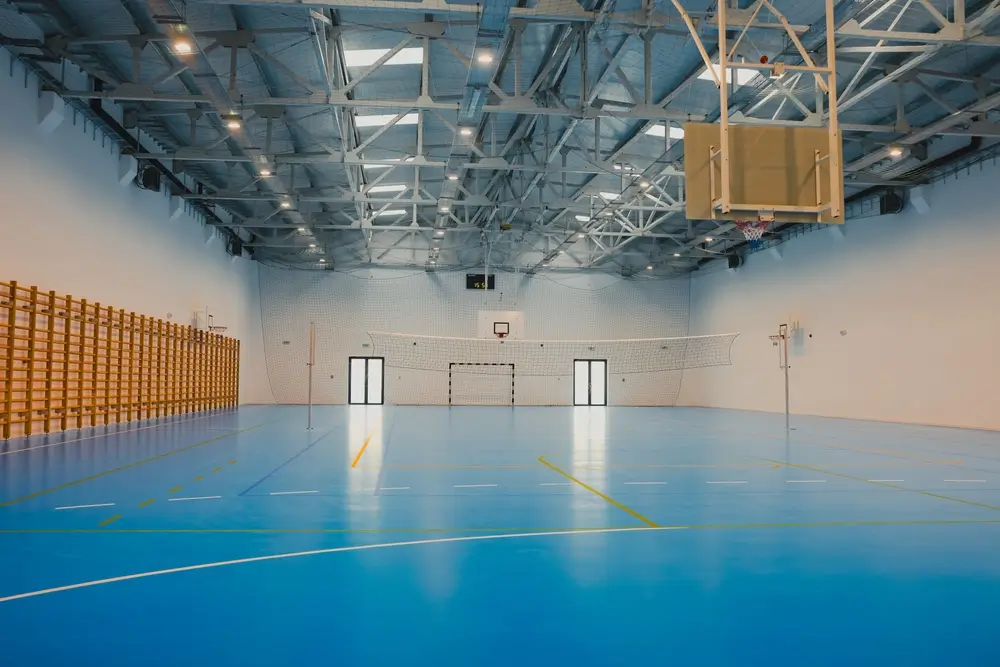
To run a valid test you need a flat non-slip surface, cones to mark each end, a 20-metre measuring tape, the beep test audio program and a device to play it. Measure the two lines exactly 20 metres apart with the tape. Guessing the distance is the fastest way to produce a score that cannot be compared with anything.
Twenty metres is approximately 21.9 yards, so this is not a 20-yard test. Marking a 20-yard lane would shorten every shuttle and inflate your level.
Two things improve a score more than raw running fitness. The first is turning technique: a tight, low pivot with a strong push-off saves fractions of a second on every shuttle, and there are hundreds of turns across a full test. The second is interval training, which raises the pace you can sustain before your anaerobic threshold forces you to slow.
| Day | Workout Type | Details and Focus |
|---|---|---|
| Monday | HIIT Session | 10 reps of 1-minute hard running, followed by 1-minute easy recovery. |
| Tuesday | Active Recovery | Go for a light walk, do some stretching, or use a foam roller. |
| Wednesday | Turning Drills & Shuttles | Spend 10-15 minutes just practicing efficient 20m shuttle turns. |
| Thursday | Endurance Run | A steady, 30-45 minute run at a pace you can hold a conversation. |
| Friday | HIIT Session 2 | 8 reps of 90-second hard running, with 90 seconds of recovery. |
| Saturday | Active Recovery | Do some light activity you enjoy, like swimming or cycling. |
| Sunday | Rest | Total rest. Let your body recover and adapt. |
Retest on the same surface, in similar conditions, with the same audio. Consistency is what gives the beep test decent test-retest reliability and lets you see whether your distance is genuinely improving.
Frequently Asked Questions
How many kilometres is 9.6 on the beep test?
Read 9.6 as Level 9, shuttle 6. On the standard 20-metre table that is 78 completed shuttles, or approximately 1,560 metres. This assumes the usual level.shuttle notation and the standard 20-metre Léger MSFT, not a 15-metre or PACER version.
Is the beep test 20 yards?
No. The standard beep test is a 20-metre shuttle run. Twenty metres is approximately 21.9 yards, so measure the course in metres rather than setting up a 20-yard lane.
Is the bleep test a 15-metre or 20-metre test?
The standard reference chart used here is the 20-metre Léger MSFT. Fifteen-metre versions do exist, but their shuttle timings and cumulative distances differ and must be read from a separate 15-metre table.
How do you measure 20 metres for a beep test?
Use a measuring tape to mark two lines exactly 20 metres apart, with cones or clear markers at each end. The surface should be flat and non-slip so that your result reflects the same course length and turning conditions as the reference chart.
What is a good beep test score by age?
It depends on age, sex and your exact level/shuttle result. The general norms above place a good result for men aged 18 to 25 at 10/2 to 11/5, and for women aged 18 to 25 at 8/7 to 10/1. These are comparison ranges, not NZDF requirements.
How hard is 7.5 on a beep test?
Read as Level 7, shuttle 5, it means holding the Level 7 pace of 11.5 km/h with 6.26 seconds per 20-metre shuttle. That is 56 completed shuttles, or approximately 1,120 metres, under the standard table.
How long does 5.4 take on the beep test, and how many runs is it?
Level 5, shuttle 4 represents 36 completed 20-metre shuttles, or 720 metres. Using the cumulative time through Level 4 plus four Level 5 shuttle intervals, the elapsed time is approximately 4 minutes 39 seconds.
What is a good score on a 20-metre beep test?
There is no single answer for everyone. The age and sex tables classify the same result differently, and any comparison only holds if both scores come from the same 20-metre version and use the same level/shuttle format.
How do you interpret beep test results?
Take the first number as the completed level and the second as the shuttles completed inside that level, then use the standard table to find cumulative distance and time. Compare the result with the norm for your age and sex, and check that the course length and audio version match.
What are the time intervals for the beep test?
The standard table starts at 9.00 seconds per 20-metre shuttle in Level 1 and 8.00 seconds in Level 2. The interval then falls steadily to 3.89 seconds at Level 21, as the speed climbs from 8.0 km/h to 18.5 km/h.
Next step
Write down your level.shuttle score, convert it with the chart above, and note the course length and audio version alongside it. That single line gives you a baseline distance you can retest against in six to eight weeks of interval training and turning practice. If you are preparing for A-Day, confirm the required level with the official NZDF requirements first, then use the chart to see exactly what pace and distance that level asks of you.
Sources
NZDF Recruitment · Aptitude & Selection 2026Train the test you cannot run.The cognitive assessment gets far less preparation than the beep test does. Give it the same discipline.

NZ Army Fitness Requirements: Tests, Standards and Times
Beep Test Audio: Correctly Timed 20 m MP3 and Setup Guide