If you are weighing up an application to the New Zealand Army, the pay question comes first. The problem is that published numbers rarely mean the same thing. Some are base salary. Some are total remuneration. Some are crowd-sourced estimates from a handful of anonymous submissions.
This article separates those measures and dates each one. You will find the official NZDF (New Zealand Defence Force) pay-grade assessment figures, the reported starting total remuneration under the 2026 package, training pay, allowances and the benefits that sit on top of salary.
 NZDF Recruitment · Aptitude & Selection 2026Your trade decides which test you sit.
Work through NZDF style aptitude questions under time and find out where you actually stand.
Read every amount with its label attached. A soldier comparing a NZ$69,000 average against a NZ$137,000 warrant officer package is comparing two different things, at two different career stages, measured two different ways.
NZ Army pay at a glance

Defence Careers states plainly that salaries rise in line with rank and qualifications, and that benefits sit on top of base pay. That single sentence explains most of the spread you will see in salary listings for the same job title.
The NZDF describes its remuneration package as built around the unique demands of military service. It combines pay, additional pay entitlements and allowances for specific duties, plus superannuation options and leave.
Three headline numbers are worth holding in mind before anything else.
The average annual salary for a Soldier in New Zealand is around NZ$69,000, according to Glassdoor data drawn from anonymous submissions. The Army Soldier careers profile published by Wintec gives a usual range of NZ$68,000 to NZ$98,000 per year. And the official Defence Careers Army Officer page lists NZ$69,833 annually for officers under training.
That last figure is a training salary, not an Army-wide average. Confusing the two is the most common mistake in online discussions of NZ Army pay.
Official figures versus aggregator estimates
There are two very different kinds of source in this field, and they deserve different levels of trust.
Official material comes from the NZDF, Defence Careers and government releases. It carries a stated pay year, a defined salary field and a clear scope. The 2024 Remuneration Market Assessments released by the NZDF under the Official Information Act are the strongest example.
Aggregator estimates come from salary sites that collect voluntary submissions. They are useful for a rough sense of scale but often rest on very small samples. The Glassdoor Soldier estimate, for instance, draws on nine anonymously submitted salaries from Auckland, Wellington, Trentham and Palmerston North. Treat it as an indicator, not a pay scale.
Label every amount with a date
Army pay has moved sharply since 2020, so an undated figure is close to useless. A 2021 submission and a 2026 remuneration package describe two different jobs financially.
When you research pay, note three things for each number: the year it applies to, whether it is base salary or total remuneration, and who published it. Do that and most apparent contradictions between sources dissolve.
The official NZDF pay-grade assessment
The NZDF published market assessments for 2023 and 2024 comparing military and civilian pay scales against labour-market benchmarks. These documents are the closest thing available to an official pay scale reference across Army, Navy and Air Force.
The assessment table keeps several fields separate: pay scale area, pay scale group, pay scale level, previous-year base salary, market benchmark, market gap and market alignment. That structure matters. The base salary column is not take-home pay, and the benchmark column is a civilian comparison, not an NZDF rate.
The document identifies Army pay-grade labels including PTE, LCPL, CPL, SGT, SSGT, WO2, WO1, OCDT, 2LT, LT, CAPT, MAJ, LTCOL, COL and BRIG. Anyone asking about the pay scale by rank should start from these codes, since they are what the official assessment actually uses.
Selected 2024 assessment rows
In the 2024 assessment, the A1 PTE(E) grade shows a 2023 base salary of NZ$52,622 against a 2024 market benchmark of NZ$51,662, giving a market gap of 1.8%. A1 LCPL(E) shows NZ$57,851 against a NZ$54,657 benchmark, a gap of 5.5%.
Moving up, A1 CPL(E) shows a base salary of NZ$65,240 against a NZ$62,294 benchmark, a 4.5% gap. A1 SGT(E) shows NZ$73,431 against NZ$70,949, a 3.4% gap.
Notice that the gaps swing both ways. A2 PTE(E) sits at -2.5%, A3 CPL(E) at -4.8% and A3 SGT(E) at -6.7%. Positive alignment at the entry step of a rank does not carry through every increment.
The pattern is far more severe at senior officer level. The 2024 assessment reports a -25.5% market gap for A1 COL(E) and a -8.8% gap for A3 LTCOL(E) in Area C3. This is the data that explains the targeted senior-rank adjustments discussed later in this article.
For comparison, the 2023 assessment shows how far behind the market the scale had fallen before the July 2023 increase. A1 PTE(E) recorded a base salary of NZ$41,111 against a NZ$48,682 benchmark, a gap of -18.4%. A2 PTE(E) sat at -19.8%. Almost every military grade in that year carried a double-digit negative gap.
NZ Army basic training pay and the first year
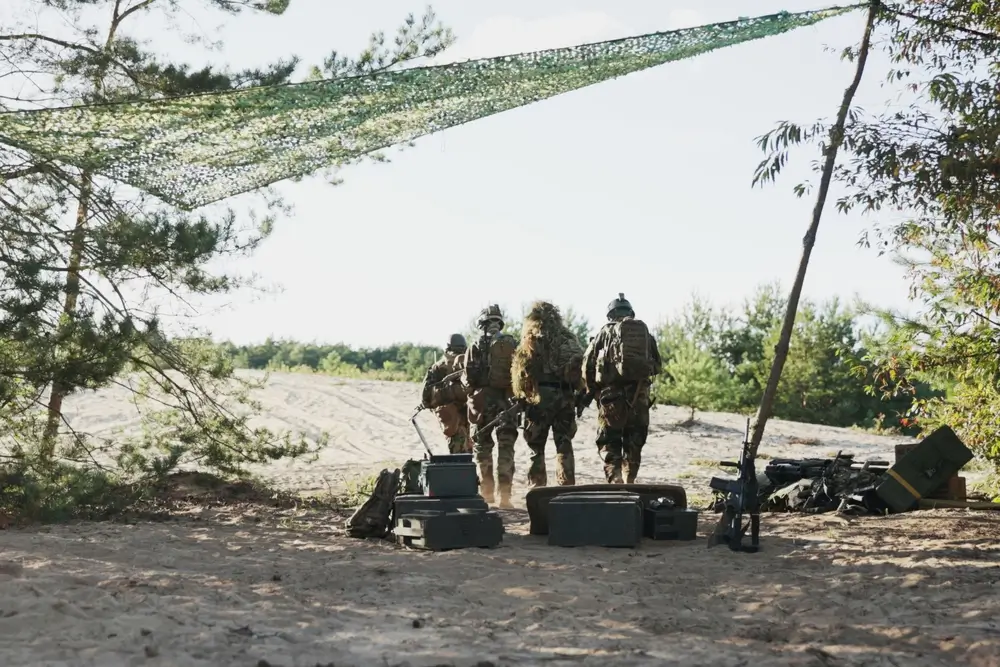
Basic training for new Army recruits runs for 16 weeks at Waiouru Army Camp, according to the Wintec Army Soldier careers profile, followed by corps training in a specific Army trade such as communication systems technician, gunner, logistics specialist or field engineer.
Yes, you are paid during this period. The precise recruit training rate is not published in the official material available, but the pay figures that are published give a solid indication of the entry level.
The Defence Careers Army Officer page lists NZ$69,833 annually while under training. A separate report on the 2026 remuneration package lists NZ$69,833 as starting total remuneration for a newly enlisted soldier, sailor or aviator. The two figures match in value but are labelled differently, and should not be treated as the same measure.
Officer entry follows a different path
Officer candidates do not do the standard 16-week recruit course. Initial Induction Training compresses the recruit basic training package into a more intensive 10-week period, according to Defence Careers.
The environment is described directly on the official page: shared accommodation with ten others, limited free time, long training days and restricted access to personal devices. Content covers Army ethos, values and Warrior Culture, the Army Combative Programme, day and night navigation, weapons training on the MARS-L assault rifle, pistol, grenade and light support weapon, field exercises, parade and drill, and self-leadership.
IIT is followed by the New Zealand Commissioning Course, a 12-month programme held at Waiouru. That duration is confirmed both by Defence Careers and by the Wintec Army Officer profile.
Officer salary under training
| Status | Salary |
|---|---|
| Under training | $69,833 |
The same Defence Careers officer page also lists future potential earnings.
| Status | Earnings |
|---|---|
| Future potential earnings | $140,000 |
That NZ$140,000 figure is a career ceiling indication, not a starting point. Reaching it depends on rank progression over many years.
How pay changes with rank, experience and role
Progression is the main driver of Army earnings. Pay rises with rank and qualifications, so promotions to corporal, sergeant and warrant officer roles lift a soldier’s pay meaningfully. Both Defence Careers and the reported salary data point the same way.
The Glassdoor Soldier estimate puts the average at NZ$69,000 per year with a typical reported range of NZ$53,000 to NZ$79,000. The underlying submissions show how much location and service length matter.
| Job title | Years of Experience | Total Pay | Base •Additional pay | Location | Date submitted |
|---|---|---|---|---|---|
| Soldier | 1-3 Years | $68K – $79K/yr | Auckland, Auckland | submitted on 29 Apr 2025 | |
| Soldier | 1-3 Years | $65K – $75K/yr | Wellington, Wellington | submitted on 25 Mar 2025 | |
| Soldier | 1-3 Years | $68K/yr | $68K • $0 | Auckland, Auckland | submitted on 12 Jun 2024 |
| Soldier | 1-3 Years | $52K – $60K/yr | Trentham | submitted on 1 Jun 2024 | |
| Soldier | 1-3 Years | $74K – $86K/yr | Auckland, Auckland | submitted on 28 Apr 2024 | |
| Soldier | 4-6 Years | $63K – $73K/yr | Palmerston North, Manawatu-Wanganui | submitted on 30 Jul 2022 | |
| Soldier | 15+ Years | $101K – $118K/yr | Auckland, Auckland | submitted on 27 Dec 2021 | |
| Soldier | 1-3 Years | $49K – $57K/yr | Palmerston North, Manawatu-Wanganui | submitted on 16 Nov 2021 | |
| Soldier | 10-14 Years | $72K – $83K/yr | Auckland, Auckland | submitted on 1 Jun 2020 | |
| Soldier | 4-6 Years | $65K – $75K/yr | Auckland, Auckland | submitted on 1 Jun 2018 |
The single strongest data point for long service is the soldier with 15 or more years reporting total pay of NZ$101,000 to NZ$118,000 in Auckland, submitted in December 2021. Read the older rows carefully though, because they predate the 2023 and 2026 pay changes entirely.
Officer pay estimates
For officers, Glassdoor estimates average NZDF Military Officer pay at NZ$111,000 per year, with a typical range from NZ$98,388 to NZ$183,657. That estimate rests on eight submissions and is flagged as low confidence on the platform itself.
| Job Title | Years of Experience | Total Pay | Base •Additional pay | Location | Date submitted |
|---|---|---|---|---|---|
| Military Officer | 7-9 years | NZ$95K – NZ$110K/yr | Wellington, Wellington | submitted on Oct 22, 2022 | |
| Military Officer | 10-14 years | NZ$104K – NZ$121K/yr | Auckland, Auckland | submitted on Oct 14, 2022 | |
| Military Officer | 10-14 years | NZ$102K – NZ$118K/yr | Auckland, Auckland | submitted on Aug 2, 2022 |
All three submissions date from 2022. An officer pay estimate built on 2022 submissions cannot describe a 2026 remuneration package, which is precisely why the label and the date matter more than the number.
Use these aggregator figures for a sense of scale between a soldier’s pay and an officer’s pay. Use the official NZDF documents when you need a defensible figure.
What makes up NZDF pay beyond base salary
Understanding the components explains why the same rank appears with wildly different numbers across sources.
Base salary is the pay received for a member’s role, trade or profession. It should be based on the relevant sector market median for the role, linked to the military or civilian remuneration table. This is the figure the NZDF market assessment tracks.
The Military Factor, formally the Liability Military Factor and commonly called the MIL Factor, is paid to all uniformed members of the Defence Force, both Regular Force and Territorial Force. Its purpose is to acknowledge the loss of certain rights and freedoms under the Defence Act 1990, the unlimited liability of service, and the compulsion to serve where and when the NZDF requires. The stated rationale is capability: the Military Factor helps retain highly skilled and trained military personnel for longer, keeping the NZDF combat ready.
Reporting on the 2026 package puts the Military Factor at approximately NZ$18,000, described as compensation for the unique demands, risks and relocation requirements of military service. That single component accounts for a large share of the difference between base pay and headline total remuneration.
Superannuation and KiwiSaver contributions are also wound into total salary. The NZDF pays the legal employer contribution entitlement of 3%, according to the Mission Homefront pay explanation written for Defence families.
Provisions of service covers allowances such as arduous and hazardous training, posting readiness and operations. The basis is compensation for special or urgent demands not fully covered by other components, plus non-monetary compensation through additional offerings.
The practical consequence is straightforward. Total remuneration includes the Military Factor and employer KiwiSaver contributions, so it always sits above the salary that actually lands in a member’s account. A NZ$137,000 total remuneration package is not a NZ$137,000 base salary.
A claim circulates widely that the Military Factor was not adjusted for 12 years, from 2012 to 2024, while wages inflated by 54.4% over the same period. This claim comes from an advocacy source and is not corroborated by official NZDF or government publications.
NZDF Recruitment · Aptitude & Selection 2026Your trade decides which test you sit.Work through NZDF style aptitude questions under time and find out where you actually stand.
Allowances, housing support and operational additions
The NZDF states that its remuneration includes additional pay entitlements and allowances for specific duties, recognising the challenges and commitments members accept.
Accommodation support is one of the more valuable elements for Regular Force members. It can include barracks, housing and allowances for higher living costs. Permanent postings also come with relocation support for the member, their household and accompanying family, within New Zealand or overseas.
The Operational Enabling Allowance Posting Readiness, or OEAPR, is a daily payment intended to offset higher rental costs for personnel living off base. Reporting on the 2026 package notes that OEAPR rates were reduced across all regions, because a fixed allowance budget now has to be spread across a larger number of qualifying regions.
That detail is worth flagging for anyone budgeting on published pay figures. Allowances can move down as well as up, independently of the base salary settlement.
Beyond housing, allowances attach to arduous and hazardous training, posting readiness and operational deployment. Exact rates are not published in the official material available, so treat allowance income as role-dependent rather than guaranteed.
Benefits that add value to Army pay
Defence Careers lists the benefit package alongside salary: annual leave, subsidised food and accommodation, free medical and dental care, and superannuation schemes to help you save for the future. Free medical and dental care in particular is a real cash-equivalent benefit that civilian salary comparisons never capture.
For retirement saving, the NZDF provides KiwiSaver and FlexiSaver schemes, plus legacy superannuation options for existing members. The Force Financial Hub team produces resources to support retirement planning and informed financial decisions.
Education is a substantial part of the package. There may be funded opportunities to pursue professional and academic qualifications that remain yours for life, alongside regular training to keep skills current with the latest technology.
Families are covered too, with benefits available for the families of serving personnel through the NZDF benefits system. Leave options for the Regular Force are designed to allow rest, recovery and management of personal or family responsibilities.
Working conditions vary widely by location and role. Being stationed on a base in New Zealand is not the same as bunking down on a warship at sea, though the NZDF states that even in the toughest conditions members are supported by resources and facilities to make life as comfortable as possible.
Regular Force and Territorial Force pay routes
The pay structure splits by service type, and the difference is significant for anyone considering part-time service.
Regular Force members receive the comprehensive remuneration package, including additional pay entitlements and allowances for specific duties. Territorial Force members receive a tailored package reflecting part-time service.
Leave works differently. Territorial Force members are not entitled to standard leave, but receive a 10% holiday pay premium alongside their regular pay.
One important commonality: the Military Factor applies to uniformed members of both the Regular Force and the Territorial Force. The recognition of military liability is not restricted to full-time service.
KiwiSaver and FlexiSaver options, together with legacy superannuation options for existing members, sit within the NZDF remuneration and benefits system for both routes.
The 2023 pay rise and market-rate context
To understand today’s figures you need the 2023 reset, which is where the sharp entry-level increases came from.
Budget 2023 allocated more than NZ$419 million to increase NZDF payroll, described by the government as the largest Defence Force pay increase in more than a decade. RNZ reported the allocation as NZ$419 million over four years, with a further NZ$328 million for upgrading NZDF assets and infrastructure.
From 1 July 2023, many NZDF personnel, including new recruits and skilled lower-ranked service people, were due to receive annual increases of NZ$4,000 to NZ$15,000. Then Defence Minister Andrew Little said the increase was four times greater than any previous defence remuneration boost over the past decade.
“Attracting and retaining more New Zealanders into our defence force means we need to ensure that wages are competitive. This pay boost helps achieve that.”
— Andrew Little, Defence Minister
The driver was attrition. High rates of staff turnover, combined with increasing calls on the NZDF such as responding to Cyclone Gabrielle, training Ukrainian troops in the UK, and regional surveillance and patrolling, had left forces stretched. Then Prime Minister Chris Hipkins said defence wages had lagged behind, calling it unfair and pointing to significant rates of attrition as the result.
“We have a moral obligation to ensure our soldiers, sailors and aviators are fairly paid for the critical and often dangerous work they do, and the government takes that responsibility seriously on behalf of all New Zealanders.”
— Andrew Little, Defence Minister
The government stated the increase would bring 90 percent of NZDF personnel to, or close to, market rates.
That target was largely about the lower ranks, and the 2024 assessment shows why the picture remains uneven. Market alignment still varies by pay area and grade, with clear positive gaps at entry steps for private, lance corporal, corporal and sergeant, and substantial negative gaps at senior officer level. Any claim that NZDF wages sit uniformly far behind the civilian median is not supported by that official 2024 market gap data.
The REM:2026 package and current total remuneration
The most recent settlement, REM:2026, took effect on 1 July. Reporting by The Post says most military and civilian personnel received an average pay increase of 2.2%, against annual inflation of 4.1% recorded in the 12 months to the June 2026 quarter. In real terms, that means most personnel went backwards.
Senior ranks were treated differently. Colonels and brigadiers received targeted salary adjustments of approximately NZ$20,000. The NZDF justified those larger increases by pointing to a significant gap against comparable external roles, with assessments indicating senior officers were about 33% behind. That reasoning aligns with the -25.5% market gap recorded for A1 COL(E) in the 2024 assessment.
Here are the current starting total remuneration figures reported under the new framework.
| Rank/Role | Starting Total Remuneration |
|---|---|
| Newly enlisted soldier, sailor, or aviator | $69,833 |
| Corporal-level role | Approx. $77,000 |
| Sergeant-level role | Approx. $84,000 |
| Warrant Officer | Approx. $137,000 |
| Colonel-equivalent officer | $198,641 |
| Brigadier-equivalent officer | $248,222 |
Read that table with the components section in mind. Every figure includes the Military Factor and employer KiwiSaver contributions, which inflates the package relative to actual take-home pay. These are not base salary numbers and they are not what appears in a member’s bank account.
Where entry-level pay has come from
Official Information Act documents cited by The Post show newly enlisted remuneration rising from NZ$42,377 in July 2020 to NZ$68,860 by April 2025, an increase of roughly 62%. That is a large shift over five years, and it explains why older salary submissions look so low.
Progression further up the scale was slower over the same window.
| Rank/Role | July 2020 Remuneration | July 2024 Remuneration |
|---|---|---|
| Captain or Lieutenant | $83,499 | $92,142 |
Senior officer remuneration also grew slowly before the recent targeted adjustments.
| Rank/Role | 2020 Remuneration | 2024 Remuneration |
|---|---|---|
| Colonel-equivalent | $171,916 | $179,489 |
| Brigadier-equivalent | $220,429 | $228,002 |
The contrast is the source of the internal frustration reported around REM:2026. Entry-level pay was lifted hard between 2020 and 2025, while mid-career and senior remuneration moved far more slowly until the 2026 targeted adjustments landed.
On retention, the NZDF has introduced Critical Continuity Payments aimed at keeping personnel in vital trades. Amounts and eligibility criteria have not been published, so the practical value of those Critical Continuity Payments to any individual soldier or officer is not yet clear.
What the published figures do not tell you
Being honest about gaps is more useful than filling them with guesses.
No separate NZSAS salary figure appears in official NZDF publications. Rather than assume a special rate, understand that specialist duties are compensated through allowances for arduous and hazardous training and operational service, on top of base pay and the Military Factor.
Pay frequency is also unpublished in official material. NZDF sources quote annual remuneration; Glassdoor displays monthly equivalents of NZ$8,199 to NZ$15,305 for Military Officers, but that is a calculated conversion, not a statement of payday. Do not infer how often you are paid from an annual figure.
Tax and deductions are another gap. Every figure in this article is gross. Your take-home pay after PAYE, KiwiSaver contributions and any accommodation charges will be materially lower than the headline number.
Finally, exact recruit training rates, allowance values and the current Military Factor calculation are not published grade by grade. For those, the recruitment process itself is the right place to ask.
Practical next steps
Start by deciding whether you are looking at a soldier route or an officer route, because the pay path and the training path both differ from day one. Soldier entry means 16 weeks of basic training at Waiouru then corps training in a trade. Officer entry means 10 weeks of Initial Induction Training then the 12-month commissioning course, at NZ$69,833 while under training.
When you get to a conversation with a recruiter, ask three specific questions: what is the base salary for this trade at entry, what is the total remuneration including the Military Factor and employer KiwiSaver, and which allowances apply to this role and posting location. Those three answers give you a real budget.
Then check the official Defence Careers role page for your target trade and the NZDF pay and benefits pages for the current allowance and superannuation detail. Those are the only sources that carry authority on your actual offer.
Frequently Asked Questions
How much do NZ military get paid?
There is no single NZDF salary, because pay depends on role, rank, qualifications and which remuneration components are included. Reported figures range from around NZ$69,000 as an average Soldier estimate, to NZ$69,833 for Army officers under training, up to NZ$248,222 total remuneration for a brigadier-equivalent role. Those are different measures, so always check whether a figure is base salary or total remuneration.
How much will I be paid if I join the New Zealand Army?
The Wintec Army Soldier careers profile gives a usual annual range of NZ$68,000 to NZ$98,000. The official Defence Careers officer page lists NZ$69,833 annually while under training. Your own figure depends on your entry route, your trade and whether the published amount is base salary or total remuneration.
Do you get paid during NZ Army basic training?
Yes. The Defence Careers Army Officer page lists NZ$69,833 annually for officers under training, and reporting on the REM:2026 package lists NZ$69,833 as starting total remuneration for a newly enlisted soldier, sailor or aviator. The values match, but they are labelled differently and should not be treated as the same base-salary measure.
How long is NZ Army basic training?
New Army recruits complete 16 weeks of basic training at Waiouru Army Camp, followed by corps training in a specific trade. Officer entry follows a different sequence: 10 weeks of Initial Induction Training, then a 12-month commissioning course.
What is the NZ Army pay scale by rank?
The official NZDF market assessment uses pay-grade labels including PTE, LCPL, CPL, SGT, SSGT, WO2, WO1, OCDT, 2LT, LT, CAPT, MAJ, LTCOL, COL and BRIG. Its 2024 examples include NZ$52,622 for A1 PTE(E) and NZ$65,240 for A1 CPL(E), but those are market-assessment rows rather than a complete take-home salary table. Read each row with its assessment year, base-salary field, benchmark and market gap attached.
How much do NZ Army officers get paid?
Defence Careers lists NZ$69,833 annually for Army officers under training, with future potential earnings of up to NZ$140,000. A Glassdoor estimate puts NZDF Military Officer pay at NZ$111,000 per year, but it rests on eight submissions and should be read as an aggregator estimate rather than an official pay scale.
What is the highest salary in the New Zealand Army?
The highest figure in the current starting total remuneration table is NZ$248,222 for a brigadier-equivalent officer, followed by NZ$198,641 for a colonel-equivalent officer and approximately NZ$137,000 for a warrant officer. These are total remuneration figures, not base salary or take-home pay.
Do NZ Army personnel get paid monthly?
Official NZDF sources publish annual remuneration figures rather than payment frequency. Glassdoor displays monthly equivalents of NZ$8,199 to NZ$15,305 for Military Officers, but that is a conversion of an annual estimate. Official NZDF pages do not state a universal monthly payday, so do not infer payment frequency from an annual salary figure.
What is the NZ Army pay scale for 2026, and will NZDF pay rise?
The REM:2026 package took effect on 1 July and gave most personnel an average increase of 2.2%, with targeted senior-rank increases of approximately NZ$20,000. That is separate from the earlier government-announced increase of NZ$4,000 to NZ$15,000 effective 1 July 2023. The 2023 announcement should not be read as the 2026 pay scale.
How much do NZ SAS get paid?
No separate NZSAS salary figure appears in official NZDF publications. NZDF remuneration combines base pay with allowances for specific duties, including arduous and hazardous training and operational service, plus the Military Factor and wider benefits. For role-specific detail, official Defence Careers information is the right reference.

Sources
NZDF Recruitment · Aptitude & Selection 2026Your trade decides which test you sit.Work through NZDF style aptitude questions under time and find out where you actually stand.
NZ Army Infantry: Training, Battalions and Career Paths

NZ Army Reserves: Training, Pay and Time Commitment Explained