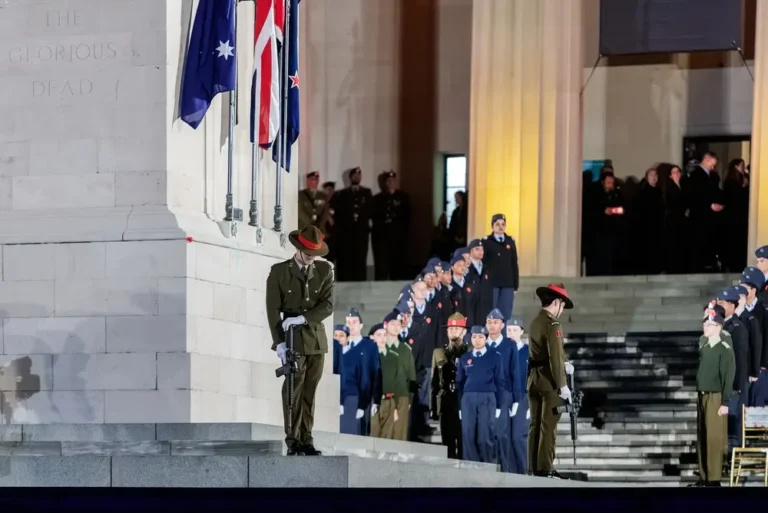
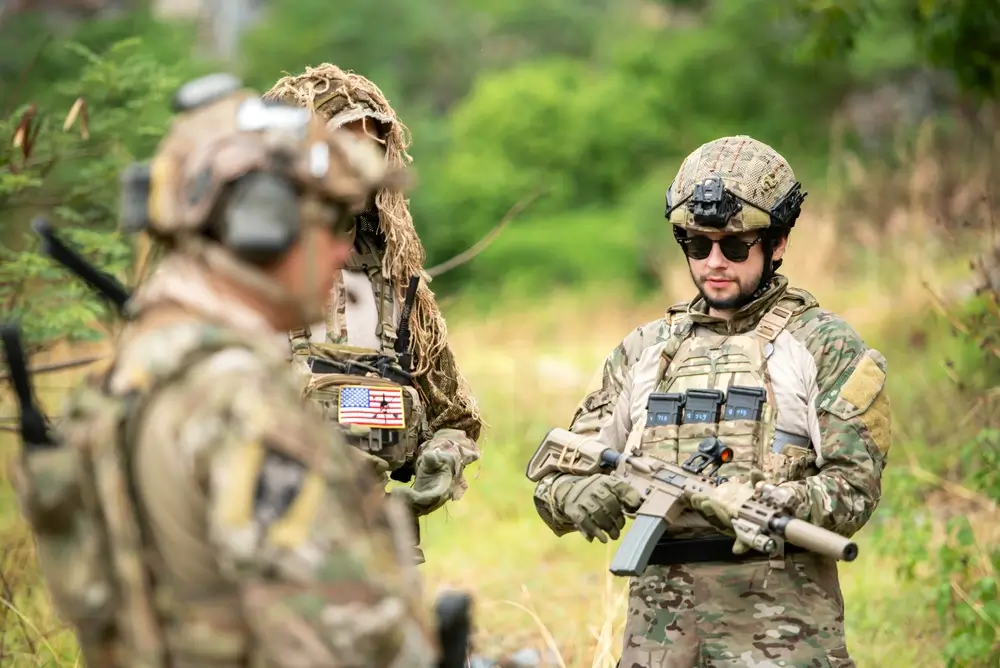
If you are thinking about joining the New Zealand Defence Force, deployment is probably one of the first things you picture. It is also one of the least understood. Some people imagine combat only. Others assume a fixed tour of duty with a set start and end date. The reality is more varied, and it depends heavily on your service, your trade and the mission.
This guide sets out what NZDF deployments actually involve, how long they can last, where personnel have been sent, and how the decisions are made. The aim is to give you a realistic picture before you apply, not a recruitment pitch.
 NZDF Recruitment · Aptitude & Selection 2026From curious to candidate.
Selection opens with a timed cognitive assessment. Here is exactly how to prepare for it.
What a deployment means for an NZDF recruit
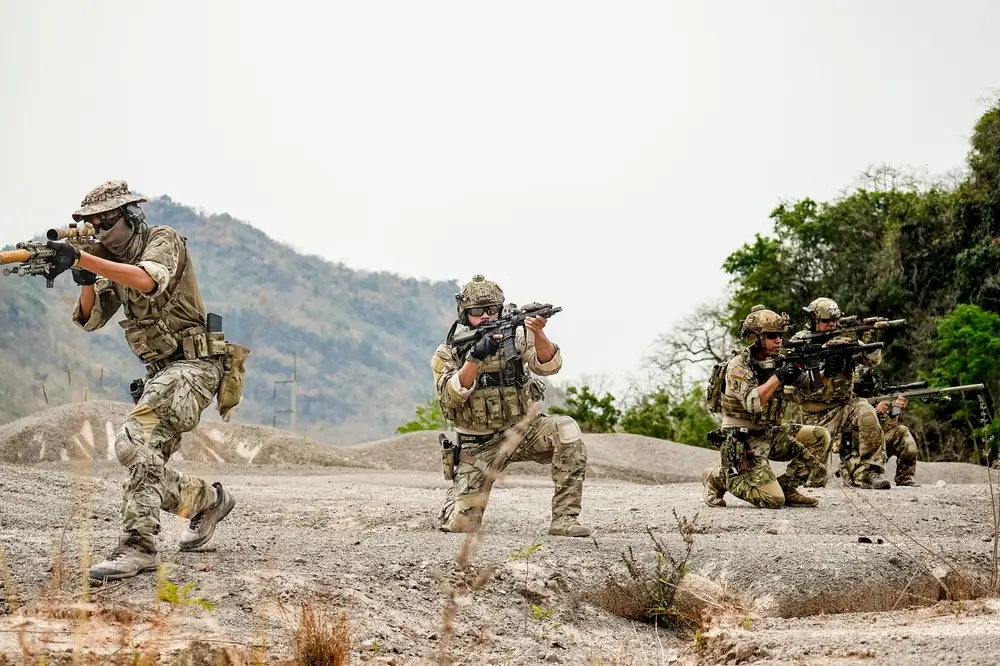
The NZ Defence Force describes “deploy” simply as moving to the right place at the right time. That covers a lot of ground. During a career with the NZDF you may deploy overseas, but also to different locations within New Zealand, as part of global operations and exercises.
Length varies with the mission. Defence Careers states that depending on how complex the deployment is, the length and type can vary: it might be a few days, or it might be many months. The destination might be somewhere in New Zealand, in the South Pacific neighbourhood, or considerably further afield.
You do not choose your own deployments. The NZDF selects which capabilities to deploy and who will be involved based on what the mission requires. That means your trade, your unit and your readiness level all feed into whether you go.
Readiness timelines also differ. A 2009 Audit Office review of the NZ Defence Force explains that each year the NZDF and the Government agree how much time the NZDF will have to respond to each scenario it needs to prepare for. Sometimes personnel and equipment must be ready within a few hours. At other times there are weeks or months to prepare.
One practical point that matters to families: the NZDF provides support systems and communities for partners and families of deployed personnel while their loved ones are away. Deployment affects the household, not just the person in uniform.
Exercises and operations are not the same thing
People often use these terms interchangeably. The NZDF does not.
Exercises are short training engagements that test personnel in simulated scenarios designed to imitate real-life environments. They are frequently run alongside allied nations. Defence Careers gives three examples: RIMPAC, Southern Katipo and Exercise Pitch Black. Exercises like RIMPAC and Exercise Pitch Black are where much of the practical interoperability work happens, because you are training with partner forces under conditions built to resemble the real thing. Southern Katipo, by contrast, sits closer to home.
Operations cover a much broader set of challenges to national and personal security. According to Defence Careers, operations can include combat operations, peacekeeping, search and rescue, international coalition support, and humanitarian aid and disaster relief, known within the NZDF as HADR. An operation is a coordinated NZDF contribution to a particular mission or security outcome, and it can send personnel to many parts of the world.
Both categories can involve other New Zealand Government agencies or allied forces. So even a domestic task may put you alongside civilian agencies rather than only military units.
Army deployments: more than combat
The Army is a fighting force, and soldiers are deployed overseas in conflict situations. But Defence Careers is direct on this point: it is incorrect to think an Army is just about combat.
On deployment, Army personnel work alongside allies and contribute to international coalitions, offering New Zealand expertise and resources while learning from other armies. That coalition dimension shapes a lot of the work.
Beyond combat, the Army helps bring stability to countries affected by internal conflict and protects civilians caught up in the crossfire. After natural disasters, Army personnel can bring resources to affected areas, help repair infrastructure and support communities getting back on their feet. As a member of the United Nations, New Zealand is also called upon to observe and monitor delicate political situations, which is a very different skill set again.
The point for a prospective recruit is simple. If you join expecting only one type of task, you will likely be surprised by the range.
Partner training: what an overseas Army rotation can look like
A recent Korean Peninsula rotation gives a concrete example of a modern Army deployment.
The NZDF deployed a combat-ready infantry platoon of 35 soldiers to the Republic of Korea for a 90-day training mission with Korean and United States forces. It was the first NZ Army organisation to train at the Korea Combat Training Center, and a second deployment was planned for the following year.
That second rotation was subsequently completed. The NZDF reported that a New Zealand Army infantry platoon finished a highly demanding three-month deployment to the Republic of Korea alongside Korean and US forces, operating under the United Nations Command. Based primarily out of Camp Casey with the US Army’s 2nd Infantry Division, the platoon achieved milestones across integration, combat readiness and interoperability, building on lessons from the first rotation.
The training content was demanding. It included a simulated coastal assault using Korean Amphibious Assault Vehicles, and a two-week field training exercise that culminated in a 96-hour continuous tactical phase.
Brigadier Jason Dyhrberg, the Land Component Commander, framed the value of this kind of work:
“By training alongside our partners in these sorts of environments, it ensures our soldiers are not only highly interoperable but at times interchangeable within a multinational force, which is vital in today’s strategic environment.”
That phrase, “at times interchangeable”, is worth noting. Coalition readiness is not just about being present. It is about being able to slot into a partner force and function.
NZDF Recruitment · Aptitude & Selection 2026From curious to candidate.Selection opens with a timed cognitive assessment. Here is exactly how to prepare for it.
Navy deployments: maritime security and rescue
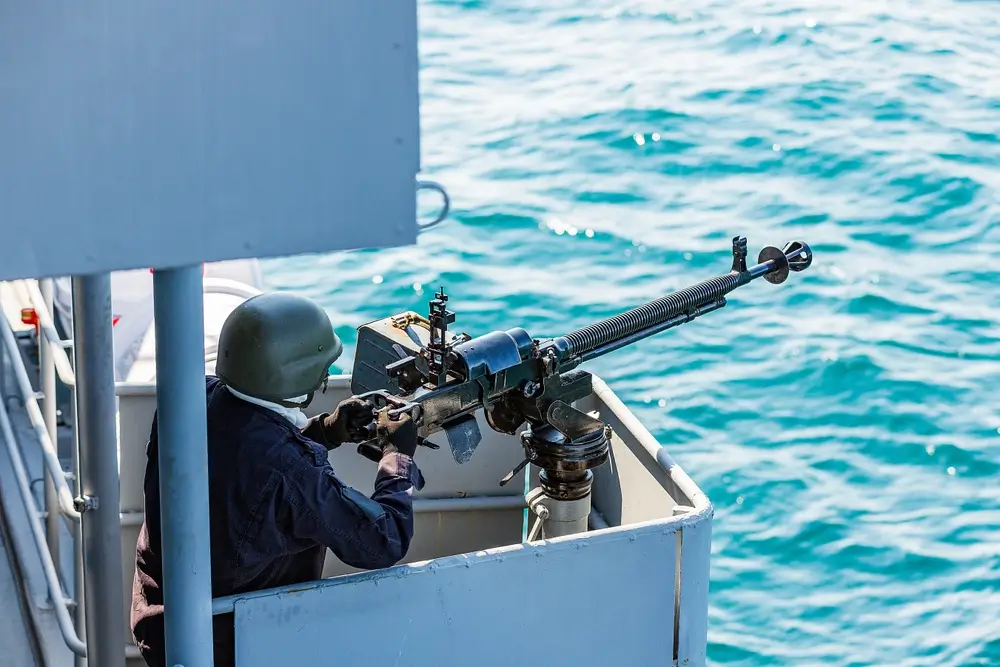
New Zealand’s coastline is long and the Pacific is vast, so Navy ships patrol frequently. Defence Careers describes the core tasks: conducting surveillance, deterring unlawful activity, and interdicting vessels of interest.
Protecting the Exclusive Economic Zone is a shared job. The Navy works closely with other New Zealand Government departments on this, which means deployments can be as much about fisheries, customs and resource protection as about military threat.
Navy personnel also take part in search and rescue operations, underwater recovery and peacekeeping. Further afield, the Navy assists the international community in anti-piracy patrols and other maritime security tasks.
North Asia is one current example of maritime work. Maritime patrol aircraft, personnel and naval assets are deployed there in support of United Nations Security Council sanctions against North Korea. As the NZDF puts it, maritime surveillance patrols detect and deter sanctions evasion activities such as ship-to-ship transfers of illicit goods at sea.
Air Force deployments: lift, intelligence and rescue
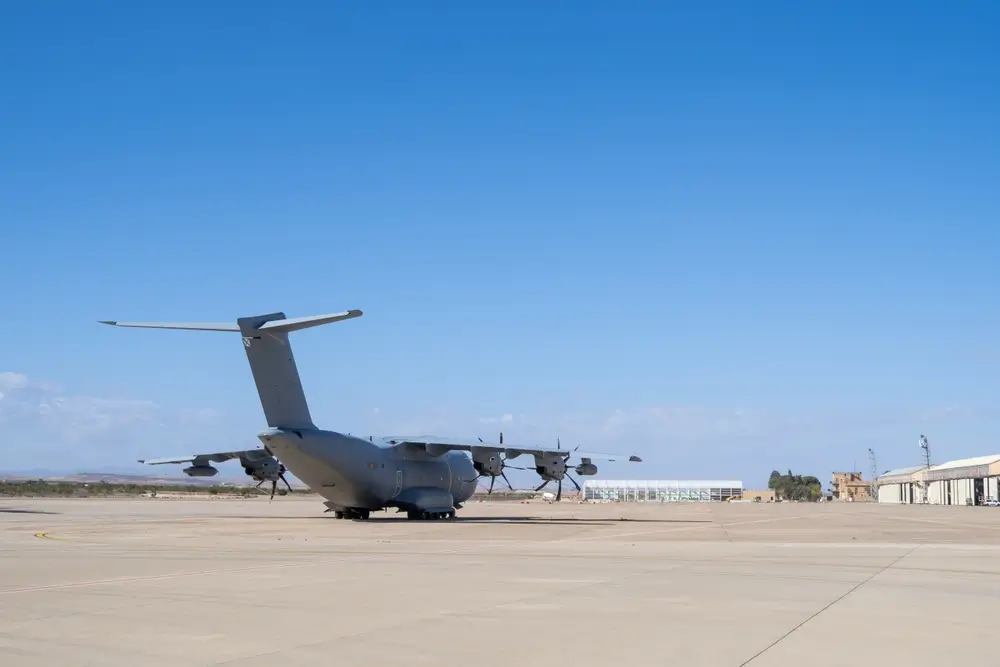
The Air Force carries large amounts of equipment, personnel and supplies, and Defence Careers notes that this expertise plays a central role in any overseas operations involving the Defence Force or its allies. Without airlift, most other deployments become much harder.
In combat theatres such as the Middle East, Hercules C-130 aircraft conduct regular supply and redeployment flights. In countries affected by war, Air Force personnel can help monitor tense situations and provide aerial intelligence, supplying the essential tools and support needed by the Army and allied forces.
Search and rescue over land and sea is another Air Force task, along with relief after natural disasters when roads and bridges are damaged or impassable. That capability matters domestically as well as overseas.
A recent Middle East tasking shows how these strands combine. No. 40 Squadron’s C-130J Hercules aircraft were positioned in the region as part of contingency plans to support New Zealanders seeking to leave Iran and Israel. Defence Minister Judith Collins described the reasoning:
“This deployment is part of our contingency plans in preparation for supporting New Zealanders seeking to leave Iran and Israel.”
Collins also noted that airspace in Israel and Iran remained heavily restricted, so getting people out by aircraft was not yet possible, but positioning an aircraft along with Defence and Foreign Affairs personnel in the region meant more could be done once airspace reopened. Not every deployment produces immediate action. Some are about being in position.
Reserve Force: who may be selected to deploy
Reservists deploy too. Because the NZDF contributes to a large number of operations and exercises in New Zealand and overseas, extra personnel are sometimes required, and the Reserve Force supplements the ranks so the mission can be achieved.
Selection works two ways. Individuals can be selected to make up sufficient numbers, or entire Reserve Force units can be tasked to perform specific roles. The modern Army Reserve is organised into three regionally based battalion groups.
Timing shapes what is possible. The Audit Office review notes that longer notice periods allow for specialised training that supplements existing skills, while maintaining all personnel and equipment at a high state of readiness for immediate deployment is considered excessively costly and resource-intensive, because it demands continuous up-to-date training and constant availability.
For a reservist, that translates into a practical reality: the more warning there is, the more preparation you can expect before you go.
The current NZDF deployment picture
The Ministry of Defence advises the New Zealand Government on deployments of NZDF personnel and assets, in line with national security priorities, support for the international rules-based system, collective security and New Zealand’s foreign-policy objectives.
The Ministry of Defence deployment list covers Antarctica, Bahrain and the United Arab Emirates, Egypt, Jordan, North Asia, the Republic of Korea, the South Pacific and South East Asia, and the Republic of South Sudan. The NZDF news feed reported on 23 July 2026 that the South Sudan deployment had been renewed.
Reporting by RNZ adds detail on scale for several of these. Up to eight New Zealand military observers are deployed in the Golan Heights, Lebanon and Syria, described as New Zealand’s largest current contribution to a United Nations-led peacekeeping mission, with tasks including patrolling and monitoring ceasefires and military activity. Up to 20 NZDF personnel are based at operational headquarters for the Combined Maritime Forces in Bahrain, a multinational naval partnership that the NZDF says exists to promote security, stability and prosperity across approximately 3.2 million square miles of international waters. Fewer than 10 personnel are in Jordan at an intelligence fusion centre called Operation Gallant Phoenix, where partners collect and share information about potential and existing terrorist threats, irrespective of threat ideology.
Other deployment names appear in public reporting, including Operation Tīeke in Europe, Op Antarctica, Op Awhina and Op Farad. Personnel figures reported by news outlets for these tasks are point-in-time snapshots rather than fixed establishments, and RNZ’s Egypt figure of up to 28 personnel is not confirmed by Ministry of Defence or NZDF listings, which name Egypt as a deployment area without a headcount.
Treat any list like this as a snapshot. Deployments are renewed, concluded and replaced, so check current NZDF and Ministry of Defence updates rather than assuming a permanent posting map.
How deployment decisions and readiness are managed
Deployments are not decided inside a single unit. The Ministry of Defence advises the Government, and the choices reflect national security priorities and foreign-policy objectives as much as military capability.
The readiness cycle is formalised. Each year, the NZDF and the Government agree how much time the NZDF will have to respond to each scenario. Twice a year, the NZDF tells the Minister of Defence what new deployment capability, if any, could be available during the next six months. The Audit Office notes that the capability available often depends on the current number and complexity of existing deployments.
That trade-off is real, and the Audit Office documented it. In its review, the Air Force and Navy mostly met their targets for improving preparedness, while the Army did not, mainly because it deployed more personnel and insufficient numbers remained available to meet the targets.
Needs themselves vary widely. The Audit Office describes them as potentially short term or long term, domestic or international, involving low or high security threats, and involving limited or extensive combat. That range is precisely why no single deployment template exists.
A realistic next step for prospective recruits
Deployment is one part of an NZDF career, not the whole of it. Around it sit exercises, domestic tasks, training cycles and time at your home base.
Do not assume every deployment means combat. Operations also include peacekeeping, search and rescue, international coalition support, and humanitarian aid and disaster relief. Your service branch and the mission determine whether you end up on maritime patrol, in partner-force land training, flying airlift, supporting intelligence work, or responding to a disaster.
The most useful thing you can do before applying is to look at the roles that interest you, then check the current NZDF and Ministry of Defence deployment information for the kinds of tasking those roles actually attract. The public picture changes, and current information beats a general impression. If you want to explore the options, start with the NZDF careers overview and work back from the trade to the missions it supports.
Frequently Asked Questions
Does the New Zealand Army get deployed?
Yes. Army personnel may deploy overseas or to locations within New Zealand, depending on the mission and the capabilities needed. That can mean coalition work, stabilisation tasks, disaster relief, observation and monitoring, or combat-related roles.
What does the New Zealand Army actually do on deployment?
It works alongside allies and contributes to international coalitions, but the job is not limited to combat. Army deployments also involve stabilising countries affected by internal conflict, protecting civilians, repairing infrastructure after disasters, and observing or monitoring delicate political situations.
What are the current deployments of the New Zealand Army?
Publicly listed NZDF deployment and engagement areas include the Republic of Korea, North Asia, the Middle East, the Golan Heights, Lebanon, Syria, Jordan, Bahrain, Egypt, Antarctica, the South Pacific and South East Asia. There is no complete permanent Army-only posting list in the public domain, so check current NZDF and Ministry of Defence updates.
What are the upcoming Army deployments?
Future tasking is not published as a fixed public schedule. The NZDF selects capabilities and personnel according to each mission, while Government and NZDF planning sets readiness and response times. A second Korean Peninsula infantry platoon deployment was announced in 2025, and that three-month rotation was subsequently reported as completed.
Are there any combat deployments right now?
There is no single definitive yes-or-no answer covering every current NZDF deployment. Operations can include combat, but they also cover peacekeeping, maritime security, intelligence support, training, search and rescue, coalition support, and humanitarian or disaster-relief work.
How long do Army combat deployments last?
No single combat-deployment length applies. The NZDF says deployments can last from a few days to many months depending on mission complexity and the capabilities required. The South Korea Army training deployment lasted 90 days.
How long can an NZDF deployment last?
A deployment may run for only a few days or continue for many months. Duration depends on the location, the complexity of the mission and which capabilities are needed.
What is the difference between an NZDF exercise and an operation?
An exercise is a short training engagement using simulated scenarios that imitate real-life environments, often run alongside allied nations. An operation is a coordinated NZDF contribution to a mission or security outcome, and it may involve combat, peacekeeping, search and rescue, coalition support, or humanitarian and disaster relief.
Can NZDF deployments involve humanitarian or disaster-relief work?
Yes. NZDF operations can include humanitarian aid and disaster relief. The Army may help repair infrastructure and support communities after natural disasters, and the Air Force can assist with search and rescue and disaster response when roads or bridges are damaged or impassable.
Sources
NZDF Recruitment · Aptitude & Selection 2026From curious to candidate.Selection opens with a timed cognitive assessment. Here is exactly how to prepare for it.
NZ Army Structure: Commands, Brigades and Units Explained
NZDF: New Zealand Defence Force Roles, Services and How to Join