
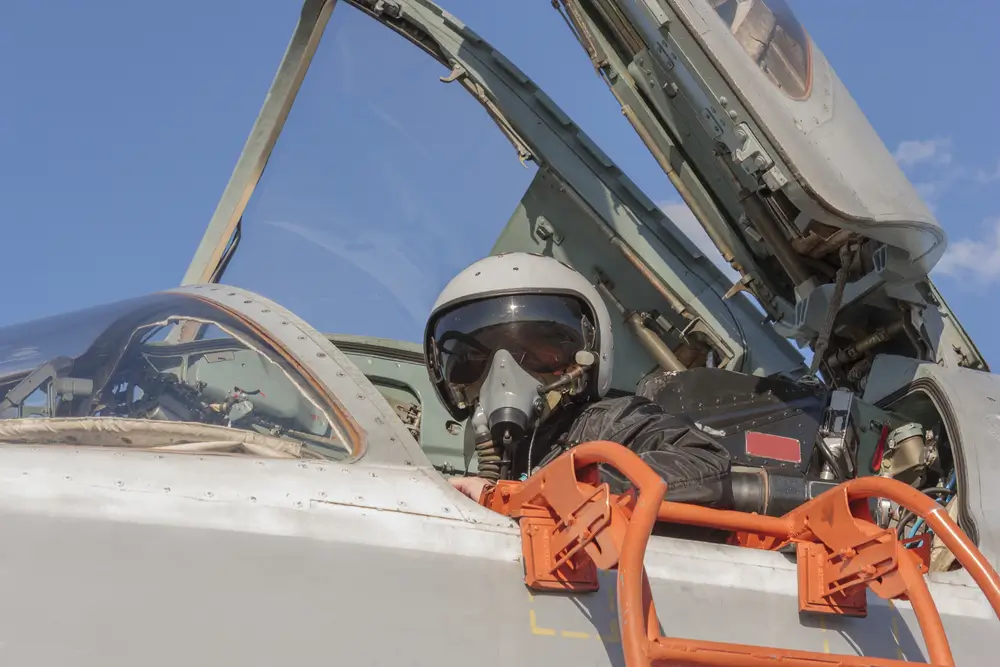
Becoming an NZDF pilot means applying for the Royal New Zealand Air Force Pilot role, an officer-entry position. It is competitive, it takes years of training, and it comes with a long service commitment. This guide sets out what Defence Careers actually publishes about the requirements, the tests, the selection board and the flying courses, so you can prepare against real information rather than guesswork.
The focus here is the pilot and aircrew side of selection. The shared NZDF aptitude core is covered briefly, because it applies to every applicant regardless of trade.
 NZDF Recruitment · Aptitude & Selection 2026Turn theory into a score.
Timed practice sets built around the SHL Verify G+ format, with worked solutions on every question.
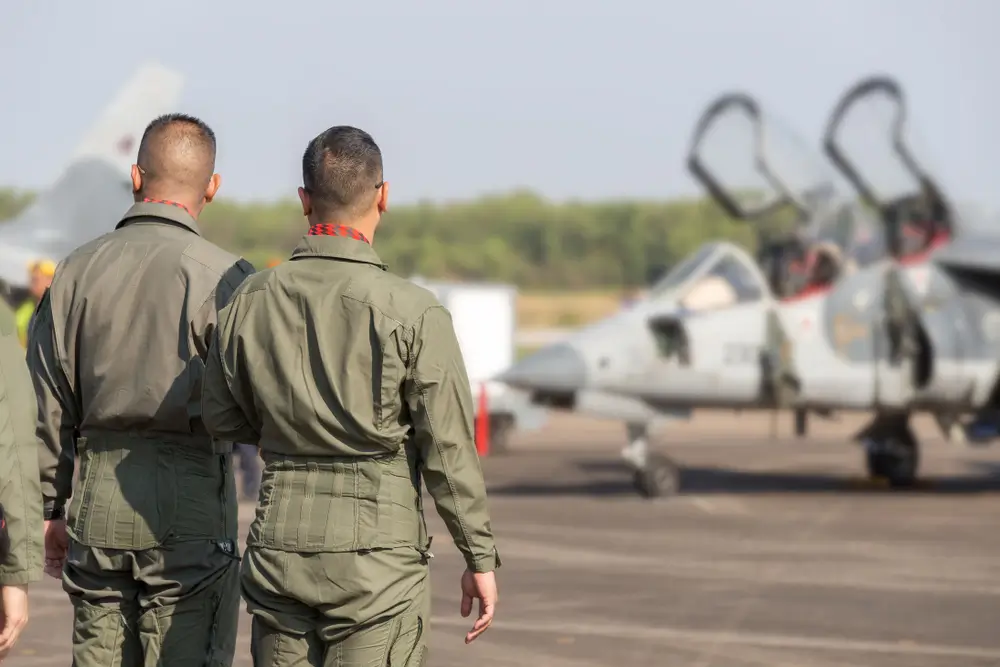
RNZAF pilot selection at a glance
The RNZAF Pilot role combines flight operations, navigation, and officer and management responsibilities. You are not only being assessed as a future aviator, you are being assessed as a future officer who will hold command and management positions.
Two pilot-specific hurdles sit inside the process. According to the Defence Careers RNZAF Pilot page, you must pass a preliminary pilot selection test covering general maths, maths reasoning and instrument comprehension, then pass an Aircrew and Officer Selection Board. Both are additional to the general aptitude tests every candidate sits.
Aptitude testing is not new to the organisation. Defence Careers notes that the NZDF has used aptitude tests since World War II, when they were first introduced to select aircrew. The stated purpose is to give reliable, objective information about a person’s ability to perform under training and on the job, and to identify who is most likely to succeed early in a military career.
Age, education, citizenship and the service commitment
The basics are short and specific. Defence Careers states that RNZAF Pilot applicants must be 18 years old by the time they graduate from the recruit course, and must hold an NCEA Level 2 certificate as the minimum educational qualification.
You also need to be eligible to meet national security clearance criteria as set out in the Government’s Protective Security Requirements. The Air Force applies strict citizenship and security conditions for the clearance level the role requires, so this is worth confirming early rather than late.
One condition surprises some applicants. Because of the size of the training investment, RNZAF pilots are required to serve for 10 years after graduating. That is a genuine career decision, not a formality.
There is also a study route. The Air Force offers undergraduate scholarships for candidates who show the qualities needed to become a pilot, including the RNZAF Undergraduate Scheme, which covers university fees and a living allowance on a year for a year return of service basis.
Vision, medical and fitness checks
The official requirement is that you must be medically fit for service and meet the minimum entry fitness standards. No numerical pilot-specific vision threshold appears on the Defence Careers Pilot page, so treat any precise eyesight figure you read elsewhere with caution and ask your recruiter directly.
On the academic side, a New Zealand schools careers summary describes the minimum as including 18 NCEA Level 2 credits in English, mathematics and a science subject, with physics preferred. That subject mix is a sensible target regardless, since the Wings Course leans heavily on maths and aeronautical science.
Fitness standards vary by service and are reviewed regularly. One NZDF preparation guide published the following entry benchmarks for 2026, and notes that Army curl-ups were removed from entry testing in July 2024:
| Service | Beep Test (MSFT) | Push-ups (Male/Female) | Other |
|---|---|---|---|
| Navy | 6.1 (Updated 2024) | 15 / 10 | Survival Swim |
| Army | 7.5 | 30 / 15 | Curl-ups removed |
| Air Force | 6.5 | 30 / 16 | 5km Weighted March |
The shared NZDF aptitude core, in brief
Every applicant sits two aptitude tests. Defence Careers describes the first as numerical, deductive and inductive reasoning questions that indicate General Mental Ability, and the second as a Mechanical Comprehension test measuring your understanding of mechanical concepts.
Candidate-facing preparation providers refer to the General Mental Ability component as Verify G+ and describe it as computer adaptive, meaning question difficulty shifts with your performance. The official page describes the same core by the reasoning skills it measures rather than by a publisher name, so use the official description as your reference point.
One point matters more than the labels. These tests are not school exams. Official guidance is explicit that they assess your ability to solve unfamiliar problems compared with other candidates, under strict time constraints. Speed and composure count as much as knowledge.
The aircrew add-on: what is public and what is not
The pilot-specific test is where the RNZAF looks for aviation potential. Defence Careers names three domains in the preliminary pilot selection test: general maths, maths reasoning and instrument comprehension.
A New Zealand Air Force entrance-exam guide describes the aviation reasoning component for RNZAF air crew applicants as including flight mathematics and aircraft instrumentation comprehension. That aligns with the official domains and gives a useful sense of what to practise: quick calculation, and reading instruments to extract meaning fast.
Generic pilot assessment material goes further, discussing hand-eye coordination, tracking, reaction time, spatial awareness and multitasking. Those are worth training as transferable skills, but the RNZAF Pilot page does not publish a named psychomotor battery or a commercial test publisher. Treat generic pilot content as skill practice, not as a specification of the RNZAF assessment.
NZDF Recruitment · Aptitude & Selection 2026Turn theory into a score.Timed practice sets built around the SHL Verify G+ format, with worked solutions on every question.
The Aircrew and Officer Selection Board
Passing an Aircrew and Officer Selection Board is an explicit requirement for the role. The RNZAF does not publish a detailed breakdown of what the board examines, so the honest answer is that the public detail stops at the requirement itself.
Broader aviation practice gives useful context for how boards of this type think. SKYbrary describes pilot aptitude assessment as extending well beyond aircraft handling, across basic physical and mental abilities, operational competencies, social competencies and personality traits. It also notes that under the IATA framework, a complete aptitude battery includes at least tests of basic mental abilities, tests of operational competencies, tests of social competencies, and interviews to capture relevant personality traits.
The practical read: prepare to be assessed as a person and a team member, not only as a test taker. Teamwork, communication under pressure, decision making and motivation all belong in that picture.
The selection calendar: application to offer
Applications start online through the Defence Careers portal, where you submit your CV, academic transcripts and work history, and answer prequalifying questions on age, citizenship and education. Once submitted, you are assigned a Candidate Engagement Facilitator, a civilian NZDF member who becomes your main point of contact through the process.
Aptitude testing follows. One NZDF process guide reports that remotely proctored Verify G+ and Mechanical Comprehension tests must be completed within 14 days of receiving the testing link, so check your own instructions carefully for the deadline you are given.
Attempts are limited, and this is the detail most worth knowing before you sit anything. Defence Careers states that entry-level aptitude testing allows a maximum of 3 attempts. After a first failure there is a 3 months wait, and after a second failure a 12 months wait before a third and final attempt. If the third attempt is unsuccessful, the application cannot proceed with the NZDF. Sitting unprepared is an expensive mistake.
Candidates who meet the required results progress to Assessment Day at a regional recruiting centre. That day typically includes medical screening, a behavioural interview with a recruiting officer, and fitness testing. The interview covers your knowledge of your chosen trade and the NZDF values of courage, commitment, comradeship and integrity.
After background checks, successful applicants are placed in the candidate pool once cleared and recommended, then receive a formal Offer of Service when an intake spot opens. The wait for a matching intake can run from several weeks to several months, and the offer sets out your rank, salary and attestation date.
Training after selection: IOT, aircrew course and Wings
Training starts with 19 weeks of Initial Officer Training at RNZAF Base Woodbourne, covering military culture, law, air power, field skills, weapons, leadership and communication.
Next come the Air Crew Courses, 4 weeks at RNZAF Base Auckland, including parachute instruction, an aviation medical course and survival training.
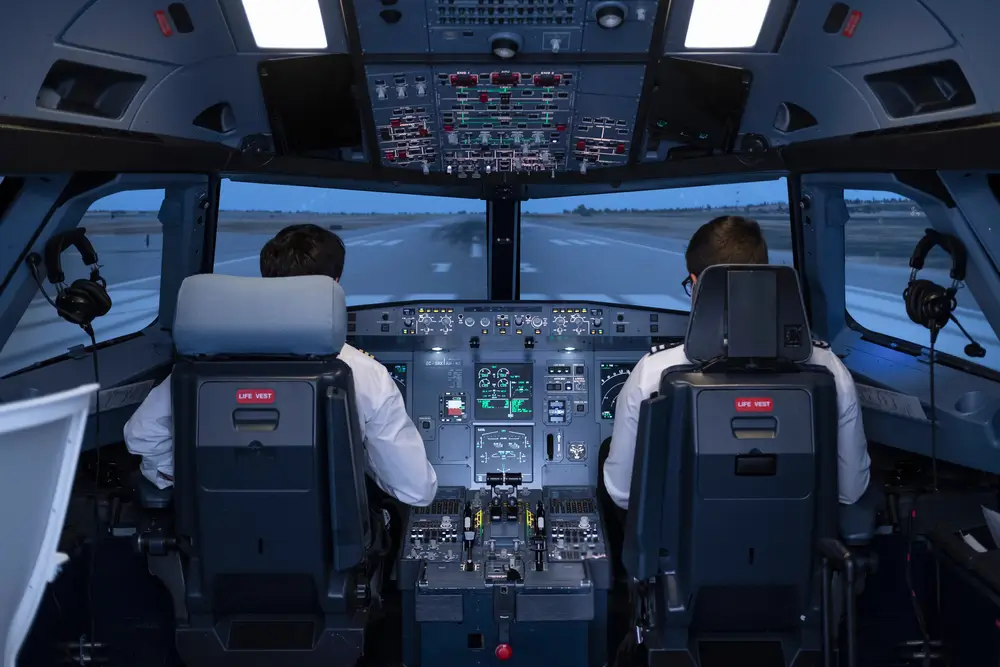
The Wings Course runs for 18 months at RNZAF Base Ohakea and includes ground school plus approximately 220 hours of simulator and aircraft training. The syllabus covers aeronautical science, mathematics, meteorology, aircraft systems, air law, flight path control, navigation, emergency procedures and practical flying skills.
The scale of assessment is worth understanding. An NZDF account of a recent Wings Course records one student sitting 14 ground exams and flying 139 sorties, each one assessed and marked. That student, Pilot Officer Coleman, entered the course in 2022 with 20 hours’ flying experience and was one of seven students who gained their wings at a graduation ceremony at Ohakea.
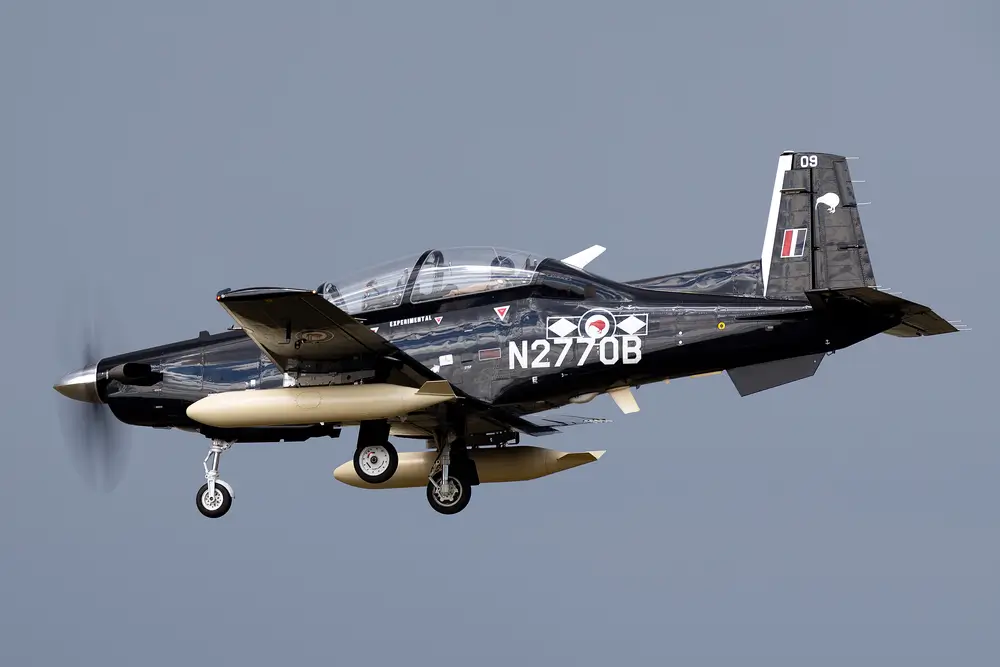
Student pilots train on the T-6C Texan II, with 11 aircraft based at Ohakea for the Wings Course. Course Commander and Instructor Flight Lieutenant Tom McDowell has described the difference from commercial training as the military content: aerobatics, low-level navigation down to 250 feet, and formation flying, including close formation in cloud.
“Operating at low level is a basic defence measure in a threat environment and something our pilots must be confident and competent in.”
— Flight Lieutenant Tom McDowell, Course Commander and Instructor
Streaming after Wings: rotary-wing or fixed-wing
Once you earn your wings, you are streamed onto either rotary-wing or fixed-wing aircraft.
Rotary-streamed pilots complete a 6 months Helicopter Basic Course at RNZAF Base Ohakea on the A109, covering helicopter theory, simulator work, night vision, underslung loads and winching.
Fixed-wing streamed pilots complete a 6 months Multi-Engine Conversion Course at Ohakea on the King Air 350 before progressing towards larger fixed-wing aircraft.
Development continues from there through aircraft conversion courses and progression towards co-pilot and captain roles. Some pilots are selected for a Flying Instructors Course of approximately nine months.
What an RNZAF pilot earns
Defence Careers publishes an under-training salary of $69,833 for the RNZAF Pilot role, with future potential earnings of $140,000. The role is based at Ohakea. Pay figures for other services and roles differ, so check the specific role page for the trade you are applying to.
How to prepare usefully from today
Start with the official material. Defence Careers strongly recommends its own General Ability and Mechanical Comprehension practice tests, and notes that other practice tests may differ from the actual assessment. That is the cleanest signal you will get about where to spend your first hours.
The official preparation advice is straightforward: understand which tests you will sit, practise similar problems so the question structure is familiar, practise under time constraints and pressure, use strategies that keep you calm, and set up a quiet space free from distractions to test and practise in.
Know what the content covers. The NZDF Numerical Ability test uses charts, graphs and tables, and can involve arithmetic, percentages, fractions, decimals, basic geometry and probability. The Mechanical Comprehension test covers leverage, weight and balance, gears, pulleys, fluid hydraulics, volume, temperature and pressure.
For the pilot-specific stage, build mental maths speed without a calculator and get comfortable reading instruments quickly. Broader pilot practice material covering numerical, logical, verbal, spatial, memory, attention, reaction, psychomotor and multitasking skills is useful for building those abilities, provided you do not treat it as the RNZAF specification.
A sensible sequence: work through the official NZDF practice tests first, then drill timed numerical and reasoning sets, then add mechanical concepts and instrument reading. Book your test only when your timed practice is consistently solid, because you only get three attempts.
Frequently Asked Questions
What are the entry requirements for an RNZAF Pilot?
You must be 18 by the time you graduate from the recruit course, hold an NCEA Level 2 certificate, be medically fit and meet minimum entry fitness standards, and be eligible for the required security clearance. You also need to pass the preliminary pilot selection test and the Aircrew and Officer Selection Board.
Is 27 too old to become an RNZAF Pilot?
Defence Careers states a minimum age of 18 by recruit-course graduation and does not publish an upper age limit in the role requirements. A 27-year-old should confirm current eligibility directly with Defence Careers rather than relying on airline or overseas advice.
What is asked in the NZDF pilot aptitude test?
The shared NZDF core covers numerical, deductive and inductive reasoning, followed by Mechanical Comprehension. The RNZAF Pilot page adds general maths, maths reasoning and instrument comprehension in the preliminary pilot selection test, and a New Zealand entrance-exam guide describes the aircrew aviation component through flight mathematics and aircraft instrumentation comprehension.
Does the NZDF use SHL Verify G+ for pilot applicants?
Candidate-facing preparation providers identify the General Mental Ability component as Verify G+, while Defence Careers describes the same core by its numerical, deductive and inductive reasoning content. Use the official description as your reference, and treat the pilot-specific stages as the part unique to aircrew applicants.
What extra assessment is used for RNZAF aircrew?
A preliminary pilot selection test followed by an Aircrew and Officer Selection Board. A New Zealand guide describes the aircrew aviation assessment as including flight mathematics and aircraft instrumentation comprehension. Generic pilot material also discusses psychomotor skills, but the RNZAF does not publish a complete named psychomotor battery.
How difficult is it to join the NZDF as a pilot?
The RNZAF describes pilot selection as competitive, and NZDF aptitude tests compare candidates on unfamiliar problems under strict time limits. The useful response is to learn the official test types, practise similar questions and work under timed conditions, rather than studying as you would for a school knowledge exam.
Is pilot aptitude-test preparation worth it, and how should I prepare?
Yes. Defence Careers recommends understanding the test types, practising similar problems, simulating time pressure and preparing a quiet testing space. Begin with the official NZDF descriptions and practice tests, then use generic pilot exercises only to build transferable skills such as numerical speed, reasoning, spatial awareness, reaction and multitasking.
Where can I get a free NZDF aptitude test or pilot aptitude-test PDF?
Defence Careers provides practice tests for General Ability and Mechanical Comprehension, and those are the most relevant free starting points for the shared core. Free pilot exercises and PDF question sets can help general skill practice, but they are not replicas of the RNZAF aircrew assessment and do not indicate a selection score.
Is there a universal pass mark, and is 80% good for the NZDF aptitude test?
NZDF guidance does not publish a universal percentage pass mark. One NZDF testing guide says score requirements vary by career path, with officer, aviation, technical and specialist roles generally requiring stronger results, so an 80% result cannot be interpreted without the relevant role standard.
What happens if I fail an NZDF aptitude test?
Entry-level aptitude testing allows a maximum of three attempts. After the first failure you wait three months, and after the second you wait 12 months before a third and final attempt. If the third attempt is unsuccessful, the application cannot proceed with the NZDF.
Sources
NZDF Recruitment · Aptitude & Selection 2026Turn theory into a score.Timed practice sets built around the SHL Verify G+ format, with worked solutions on every question.

Mechanical Aptitude Test: SHL Prep Guide for NZDF Trades

SHL Aptitude Test: Format, Scoring and Preparation Guide