If you are planning to join the New Zealand Defence Force, the intake calendar is the single most useful thing to understand early. It tells you when applications open, when training starts, and whether the role you want is still accepting candidates. Get the timing wrong and you can lose six months.
This guide explains how NZDF intakes are structured, what the listed dates actually mean, and what you need to complete before you can join a specific cohort. All dates below come from the official Defence Careers schedules. Roles and dates change, so treat this page as an orientation guide and confirm the details on the official schedule before you commit to a plan.
 NZDF Recruitment · Aptitude & Selection 2026Next step in the process: the aptitude test.
See the format, the sections and the timing, then practise until the clock stops mattering.
How to Use This Intake Calendar

The official Defence Careers calendar splits opportunities into two groups: Currently Recruiting and Active Intakes. The first group is where you can still apply. The second group covers cohorts that have started or are about to start, so applications for them have closed.
That distinction matters more than the raw list of dates. A cohort can appear prominently on the page and still be completely shut to new applicants. Read the group heading first, then the role list, then the dates.
One more habit worth building: check the official page again before you rely on any date you read anywhere, including here. The NZDF states plainly that roles and dates are subject to change. Applying early gives you the best chance of being selected for your preferred intake. Late applications may be considered, but there is no guarantee you will make the cohort you wanted.
How NZDF Intakes Are Organised and How Often They Run
There is no single NZDF intake date. Each service runs its own named cohorts with their own application and training windows, and the roles attached to each cohort differ.
According to an NZDF Official Information Act response, the NZDF has 21 intakes per year. Recruits are not recorded by month, and there are some months where no intakes occur at all. That is why you will sometimes look at the calendar and find nothing starting in a period you expected to be busy.
The Royal New Zealand Navy publishes its own annual pattern: two Basic Common Training courses and two Junior Officer Common Training courses each year. Army and Air Force schedules work differently, listing named cohorts such as Recruit Regular Force 423 or Recruit 2/27 rather than a fixed twice-yearly rhythm.
Because the calendar mixes currently recruiting entries with active intakes, the number of entries you see on screen is not a count of all annual intakes. It is a snapshot of what is open and what is imminent at that moment.
What Currently Recruiting and Active Intakes Mean
Currently Recruiting entries identify roles the NZDF is accepting applications for right now. Some are flagged as closing soon, which is a signal to move rather than a hard stop.
Active Intakes have commenced or are due to start shortly, and applications have closed. For these, successful applicants are notified of their enlistment by the listed selection confirmed date. If you are already in the pipeline, that date is the one to watch.
There is a third state that trips people up: a closed Selection Board against an individual role inside an otherwise open intake. In the Army schedule, for example, Ammunition Technician and Plumber appear with a note saying the Selection Board is closed and applicants should apply for the next intake, while other roles in the same cohort remain listed. A closed Selection Board is role-specific. It does not mean the whole intake is shut.
Finally, watch the two date ranges attached to each entry. One is the application or selection period, the other is the training period, and they often sit in different calendar years. The application window is not the intake start date.
Army Intake Dates and Application Windows

The Army schedule lists both Regular Force cohorts and Reserve-focused entries, so read the role list carefully before you match yourself to a date.
MOD Nov 26 is listed with a period of January 2026 to September 2026 and an application window from 9 November 2026 to 13 December 2026, marked as closing soon. Its roles are Reserve positions: Reserve Combat Driver, Reserve Combat Engineer, Reserve Medic, Reserve Infantry and Reserve Logistics Specialist.
Recruit Regular Force 423 is listed with an application period from May 2026 to October 2026 and training from 22 February 2027 to 21 May 2027, also marked as closing soon. Trades include Armoured (Combat Specialist), Chef (Caterer), Combat Driver, Gunner (Combat Specialist) and Infantry (Combat Specialist). Ammunition Technician on this cohort shows a closed Selection Board.
On the active side, Recruit Regular Force 420 runs training from 22 June 2026 to 18 September 2026, with a May 2026 selection confirmed marker and a broad trade list covering Carpenter, Dental Assistant, Electrician, Intelligence Operator, IT Specialist, Logistics Specialist, Medic, Movement Operator and Force Health Protection Technician among others. Recruit Regular Force 421 runs training from 26 July 2026 to 22 October 2026.
Looking further ahead, Initial Induction Training 27/1 is listed for November 2026 with training from 11 January 2027 to 6 March 2027, and Recruit Regular Force 422 has training from 18 January 2027 to 16 April 2027. Army initial training takes place at the Waiouru Military Training Area.
The practical takeaway is that there is no universal next Army intake. The relevant one depends entirely on your trade and whether its Selection Board is still open.
Navy Intakes: Basic Common Training and Junior Officer Common Training
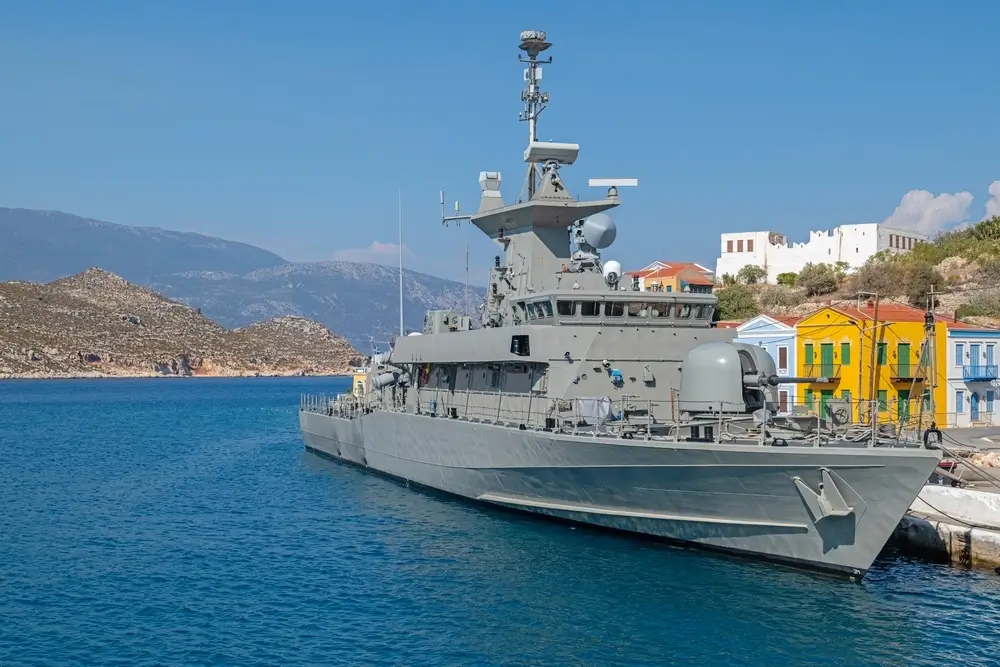
The Navy runs two distinct entry pathways, and confusing them is a common mistake.
Basic Common Training is the enlisted pathway. The official Navy education and training page states that two 15-week Basic Common Training courses run each year. Junior Officer Common Training is the officer pathway, with two 22-week courses each year.
On the central intake schedule, Navy Junior Officer Common Training 27-1 appears as an active intake running from 18 January 2027 to 19 June 2027. Navy initial training takes place at Devonport Naval Base, according to the official Defence Careers application process page.
Because the Navy publishes its annual course frequency but not always the individual application windows on the same page, check the central calendar for the application dates attached to each Navy cohort. The course dates and the application dates are separate pieces of information.
NZDF Recruitment · Aptitude & Selection 2026Next step in the process: the aptitude test.See the format, the sections and the timing, then practise until the clock stops mattering.
Air Force Intake Dates and Application Windows
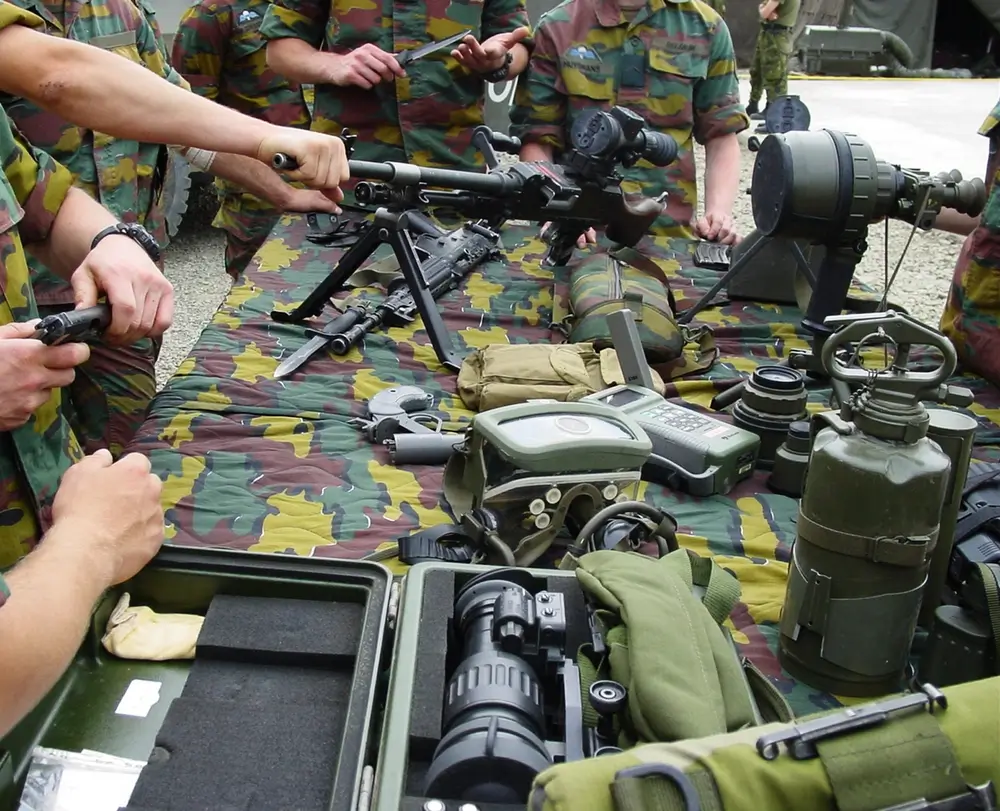
The Air Force uses a numbered Recruit Course system, with officer entries listed under Officer Induction.
Recruit 2/27 has an application window from May 2026 to November 2026 and training from 25 May 2027 to 13 August 2027. Listed roles include Aircraft Systems Technician, Armament Technician, Aviation Fuel Specialist, Avionics Technician (Aviation Electronics), Ground Support Equipment Technician, Logistics Specialist and Safety & Surface Technician.
Recruit 3/27 has an application window from May 2026 to January 2027 and training from 21 September 2027 to 10 December 2027. Its roles include Aeronautical Metal Worker, Aircraft Systems Technician, Aviation Rescue Firefighter, Avionics Technician (Aviation Electronics), Helicopter Loadmaster and Intelligence Specialist.
Two cohorts are already listed as active. Recruit Officer Induction 27/1 shows an August 2026 selection period and training from 19 January 2027 to 28 May 2027, covering Engineering Officer, Learning and Development Officer, Legal Officer, Medical Officer (Doctor), Pilot and Psychologist. Recruit 1/27 has an application period ending in November 2026 and training from 26 January 2027 to 16 April 2027, with roles including Air Warfare Specialist, Communications and Information Systems Technician, Intelligence Specialist, Medic, RNZAF Police and Air Loadmaster.
Air Force initial training takes place at RNZAF Base Woodbourne. As with the other services, the schedule warns that roles and dates are subject to change and recommends applying early.
Army Reserve Intake Timing
The Army Reserve Force, formerly known as the Territorial Force, follows a different pattern from Regular Force intakes, so do not read the two calendars as interchangeable.
Reserve soldiers and officers generally train one weekend per month plus the occasional weekday evening, with a minimum expected commitment of a cumulative 20 days per year. Initial training runs in three stages totalling approximately seven weeks.
Module 1 is a two-day introduction to Army and Reserve Force service. You are attested into the New Zealand Army during this course and cover drill and command basics, Military Law, the ethos and values of the NZ Army and the specifics of Reserve service. It runs at specified times throughout the calendar year in Auckland (Whangaparāoa Leadership Centre or RNZAF Base Auckland, Whenuapai), Wellington (Trentham Military Camp) or Christchurch (Burnham Military Camp). Your Candidate Engagement Facilitator will confirm your intended Module 1 location during the application.
Module 2 is a 38-day residential Basic Training course at Waiouru Military Camp. Corps Training, the initial trade-specific stage, is typically a 14-day commitment in January or February of the following year. Module 2 and Corps Training take place in November, December and January of a given year, which is why Reserve timing clusters around the summer period rather than spreading across the schedule like the Regular Force cohorts.
How Long the Application Really Takes
The official NZDF application process page says you should be prepared to invest about 3 to 6 months for your application to be fully processed. That window covers health and security checks, assessments and interviews.
You will be paired with a Candidate Engagement Facilitator (CEF), who supports you through the process and answers questions along the way. After you submit the online application, which includes prequalifying questions, a candidate account and portal tasks, you can expect to hear back within ten working days.
That three to six month range is not a promise of a particular start date. Your actual joining date depends on both your processing speed and the role-specific intake schedule. If your checks finish two weeks after your preferred cohort’s Selection Board closes, you go to the next one.
Working backwards from a target intake is the sensible approach. Take the training start date, subtract the processing window, and apply well before that point rather than at the edge of it.
What Must Be Completed Before You Join an Intake
Meeting the application window is only the first date-sensitive step. Several stages must be finished before you can take a place in your designated cohort.
Within two weeks of applying, you need to provide copies of your birth certificate, NZ driver licence if you have one (to support the initial Police check), NZ passport or citizenship certificate or residency sticker, and academic transcripts for all qualifications you have achieved, including subjects and grades. That covers school-level records such as NCEA results as well as tertiary or trade qualifications, so pull your record of learning together before you start. Have your CV up to date too.
You also complete an initial health and security check to confirm you are fit for service. The medical questionnaire asks for your doctor’s name and contact details plus any past or present medical conditions, medications, broken bones and operations.
Next comes testing. You sit an Aptitude Test to help determine your suitability for a military career, booked by your CEF either through remote proctoring or in person at your nearest recruiting office. You are then invited to A-Day, your Assessment Day, where your physical fitness is tested. The NZDF points applicants to Force Fit or group fitness sessions to prepare for the Fitness Test. If you are unsuccessful at this stage, further options are discussed with you.
An interview follows. If successful, you either join the candidate pool to await placement or attend a Selection Board, which is required only for select trades. Passing those stages leads to an Offer of Service, a formal job offer that remains subject to full Security Clearance and Medical Clearance. Further fitness testing happens on Induction Day before you join your designated intake.
What Happens If You Miss an Intake Window
Missing a window is not the end of the process, but it does cost time. The NZDF will consider late applications and cannot guarantee you will make your preferred intake.
If the Selection Board for your specific role has closed, the official schedule tells you to apply for the next intake. Other roles within the same cohort may still be open, so check the role-level notes rather than assuming the whole intake is unavailable.
Do not go looking for a single NZDF-wide application deadline. The official pages present role-specific and intake-specific windows that can change, and third-party sites circulating one global cut-off date are not supported by the official schedules. The schedule also notes that not all roles are listed, so if the role you want does not appear, apply anyway.
Recruitment Targets and Attested Numbers
Attested means the recruit has accepted the Offer of Service, presented for training and sworn allegiance to the Crown. It is the point at which an applicant becomes a member of the Armed Forces, and the NZDF uses it as its recruitment measure.
The gap between target and attested numbers gives a sense of how competitive each service pipeline has been over time. According to NZDF data released under the Official Information Act covering 2015 to April 2025:
| Year | Service | Target | Attested |
|---|---|---|---|
| 2015 | Army | 426 | 363 |
| 2015 | Navy | 127 | 111 |
| 2015 | Air Force | 229 | 165 |
| 2016 | Army | 420 | 392 |
| 2016 | Navy | 202 | 162 |
| 2016 | Air Force | 202 | 160 |
| 2017 | Army | 633 | 451 |
| 2017 | Navy | 263 | 205 |
| 2017 | Air Force | 230 | 195 |
| 2018 | Army | 565 | 513 |
| 2018 | Navy | 292 | 216 |
| 2018 | Air Force | 202 | 159 |
| 2019 | Army | 571 | 470 |
| 2019 | Navy | 296 | 246 |
| 2019 | Air Force | 157 | 144 |
| 2020 | Army | 611 | 458 |
| 2020 | Navy | 268 | 230 |
| 2020 | Air Force | 136 | 134 |
| 2021 | Army | 833 | 646 |
| 2021 | Navy | 207 | 164 |
| 2021 | Air Force | 136 | 122 |
| 2022 | Army | 698 | 460 |
| 2022 | Navy | 348 | 197 |
| 2022 | Air Force | 201 | 156 |
| 2023 | Army | 756 | 474 |
| 2023 | Navy | 333 | 158 |
| 2023 | Air Force | 253 | 152 |
| 2024 | Army | 651 | 433 |
| 2024 | Navy | 347 | 200 |
| 2024 | Air Force | 230 | 185 |
| 2025 | Army | 245 | 210 |
| 2025 | Navy | 41 | 41 |
| 2025 | Air Force | 52 | 52 |
The 2025 figures are as at April, which is why they sit well below earlier full-year totals rather than indicating a collapse in recruitment.
Your Next Step
Pick your service and your role first, then find the cohort that role appears in. That is the only reliable way to identify your real next intake, because a date that applies to Infantry may be closed for Ammunition Technician in the same cohort.
Once you have that cohort, count back three to six months from the training start date. If you are already inside that window, apply now and let your Candidate Engagement Facilitator advise on which intake is realistic. If you have more runway, use it to get your documents ready and to prepare for the Fitness Test before Assessment Day comes around.
Frequently Asked Questions
How often does the NZDF have intakes in New Zealand?
The NZDF states that it has 21 intakes per year, although recruits are not recorded by month and some months have no intakes at all. The Navy separately runs two Basic Common Training courses and two Junior Officer Common Training courses each year. Army and Air Force dates should be read from their named, role-specific schedules rather than treated as one universal date.
What are the upcoming Air Force intakes for 2026?
The official schedule lists Recruit 2/27 with applications from May to November 2026 and training from 25 May to 13 August 2027. Recruit 3/27 has applications from May 2026 to January 2027 and training from 21 September to 10 December 2027. Officer Induction 27/1 and Recruit 1/27 also show 2026 application activity. Dates and roles can change, so check the official Air Force page before you apply.
What is the next Army intake in New Zealand?
There is no single next intake covering every Army role. In the official schedule, Recruit Regular Force 420 has training from 22 June to 18 September 2026, while MOD Nov 26 and Recruit Regular Force 423 appear as currently recruiting opportunities with their own application windows. The relevant intake depends on your role and whether its Selection Board is still open.
How long does the NZDF application process take before joining an intake?
Expect about 3 to 6 months for the application to be fully processed. That period covers health and security checks, assessments and interviews. It does not guarantee a particular intake, because placement also depends on the role-specific schedule and the available selection window.
Can I apply late for an NZDF intake?
Late applications may be considered, but the NZDF cannot guarantee that a late applicant will make their preferred intake. The official schedule also advises people to apply even when their preferred role is not listed, because not all roles appear on the page.
What happens if the selection board for my NZDF role has closed?
A closed Selection Board means that board, for that specific role and intake, is no longer accepting applications. The official Army schedule tells applicants to apply for the next intake, and other roles in the wider schedule may still be recruiting.
What must be completed before joining a chosen NZDF intake?
You must provide the requested documents within two weeks of applying and complete the initial health and security check. You then progress through aptitude and fitness testing, Assessment Day, an interview and, for selected trades, a Selection Board. An Offer of Service remains subject to full security and medical clearance, followed by Induction Day before you join the designated intake.
Is it hard to join the NZDF?
The NZDF describes its application process as more comprehensive than a typical job application and says it usually takes about 3 to 6 months. Applicants complete aptitude and fitness testing, interviews and health and security checks, and some trades also require a Selection Board. The official sources do not publish a single general pass rate or difficulty rating.
Does the Navy have intakes twice a year?
Yes. The official Navy education and training page states that it runs two 15-week Basic Common Training courses and two 22-week Junior Officer Common Training courses annually. Check the current calendar for the specific application and training dates attached to each Navy intake.
Do Army Reserve intakes follow the same timetable as Regular Force intakes?
No. The Army Reserve uses a separate module-based pattern. Module 1 runs throughout the calendar year, while Module 2 and Corps Training take place in November, December and January of a given year, so Reserve timing should not be read as identical to the Regular Force Army schedule.
Sources
NZDF Recruitment · Aptitude & Selection 2026Next step in the process: the aptitude test.See the format, the sections and the timing, then practise until the clock stops mattering.
How Long Is Army Basic Training? NZ Army RRF Course Explained
Air Force Basic Training NZ: Length, Content and What to Expect